Key Predictions about 2026 Health Policy from an Expert

In this post I review some 2026 healthcare predictions for likely continuation of partisan gridlock, minimal congressional action, and increased focus on health care affordability amid midterm elections. Key issues to watch include ACA enrollment responses, Medicaid work requirements, rising insurance costs, and the impact of AI on consumer health care navigation.

This information is current as of the date of original publication or update. It may have changed by the time you read this. I invite you to fact-check what you read here.

This information is not intended for diagnosis or treatment. Before making health decisions, discuss with your physician or other qualified healthcare provider to decide what is right for you.

As we anticipate 2026, here is a look at what the federal government may do with healthcare in the United States.

This is a reprint of an article first published on KFF and shared here by permission.

The author is Drew Altman, President and Chief Executive Officer of KFF, a position he has held for over 30 years, founding the KFF organization in the 1990s. He is a leading expert on national health policy issues and an innovator in health journalism and the nonprofit field.

(Note: I have edited this article for length and readability. I linked to the original content so you can read the full sections. The photos are for illustration and are not affiliated with the original article on KFF. AO)

Health Policy in 2026

from Drew Altman, December 8, 2025

Forecasting the year ahead in health policy is always treacherous because events intervene and screw up even the best predictions. But my working theory is that the sharp partisan divide in Congress, and even sharper disagreement on health care policy, can produce only small-ball actions on health next year.

So, what should you watch for that will really matter for people, policy, and politics?

Voter Reaction to the ACA in the Midterms

First and foremost is the role that health care affordability will play in the midterms. Assuming there is no deal on the enhanced ACA (Affordable Care Act) tax credits, spiking premium payments in the Marketplaces will become the national symbol for voters of concerns about their health care bills.

Democrats will prosecute the issue to the fullest, and Republicans will generally try to shift the subject and fight on other issues. Health care affordability will be in the spotlight, but how important it is as a vote-and-turnout driver remains to be determined.

Photo by Edmond Dantu00e8s on Pexels.com

How ACA Enrollment Might Change

Second, again assuming there’s no deal on the tax credits, we’ll see how enrollees actually respond in the Marketplaces. What share of the 24 million enrollees switch to cheaper high-deductible plans? What is the impact of doing that on their financial security and health-seeking behavior? What happens to older and sicker enrollees who need better, more comprehensive coverage? How many millions choose to be uninsured in 2026 and who are they?

Medicaid Work Requirements

Third, states that have expanded Medicaid will be gearing up for Medicaid work requirements, which kick in in 2027.

Red states may be looking for flexibility to implement the toughest possible requirements and reduce their Medicaid rolls and spending.

Blue states will be looking for nooks and crannies in the law and the rules to lessen the impact in the hopes that Democrats seize control again in 2028 and reverse the requirements.

Having implemented state welfare work requirements myself, I know there is always some ability to shade implementation depending on the goals of a state.

In our case in New Jersey, we had little interest in kicking people off welfare (and into homelessness or deep poverty, which we’d also have to address). We did have a big interest in providing job training, childcare, transportation, and a pathway to jobs.

More Expensive Health Insurance

Fourth, after years of moderate increases, health costs will increase more sharply again. Employer premium increases may not touch double digits but could come close.

The average cost of a family policy for employers could approach $30,000. Cost-sharing and deductibles will likely rise again after plateauing for several years.

Employers and public payers are increasingly skittish about the costs of GLP-1s for weight loss. It’s possible GLP-1s could turn from today’s dilemma to a technology-diffusion success story of sorts. (Glucagon-Like Peptide-1)

Costs are coming down, pills are on the horizon, and payers are developing more sensible guidelines for their initial and long-term use.

In a country where the dam breaks on every effective new medical technology and it’s rapidly disseminated at high costs, GLP-1s could emerge as a more balanced and sensible example of technology diffusion. Like most new medical technologies, it still increases costs.  

Drug and Hospital Costs Increase

Fifth, the Trump administration has put pressure on drug prices through a variety of initiatives. Probably the most important is Medicare drug price negotiations, which began in the Biden years, but together they are putting pressure on drug prices.

Still, retail drug spending is only 9% of overall health spending (16% for employers) and there is growing awareness that hospitals gobble up the single largest share of the health care dollar.

Proposals to cap hospital prices or put hospitals on a budget seem to be coming back into fashion again but are non-starters with Republicans in charge, as of course is single payer.

For 2026, we can look generally for greater attention being paid to hospital prices and possibly greater action at the state level, where several states have established hospital cost targets with varying degrees of teeth. 

Prior Authorization Review

Sixth, people (and providers) hate prior authorization review. Will the administration’s voluntary effort to work with industry to streamline and pare back prior authorization result in any concrete relief for patients when it kicks in this year?

MAHA and Vaccinations

Seventh, four in 10 Americans say they identify with the MAHA agenda. We’ll learn more in the coming year about which tenets of this loose movement have staying power. (Make America Healthy Again)

Everyone is for exercise and for healthier food for kids (although I do still miss those Hostess Cupcakes and Twinkies that I had as a kid).

But people who have serious illnesses may grow tired of the central MAHA notion that they are personally responsible for disease and may increasingly make the connection between their own need for medical care and cuts in Medicaid and ACA coverage.

President Trump and Secretary Kennedy at the MAHA commission meeting, public domain photo

There is some overlap between MAHA and the anti-vax movement. Another thing to watch: will vaccination rates continue to decline as the administration chips away at universal vaccination and trust in vaccines?

Patients Using AI for Health

Eighth, AI means a lot for physicians, researchers, hospitals, insurance companies, and investors, with profound implications in some areas of medicine, such as radiology. But when will AI start having real meaning for the things people care about most: their costs and their ability to navigate the health system? (AI-Artificial Intelligence)

The implications and practical applications for consumers receive far less attention, as generally does the relatively low level of trust in AI. Possibly, 2026 will be the year when attention shifts more seriously to the consumer side of AI in health. 

Conclusion

All told, it will be a big year ahead in health policy. And this list only just scratches the surface. (Others include the CDC, NIH, FDA, and Medicare.)

But there probably won’t be a lot of significant action in Congress. Still, every incremental change is a big fight in health care, and hard won, and in a hyper-partisan Congress, 2026 will be no different. 

KFF Health News is a national newsroom that produces in-depth journalism about health issues and is one of the core operating programs at KFF—an independent source of health policy research, polling, and journalism. Learn more about KFF.

Subscribe to KFF Health News’ free Morning Briefing.

This article first appeared on KFF Health News and is republished here under a Creative Commons license.

How health policies may affect you.

Based on what you know now, how likely are these predictions correct?

Which of these issues are most important to your healthcare?

How will you respond to health policy changes that affect you? What information do you need?

How do you and your family contribute to “making America healthy again”?

Cover Photo

The cover image was created by the AI feature of Jetpack. (affiliate link)

Exploring the HEART of Health

I’d love for you to follow this blog. I share information and inspiration to help you turn health challenges into health opportunities.

Add your name to the subscribe box to be notified of new posts by email. Click the link to read the post and browse other content. It’s that simple. No spam.

I enjoy seeing who is new to Watercress Words. When you subscribe, I will visit your blog or website. Thanks and see you next time.

Use this link to search for other posts about

Medical stethoscope and heart on a textured background

Dr Aletha

AI in Healthcare: Enhancing Patient Understanding

Although many patients find AI helpful for understanding medical information, experts caution about potential inaccuracies and privacy risks, urging careful use and verification of AI-generated responses.

This information is current as of the date of original publication or update. It may have changed by the time you read this. I invite you to fact-check what you read here.

This information is not intended for diagnosis or treatment. Before making health decisions, discuss with your physician or other qualified healthcare provider to decide what is right for you.

I recently had a medical procedure and when the results came into my patient portal, I logged in to read the results. The diagnosis was something I don’t have much professional experience with, so I did what many patients to with their medical information. I went online and searched for information.

Although this time I didn’t stop with a search engine. I used an AI assistant and was amazed at how easy it was not only to read information but also to ask questions and receive an answer. It even suggested additional resources and next steps.

Then I found this article on KFF indicating that I am not alone. And probably many of you have already used AI for this and other purposed. So I am sharing it here.

An AI Assistant Can Interpret Those Lab Results for You

(Edited for readability and length.)

written by Kate Ruder, September 15, 2025

When Judith Miller had routine blood work done in July, she got a phone alert the same day that her lab results were posted online. So, when her doctor messaged her the next day that her overall tests were fine, Miller wrote back to ask about the elevated carbon dioxide and low anion gap listed in the report.

While the 76-year-old Milwaukee resident waited to hear back, Miller did something patients increasingly do when they can’t reach their health care team. She put her test results into Claude and asked the AI assistant to evaluate the data.

Medical Records plus AI equals Understanding

“Claude helped give me a clear understanding of the abnormalities,” Miller said. The generative AI model didn’t report anything alarming, so she wasn’t anxious while waiting to hear back from her doctor, she said.

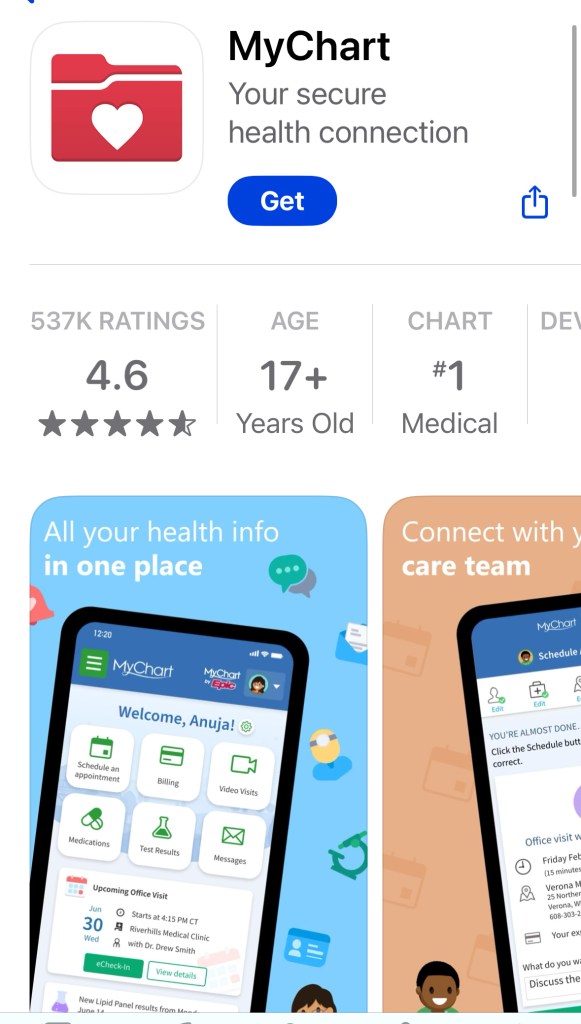
Patients have unprecedented access to their medical records, often through online patient portals such as MyChart. Federal law requires health organizations to immediately release electronic health information, such as notes on doctor visits and test results.

Screenshot of the MyChart app

A study published in 2023 found that 96% of patients surveyed want immediate access to their records, even if their provider hasn’t reviewed them.

And many patients are using large language models, or LLMs, like OpenAI’s ChatGPT, Anthropic’s Claude, and Google’s Gemini, to interpret their records.

Use AI for Health Cautiously

That help comes with some risk, though. Physicians and patient advocates warn that AI chatbots can produce wrong answers and that sensitive medical information might not remain private.

Yet, most adults are cautious about AI and health. Fifty-six percent of those who use or interact with AI are not confident that information provided by AI chatbots is accurate, according to a 2024 KFF poll. (KFF is a health information nonprofit that includes KFF Health News.)

“LLMs are theoretically very powerful and they can give great advice, but they can also give truly terrible advice depending on how they’re prompted,”

Adam Rodman, internist at Beth Israel Deaconess Medical Center

Adam Rodman Is an internist at Beth Israel Deaconess Medical Center in Massachusetts and the chair of a steering group on generative AI at Harvard Medical School.

Justin Honce, a neuroradiologist at UCHealth in Colorado, said it can be very difficult for patients who are not medically trained to know whether AI chatbots make mistakes.

“Ultimately, it’s just the need for caution overall with LLMs. With the latest models, these concerns are continuing to get less and less of an issue but have not been entirely resolved,” Honce said.

Rodman has seen a surge in AI use among his patients in the past six months. In one case, a patient took a screenshot of his hospital lab results on MyChart then uploaded them to ChatGPT to prepare questions ahead of his appointment.

Rodman said he welcomes patients’ showing him how they use AI, and that their research creates an opportunity for discussion.

Roughly 1 in 7 adults over 50 use AI to receive health information, according to a recent poll from the University of Michigan, while 1 in 4 adults under age 30 do so, according to the KFF poll.

Photo by Beyzaa Yurtkuran on Pexels.com

Should AI Give Medical Advice?

Using the internet to advocate for better care for oneself isn’t new. Patients have traditionally used websites such as WebMD, PubMed, or Google to search for the latest research and have sought advice from other patients on social media platforms like Facebook or Reddit.

But AI chatbots’ ability to generate personalized recommendations or second opinions in seconds is novel.

Liz Salmi, communications and patient initiatives director at OpenNotes, an academic lab at Beth Israel Deaconess that advocates for transparency in health care, had wondered how good AI is at interpretation, specifically for patients.

In a proof-of-concept study published this year, Salmi and colleagues analyzed the accuracy of ChatGPT, Claude, and Gemini responses to patients’ questions about a clinical note. All three AI models performed well, but how patients framed their questions mattered, Salmi said

For example, telling the AI chatbot to take on the persona of a clinician and asking it one question at a time improved the accuracy of its responses.

Are Medical Records Private with AI?

Privacy is a concern, Salmi said, so it’s critical to remove personal information like your name or Social Security number from prompts. Data goes directly to tech companies that have developed AI models, Rodman said, adding that he is not aware of any that comply with federal privacy law or consider patient safety

Sam Altman, CEO of OpenAI, warned on a podcast last month about putting personal information into ChatGPT.

“Many people who are new to using large language models might not know about hallucinations,” Salmi said, referring to a response that may appear sensible but is inaccurate.

For example, OpenAI’s Whisper, an AI-assisted transcription tool used in hospitals, introduced an imaginary medical treatment into a transcript, according to a report by The Associated Press.

Using generative AI demands a new type of digital health literacy that includes asking questions in a particular way, verifying responses with other AI models, talking to your health care team, and protecting your privacy online, said Salmi and Dave deBronkart, a cancer survivor and patient advocate who writes a blog devoted to patients’ use of AI.

Photo by Anna Shvets on Pexels.com

Can AI help physicians communicate results?

Patients aren’t the only ones using AI to explain test results. Stanford Health Care has launched an AI assistant that helps its physicians draft interpretations of clinical tests and lab results to send to patients.

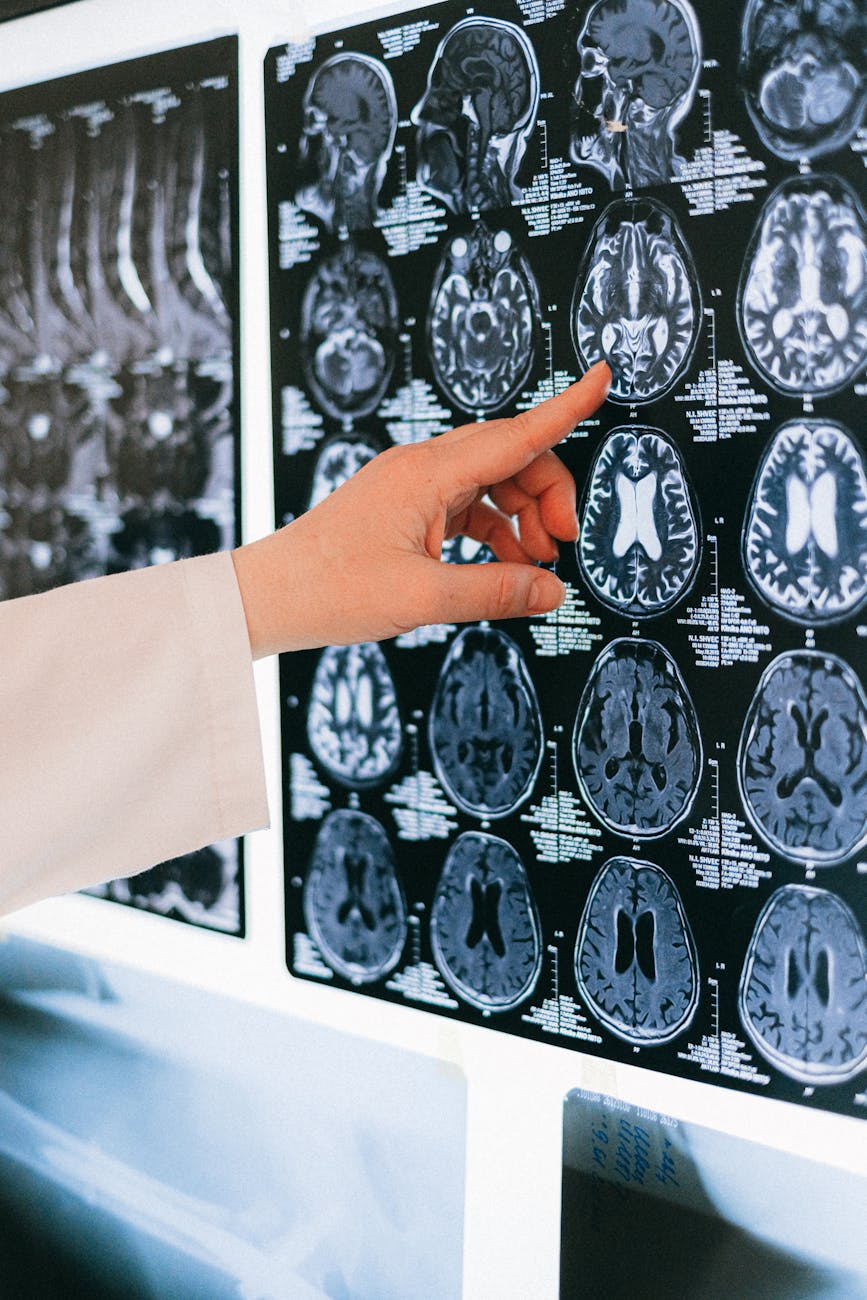
Colorado researchers studied the accuracy of ChatGPT-generated summaries of 30 radiology reports, along with four patients’ satisfaction with them. Of the 118 valid responses from patients, 108 indicated the ChatGPT summaries clarified details about the original report.

But ChatGPT sometimes overemphasized or underemphasized findings, and a small but significant number of responses indicated patients were more confused after reading the summaries, said Honce, who participated in the preprint study.

Meanwhile, after four weeks and a couple of follow-up messages from Miller in MyChart, Miller’s doctor ordered a repeat of her blood work and an additional test that Miller suggested. The results came back normal.

Miller was relieved and said she was better informed because of her AI inquiries.

“It’s a very important tool in that regard,” Miller said. “It helps me organize my questions and do my research and level the playing field.”

KFF Health News is a national newsroom that produces in-depth journalism about health issues and is one of the core operating programs at KFF—an independent source of health policy research, polling, and journalism. Learn more about KFF.

Subscribe to KFF Health News’ free Morning Briefing.

This article first appeared on KFF Health News and is republished here under a Creative Commons Attribution-NoDerivatives 4.0 International License.

This article also appeared on NPR.ORG.

AI in Medical Education

I graduated from college, medical school, and residency without using a computer for training or patient care. When computers and the internet came into widespread use, medical education and medical practice changed to embrace that new technology.

Now AI is doing the same thing. Here you can learn how Harvard Medical School is building artificial intelligence into the curriculum to train the next generation of doctors.

Reader Reflection and Response

I hope you have learned something new in this post, or it confirms something you already knew.

How are you using technology to manage your healthcare? Do you use options such as

  • health record portals
  • online scheduling
  • video visits
  • internet search for medical information, with or without AI

Were you aware that doctors are using AI to create office notes and result summaries?

What concerns do you have about the value and safety of using AI in healthcare? What else do you need to know or want to learn about AI use ?

Cover Image

The cover image was created by the Jetpack AI Assistant from Automatic, Inc.

Exploring the HEART of Health

I hope the information in this post gives you inspiration.

I’d love for you to follow this blog. I share information and inspiration to help you turn health challenges into health opportunities.

Add your name to the subscribe box to be notified of new posts by email. Click the link to read the post and browse other content. It’s that simple. No spam.

I enjoy seeing who is new to Watercress Words. When you subscribe, I will visit your blog or website. Thanks and see you next time.

Medical stethoscope and heart on a textured background

Dr Aletha