updated September 15, 2025
We recognize, honor, and appreciate all women physicians in September every year. But a few have gone “above and beyond” in service to their country and healthcare. One has even “sacrificed her life for space research.”
Here are stories about some of them
Dr. Margaret Rhea Seddon
When she graduated from the University of Tennessee Medical School in 1973, Margaret Rhea Seddon was one of few women. She was the only woman in her surgical residency in Memphis. She also earned a pilot’s license.
While in college, she watched the Apollo 11 moon landing, which sparked her interest in space. In 1978, NASA chose her to be among the first class of six female Astronaut candidates.
Dr. Seddon served 30 days in space on three separate missions.
- Discovery, STS-51D, 1985
- Columbia, STS-40, Spacelab Life Sciences in 1991
- Columbia, STS-58, Spacelab Life Sciences-2, 1993
On the first two missions, Dr. Seddon served as Mission Specialist, and as Payload Commander in charge of life science research on the last.
After 19 years at NASA, she served as Assistant Chief Medical Officer for Vanderbilt Medical Group in Nashville. She founded Lifewing Partners, which teaches aviation-based healthcare.
Dr.Seddon’s honors include induction into the Tennessee Aviation Hall of Fame, the Tennessee Women’s Hall of Fame, and the Astronaut Hall of Fame.
Dr. Seddon and her astronaut husband, Robert L. Gibson, have four children and three grandchildren. She belongs to the DAR, Daughters of the American Revolution, which recently honored her in their monthly newsletter (and from which I prepared this bio of her).

Dr. Mae Jemison
While an undergraduate at Stanford University in California, Mae Jemison felt and fought racial injustice, serving as President of the Black Student Union. She went on to earn a Doctor of Medicine at Cornell University in 1981. She served in the Peace Corps as a Medical Officer in Africa and then started a private medical practice.
As a child, she was intrigued by the Space Program and wondered why there were no women astronauts. However, she was inspired by a fictional female astronaut played by African American actress Nichelle Nichols, Lieutenant Uhura on the Star Trek television show.
When Sally Ride became the first American woman in space in 1983, Dr. Jemison applied to the astronaut program at NASA in 1985. Due to the Space Shuttle Challenger disaster in 1986, NASA took a break from accepting new people. She applied again in 1987 and was one of 15 people chosen out of 2,000 applications.
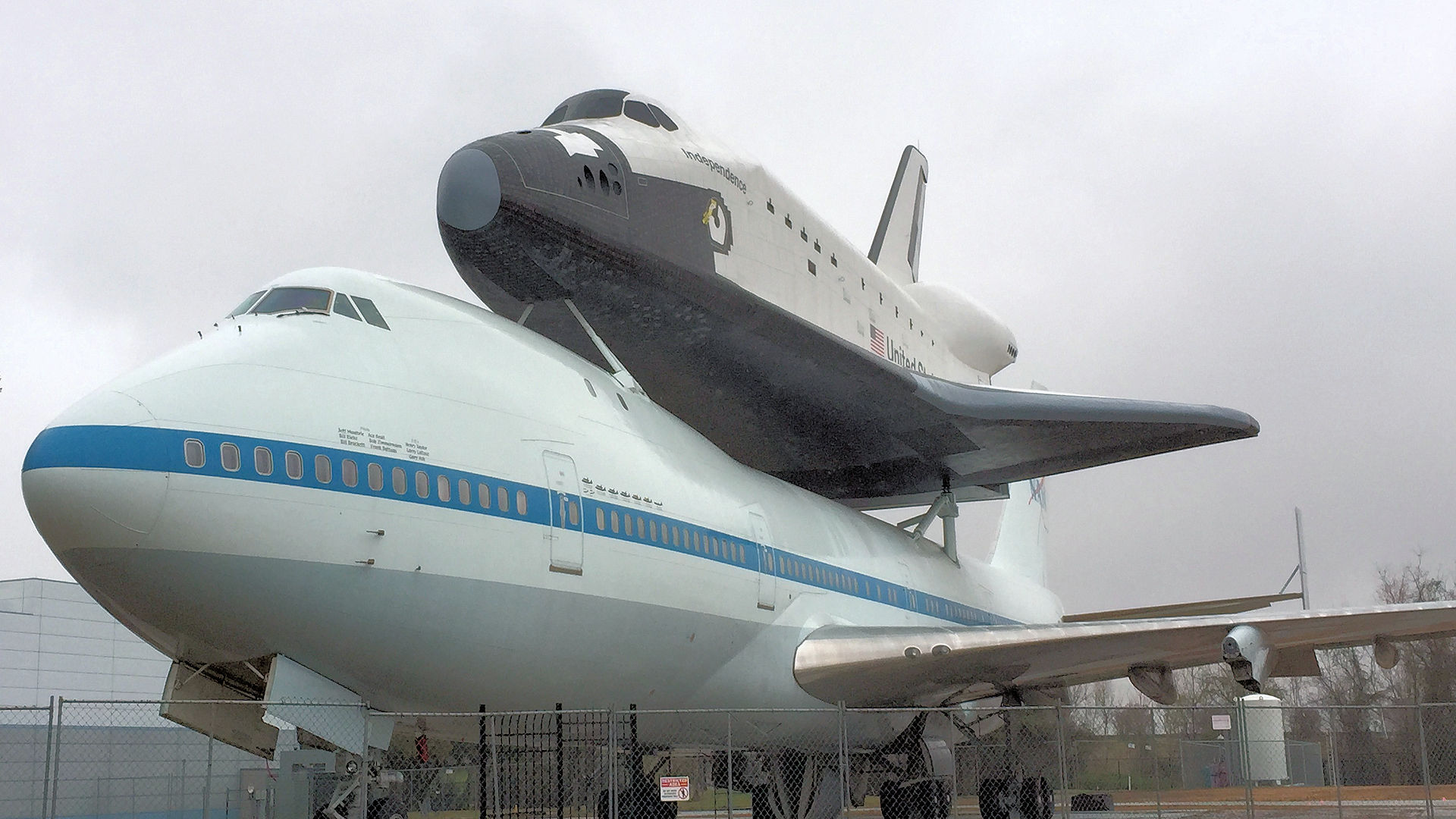
On September 12, 1992, Dr. Jemison and six other astronauts flew into space on the the space shuttle Endeavor, making her the first African American women in space. The crew flew 127 orbits around the Earth and returned to the Kennedy Space Center in Florida on September 20, 1992.
Dr. Jemison left NASA in 1993 after serving as an astronaut for six years . She started The Jemison Group, a consulting company that encourages science, technology, and social change. She also began teaching environmental studies at Dartmouth College and directed the Jemison Institute for Advancing Technology in Developing Countries.
Dr. Jemison is leading the 100 Year Starship project through the United States Defense Advanced Research Projects Agency (DARPA). This project works to make sure human space travel to another star is possible within the next 100 years. She also serves on the Board of Directors for many organizations including; the Kimberly-Clark Corp., Scholastic, Inc., Valspar Corp., Morehouse College, Texas Medical Center, Texas State Product Development and Small Business Incubator, Greater Houston Partnership Disaster Planning and Recovery Task Force, and the National Institute of Biomedical Imaging and Bioengineering.
Dr.Jemison has been inducted into the National Women’s Hall of Fame, National Medical Association Hall of Fame and Texas Science Hall of Fame.
Perhaps one of her favorite “honors” was appearing in an episode of Star Trek. Dr. Jemison became the first real astronaut to be in Star Trek: The Next Generation. She played Lieutenant Palmer in the episode, “Second Chances.”
taken from a bio of Dr. Jemison by Kerri Lee Alexander, NWHM Fellow | 2018-2019

Dr. Laurel Salton Clark
Dr. Laurel Clark served her country as a flight surgeon with the U.S. Navy. She along with her husband, Dr. Jonathon Clar,k joined NASA as astronauts.
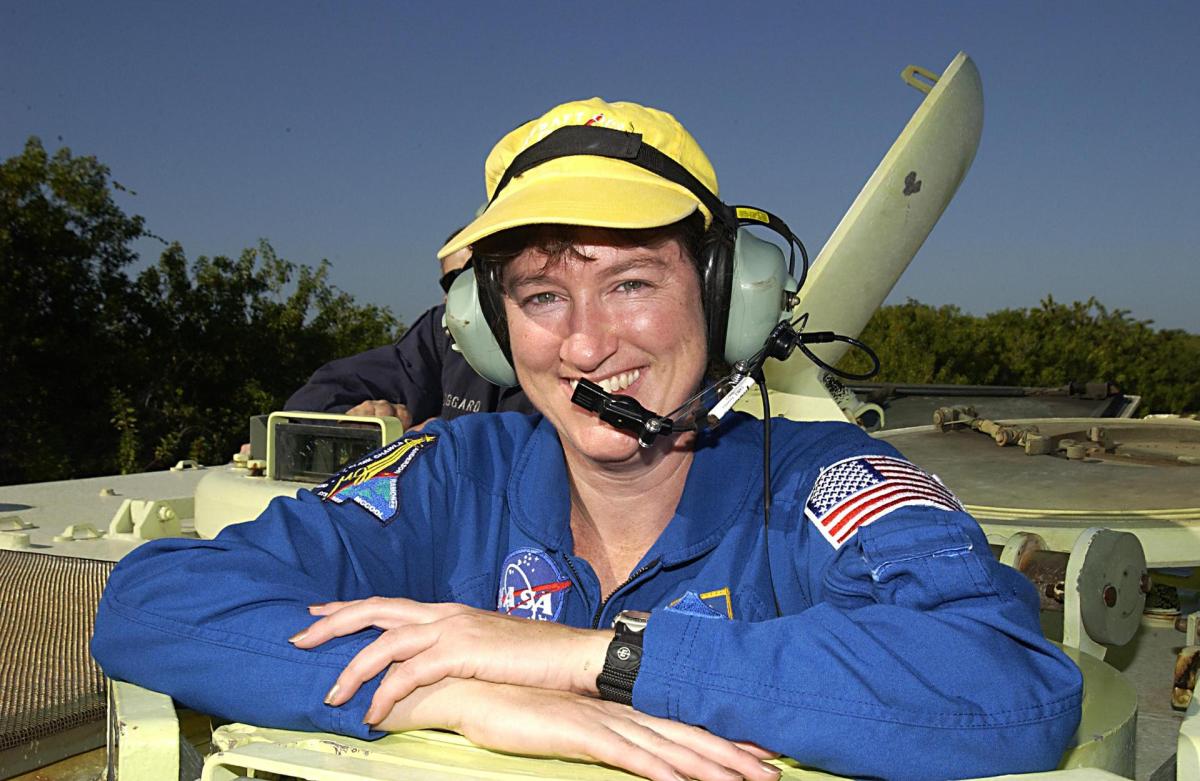
The cover image for this post is of Dr. Clark during training on the operation of an M113 armored personnel carrier during Terminal Countdown Demonstration Test activities, a standard part of launch preparations, dated December 18, 2002. It is used with the permission of NASA.
Dr. Clark made her first space flight on Space Shuttle Columbia during STS-107 as a mission specialist. The extended-duration mission was dedicated to scientific research. The STS-107 crew successfully conducted more than 80 experiments.

On February 1, 2003 Clark and the STS-107 crew perished during re-entry as Columbia broke up over Texas en route to a landing in Florida. She amassed 15 days, 22 hours and 20 minutes in space.

During a memorial service at Johnson Space Center in Houston, Texas, on Feb. 4, 2003, President George W. Bush emphasized Clark’s love for her family and her work.
“Laurel Salton Clark was a physician and a flight surgeon who loved adventure, loved her work, loved her husband and her son,” he said.
A friend who heard Laurel speaking to Mission Control said there was a smile in her voice. Laurel conducted some of the experiments as Columbia orbited the Earth and described seeing new life emerged from a tiny cocoon. ‘Life,’ she said, ‘continues in a lot of places and life is a magical thing.'”
In this 2008 emotional interview, Dr. Jonathon Clark remembers his wife, who “sacrificed her life for space research.”
Exploring the HEARTS of women in medicine and space
Thank you for reading this post. Please follow this blog and me on social media.
I share information and inspiration to help you transform challenges into opportunities for learning and growth.
Add your name to the subscribe box to be notified of new posts by email. Click the link to read the post and browse other content. It’s that simple. No spam.
I enjoy seeing who is new to Watercress Words. When you subscribe, I will visit your blog or website. Thanks and see you next time.
Doctor Aletha
- About Dr. Aletha
- How to Use this Site
- Make Your Life Easier
- Search by Category
- Share the HEART of health
- my Reader Rewards Club
- RoboForm Password Manager