The United States voters elected a new president, Donald Trump, and a new legislature in 2016, both Republican. Analysts expect major changes in policy and law after 8 years of Democratic control, especially regarding the ACA, Affordable Care Act (often dubbed ObamaCare)
Since his election, President-elect Trump says there are two features of the ACA he would like to see preserved-(in an interview with Leslie Stahl on November 13, 2016)
Prohibition of insurance denial for pre-existing conditions
Covering young adults age 18-26 years old on their parents’ insurance plan
the Republican party’s platform on health care.
While similar to the President-elect’s plan, it is broader in scope and more specific.
The Republican Platform includes:
Repeal of the Affordable Care Act
Protect insurance discrimination for preexisting conditions as long as continuous coverage is maintained
Allow people to buy insurance across state lines
Make individually purchased health insurance tax deductible
Limit federal spending on Medicaid, allowing the states more leeway in administering the program through block grants
Changes to Medicare- providing people under 55 years with a traditional Medicare option or a premium support system of competing plans; raising the age of eligibility for Medicare.
the Democratic Party supports
Continue building on the ACA to achieve universal health care
Provide a “public option” plan and allow people over age 55 years to buy-in to Medicare
Make premiums more affordable and reduce out-of-pocket costs to patients
Cap out-of-pocket monthly drug costs
Permit importation of lower-priced drugs from other countries
Allow Medicare to negotiate drug prices directly with manufacturers
Expand funding for community health centers
Mr. Levitt is Senior Vice President for Special Initiatives at the Kaiser Family Foundation and Co-Executive Director of the Kaiser Initiative on Health Reform and Private Insurance. He summarizes his review this way-
“The ACA has increased insurance coverage by 20 million people and is now the status quo in our health care system. Fully repealing it would be very disruptive.
At the same time, the public remains divided on the law, so building on it will also be controversial.”
He provides eye surgery free of charge to people unable to pay in his home state of Kentucky.
He has travelled around the world as a volunteer eye surgeon, providing care to people unable to pay; a recent trip was to Guatemala. He has received awards for his humanitarian work.
An ophthalmologist is a physician (doctor of medicine, MD, or doctor of osteopathy, DO) who specializes in the medical and surgical care of the eyes and visual system and in the prevention of eye disease and injury.
Dr. Carson’s mother, Sonya, one of 24 children, married at age 13 ;her husband abandoned her when Dr. Carson and his brother were young boys. An uneducated illiterate woman, she taught herself to read, and required her sons to read books weekly.
While he was growing up, his family depended on food stamps to have enough to eat.
At age 8, after hearing a missionary doctor speak at his church, he decided to become a physician.
He had such poor vision, he was almost legally blind. His grades improved when he started wearing glasses.
As a teenager, he had such a quick and fiery temper, her feared he might kill someone.
Both he and his brother were in JROTC while in high school; his brother served in the Navy during the Vietnam War.
In high school he played clarinet and developed a love of classical music, something he would share with his future wife Candy.
During college he worked at the Ford Auto plant and at Chrysler.
He and Candy lived in Australia for one year so he could train in neurosurgery there- and his first child was born in Australia that year.
His third child was born at home- and he did the unplanned, quick delivery while his mother dialed 911 for help.
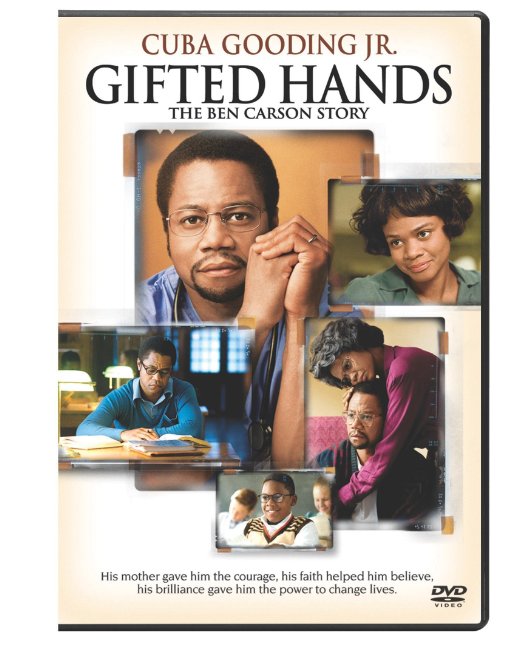
Neurosurgery is the surgical specialty that deals with the nervous system, including the brain and spinal cord. Long before Dr. Carson became involved in politics, he was known for his pioneering work in brain surgery. He discusses this work in his autobiography, which was also made into a movie of the same name. In the movie, one of my favorite actors, Cuba Gooding Jr., played Dr. Carson.
Dr. Carson specialized in two difficult and dangerous types of surgeries.
In hemispherectomy half of the brain is surgically removed as a treatment for severe, intractable seizures. It is only used as a last resort, is not always successful and can cause paralysis on one side of the body. Dr.Carson was known as an expert in this surgery.
Conjoined or Siamese twins joined at the head are rare, occurring in 1 in 2 million births.
“In 1987, Carson attracted international attention by performing a surgery to separate 7-month-old occipital craniopagus twins in Germany.
Patrick and Benjamin Binder were born joined at the head. Their parents contacted Carson, who went to Germany to consult with the family and the boys’ doctors. Because the boys were joined at the back of the head, and because they had separate brains, he felt the operation could be performed successfully.
On September 4, 1987, after months of rehearsals, Carson and a huge team of doctors, nurses and support staff joined forces for what would be a 22-hour procedure. Part of the challenge in radical neurosurgery is to prevent severe bleeding and trauma to the patients.
In the highly complex operation, Carson had applied both hypothermic and circulatory arrest. Although the twins did suffer some brain damage and post-operation bleeding, both survived the separation, allowing Carson’s surgery to be considered by the medical establishment the first successful procedure of its kind.”(from Ben Carson bio)





 watercress words by Dr Aletha