Avoid Financial Scams: Key Tips to Stay Safe

In this post I discuss the pervasive issue of money-related scams, outlining four key signs. I explain how to report possible scams while emphasizing caution in sharing personal information to protect you and your money.

updated May 4, 2025

Listen or read the news, and you will notice that money gets people into trouble; or people get into trouble because of money.

People misuse money themselves, or trick or force someone else into making bad money decisions.

Recognize the four basic signs of a scam:

  1. Scammers pretend to be from a familiar organization or agency, like the Social Security Administration. They may email attachments with official-looking logos, seals, signatures, or pictures of employee credentials.
  2. Scammers mention a problem or a prize. They may say your Social Security number was involved in a crime or ask for personal information to process a benefit increase.
  3. Scammers pressure you to act immediately. They may threaten you with arrest or legal action.
  4. Scammers tell you to pay using a gift card, prepaid debit card, cryptocurrency, wire or money transfer, or by mailing cash. They may also tell you to transfer your money to a “safe” account.

What to do when you suspect a scam

Ignore scammers and report criminal behavior. Report Social Security-related scams to the SSA Office of the Inspector General (OIG).

www.ssa.gov/scam

If you ever question whether a message or email is legit, call the business or go to its validated website. Even then, don’t release your personal information until you are absolutely sure.

Report fraud, scams, and bad business practices here

ReportFraud.ftc.gov

Mark scam emails and texts as “junk” and delete. If options to report are offered by your phone carrier or email provider, follow those instructions.

What motivates scammers?

Scammers prey on honest people’s needs, emotions, trust, fear, and misinformation.

Fraud, cheating, stealing, scamming, hacking, counterfeiting, embezzlement, blackmail- people are endlessly creative when using and abusing money.

The Bible connects the desire for or love of money with evil.

“But godliness with contentment is great gain. For we brought nothing into the world, and we can take nothing out of it. 

But if we have food and clothing, we will be content with that. 

Those who want to get rich fall into temptation and a trap and into many foolish and harmful desires that plunge people into ruin and destruction. “

For the love of money is a root of all kinds of evil. “

1 Timothy 6:6-10, NIV

Holy Bible, New International Version®, NIV® Copyright ©1973, 1978, 1984, 2011 by Biblica, Inc.® Used by permission. All rights reserved worldwide.

Advice from the Federal Trade Commission

Spot a scam

  • Scammers PRETEND to be from an organization you know.
  • Scammers say there’s a PROBLEM or a PRIZE.
  •  Scammers PRESSURE you to act immediately.
  • Scammers tell you to PAY in a specific way.

Avoid a scam

  • Don’t give your personal or financial information in response to a request that you didn’t expect.
  • Block unwanted calls and text messages. 
  • Resist the pressure to act immediately. 
  • Know how scammers tell you to pay. 
  • Stop and talk to someone you trust.  

Exploring the HEART of health

Thanks for reading and sharing this post, information we all can use; it only takes a moment of carelessness to create hours of financial hardship. Sign up to follow this blog for more information and inspiration to live safely and healthily.

I’d love for you to follow this blog. I share information and inspiration to help you turn health challenges into health opportunities.

Add your name to the subscribe box to be notified of new posts by email. Click the link to read the post and browse other content. It’s that simple. No spam.

I enjoy seeing who is new to Watercress Words. When you subscribe, I will visit your blog or website. Thanks and see you next time.

Dr. Aletha

RoboForm Password Manager

Go to this link to try RoboForm Free;

if you like it you can upgrade to RoboForm Everywhere version with all the features

With Roboform, you will have one less thing to feel stressed about. (affiliate link)

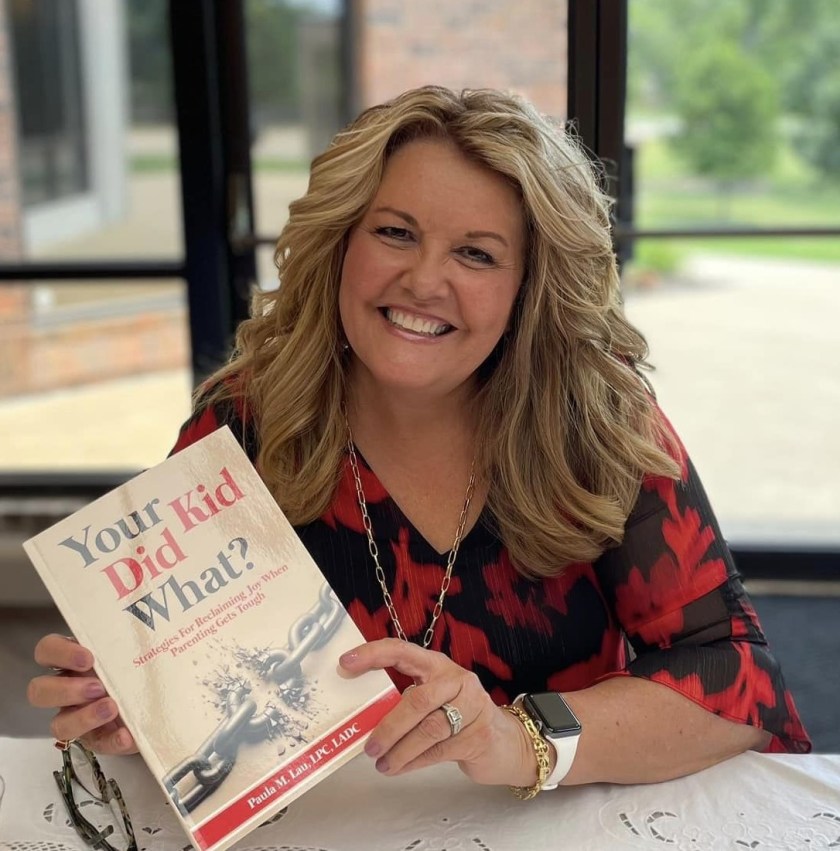
YOUR KID DID WHAT? -a book review

“Your Kid Did What?” by Paula M. Lau, LPC, LADC, is a candid memoir and guide for parents facing unexpected challenges with their children’s choices. Through personal experiences, Paula offers practical strategies and faith-based insights for coping with difficult situations, emphasizing self-care, establishing boundaries, and seeking support.

YOUR KID DID WHAT?

Strategies for Reclaiming Joy When Parenting Gets Tough

By Paula M. Lau, LPC, LADC

Your Kid Did What? by Paula Lau licensed professional counselor is a candid memoir and expert guide for parents who get “slapped in the face” by a child’s unexpected and challenging life choices.

Even in the best circumstances, children may choose lifestyles or behaviors parents don’t understand or approve of. Parents feel disappointed, angry, or even fearful for their child’s choices. They wonder what they did wrong or did not do right, and spiral into denial, blame, and rejection.

Paula’s personal story

Paula felt unprepared for her family’s struggle, and as she attempted to fix the situation she made missteps that made things worse and later regretted. She felt isolated and alone when some of her Christian friends offered little if any support or just withdrew.

In her role as a professional counselor, Paula had seen this happen to others, but when it happened to her and her husband she was surprised at the emotions it stirred up. After a time of anguish and soul searching, she realized the only way to deal with her pain was to turn to God with her Christian faith.

She needed a path forward into acceptance, so she sought answers by reading the Bible, praying, and listening to Christian music. She also applied the same psychological principles she skillfully uses with clients and students.

She shared her insights by teaching a class at her church leading to the idea of a book. She felt God directing her to be discreet in what she revealed about her family’s experience and to ask for and receive her son’s permission to share the story that involves him.

Paula’s insights and recommendations

In her book, Paula describes what happens when parents meet the unexpected challenge of a “prodigal” child, a “frightening detour”, issues like sexuality, school dropout, substance use, unhealthy relationships, rejection of faith, or legal problems. Parents may cope with denial, blame-shifting, magical thinking, and a martyrdom complex, all counterproductive.

She provides strategies for dealing with fear, negative thinking, and anxiety. She urges practical self-care like sleep and exercise. She recommends physical, emotional, and mental boundaries and explains how to set them.

“Our emotions are often indicators of a deeper internal struggle that may not yet be verbal. We may not be able to voice the realization our boundaries are being violated, but our feelings will alert us something is wrong. We can experience internal discomfort.”

In each chapter, Paula provides questions for self-reflection with space to record your insights. Each chapter concludes with a suggested Bible reading, a prayer, and a song by a Christian music artist.

Written with a Faith-based Perspective

This book is unapologetically Christian faith-based but does not disparage other faiths or no faith. If you share her Christian worldview, you will appreciate how Paula combines that with a psychological framework for dealing with trauma. Others can still benefit from her insights and professional expertise. You may choose to look further into the source of her faith.

Read an excerpt from Your Kid Did What? at this link

A Personal Connection

Paula and I attend the same church so I have known her for several years. I have felt her kindness and generosity. She did not ask me to review her book but gave me a complimentary PDF copy when I offered.

I talked to her about her book and asked a few questions. She writes that God “revealed” things to her. She explained she hears from God through the Bible or sermons, and occasionally something she “feels deep within.”

I asked Paula what she wanted readers to take from her book. She said there’s no “5-step” formula to dealing with these situations. But she offered these suggestions.

  • Don’t isolate yourself. Talk to a trusted person.
  • Be willing to adapt and change.
  • Be prepared for difficult conversations.
  • Listen to the Lord.

Early In the book she writes

I endeavor to help you build a sturdy foundation on which to stand as you move forward, despite what life throws at you.

These activities can strengthen you in the worst times and bring transformation when you thought it was impossible.

We need these outcomes in any challenging situation no matter the source. I personally found Paula’s book helpful and insightful and I believe you will also.

The author-Paula Lau

Paula M. Lau is a licensed professional counselor and licensed alcohol and drug abuse counselor. She earned a bachelor’s degree in Psychology from Doane University and a master’s in Christian Counselling from Oral Roberts University. She has worked as a private therapist and at mental health agencies.

Now Paula serves as a crisis and referral counselor for middle and high school students at Jenks Public Schools, one of the largest school districts in Oklahoma.

In that capacity, she has responded to multiple crises at the schools involving student and staff deaths over the past 15 years, providing staff support and resources to families in the community.

Paula’s roles include assessing and counseling students and their families regarding depression, anxiety, substance abuse, and suicide risk. She also consults for substance abuse education classes and referrals for counseling.

Paula has written articles and curricula about substance abuse and mental health issues. She received the Vision of Excellence Award for her outstanding contributions to the Jenks Public School District.

Paula serves on the Women’s Ministry team at her church. She lives in Tulsa Oklahoma with her husband Rick and one sweet, American bulldog. They have three adult sons.

Paula enjoys speaking at church, business, community, and school events.

Find Paula on her website paulalau.com and Instagram @healthyperspectiveswithPaula.

You can reach her at paula.lau02@gmail.com

Your Kid Did What? is published by Lisa D. Vest, Melbourne, FL

Printed by Camden House Books

Distributed by getmynewbook.com

Sources for Scripture

In Your Kid Did What? Paula used Scripture from the New Living Translation (NLT) and the New King James Version (NKJV) translations of the Bible. You can read these and other Bible translations free at this link, also available as an app.

YouVersion

Exploring the HEART of Health

Thanks for reading this post and for sharing. If you don’t need this help, likely someone you know does.

This post is not intended to diagnose or treat any mental or emotional disorder. Seek help from a mental health professional if you or your family have concerns about these issues.

I’d love for you to follow this blog. I share information and inspiration to help you turn health challenges into health opportunities.

Add your name to the subscribe box to be notified of new posts by email. Click the link to read the post and browse other content. It’s that simple. No spam.

I enjoy seeing who is new to Watercress Words. When you subscribe, I will visit your blog or website. Thanks and see you next time.

Dr. Aletha

Try Dwell Bible App

Using this affiliate link helps support this blog and my mission to share the heart of health wherever needed all over the world. Please join me.

Cover photo

The cover photo is from Lightstock.com, a stock photo site ( affiliate link). Try free for 14 days.