This post talks aboit giving, how and why. It contrasts the self-awareness of generosity, illustrated through characters like George Bailey from “It’s a Wonderful Life” and Ebenezer Scrooge from “A Christmas Carol.” Both highlight life’s impact through generosity.
updated December 20, 2025
“Watch out! Don’t do your good deeds publicly, to be admired by others, for you will lose the reward from your Father in heaven.
When you give to someone in need, don’t do as the hypocrites do—to call attention to their acts of charity! ….they have received all the reward they will ever get.
But when you give to someone in need, don’t let your left hand know what your right hand is doing.
Give your gifts in private, and your Father, who sees everything, will reward you.”
Have you ever made a charitable donation online or by mail, where they asked you to check a box “make my donation anonymous”? is that what the Bible means by “giving gifts in private”.
And be rewarded?
The Bible scripture passage quoted above, from Jesus’ Sermon on the Mount, seems to tell us we should give in secret, not letting anyone else know.
But Bible scholars interpret it less literally. Considering it in the context of the whole sermon, they suggest we shouldn’t give just to impress people nor brag about what we give, not that it always has to be secretive (although sometimes it should be.)
Giving from the Left or Right
I don’t think Jesus was making a political statement here. Nor was he just using hyperbole, an exaggerated statement or claim not meant to be taken literally. But I do think he was using it to make a point.
Because not knowing one side of one’s body is a real thing.
Hemispatial Neglect
People with the syndrome of hemispatial neglect experience reduced awareness of stimuli on one side of space. This may occur after damage to the brain due to a stroke or trauma.
People with hemispatial neglect are often unaware of their condition. Friends or relatives might suggest they look to their neglected side but that instruction misunderstands the problem they have with navigating the space around them… people are not aware that something is missing, so why would they seek it out?
A single image of a human brain using a magnetic resonance imaging (MRI) machine.
Source: Dr. Leon Kaufman. University Of California, San Francisco
Creator: Unknown Photographer
used courtesy National Cancer Institute
So imagine not knowing what’s on the left side of your body. Well, that’s how generous we should be; give (as if) we don’t know what we gave.
(Obviously, if we take that too literally, and waste our money,we limit our ability to be generous; we still need to be financially prudent. )
The man who didn’t know what he had given
Every year at Christmas time a classic movie makes its way to network television and streaming services. Like many famous movies, the script was adapted from a book, or rather a short story titled “The Greatest Gift”.
George was a man who had a good life until things started going wrong, so badly that he concluded his life had been a failure and he had never done anything right or good in his entire life. He even contemplated suicide.
That is until a mystery “person” came along and showed him how the world would have been without George’s life and good deeds. Poverty, crime, unemployment, alcohol abuse, and even deaths would have occurred had it not been for George’s life. And he had no idea!
His left hand didn’t know what his right hand had done.
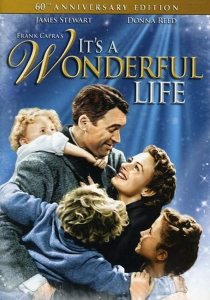
Of course you know I’m talking about George Bailey from the classic movie It’s a Wonderful Life, released in January 1947, nominated for 5 Academy Awards, and considered one of the best films ever made. But most people like it because it’s a feel-good movie that can make you laugh and cry.
Of course, Ebenezer Scrooge of Charles Dickens’ A Christmas Carol didn’t have George’s problem. He knew exactly what he had done to help others-nothing!
It took dying (almost) and three scary visitors to show Ebenezer how stingy his hands had been, never giving anything away, and convincing him that generosity was better than miserliness and loneliness. At the end of the story, both of his hands were busy passing out food and gifts to strangers, friends, and family.
Here is a post about Charles Dickens, a renowned English writer, of “A Christmas Carol” and “The Pickwick Papers.” His storytelling introduced terms like Pickwickian syndrome, reflecting his influence on culture and health. Dickens also advocated for children’s hospitals through powerful speeches, merging his literary talent with social responsibility .
Therefore, because God is so generous to us, we’re to be lavishly generous to others. Who has been “lavishly generous” to you?
Sharing the HEART of generosity and giving
I’d love for you to follow this blog. I share information and inspiration to help you transform challenges into opportunities for learning and growth.
Add your name to the subscribe box to be notified of new posts by email. Click the link to read the post and browse other content. It’s that simple. No spam.
I enjoy seeing who is new to Watercress Words. When you subscribe, I will visit your blog or website. Thanks and see you next time.
In Boys in the Boat, the United States Olympic Rowing team of 1936 beat incredible odds to win the gold medal. But the meat of the book explores in detail how each man came to be in that boat, especially Joe Rantz.
We like sports, even if we don’t do sports, we like watching others compete. And we like books, television shows, and movies about sports. Have you noticed how many sports stories there are?
(This post offers multiple affiliate links to sites that offer a commission to this blog for purchases made there.)
Some sports stories are about fictional characters and situations-
Rocky
Field of Dreams
Bleachers
Friday Night Lights
Million Dollar Baby
But the ones that most catch our attention and our hearts are those about real people.
Seabiscuit
Chariots of Fire
A League of Their Own
The Blind Side
Rowing- athletes in a boat
Most of us know something about major sports, like football, basketball, and baseball. We probably know less about horse racing, boxing, track, and ice skating. But we know little about rowing since it is rarely if ever on the sports pages or television broadcasts.
In Boys in the Boat, the United States Olympic Rowing team of 1936 beat incredible odds to win the gold medal. But the meat of the book explores in detail how each man came to be in that boat, especially Joe Rantz.
Based on interviews with him by the author, we learn about Joe’s painful early family life, struggle to pay for college, and the grueling physical challenges of preparing for competitive rowing.
At that time the sport of rowing was dominated by the sons of wealthy families and the Ivy League colleges they attended. By contrast, the University of Washington athletes who made up the 1936 Olympic rowing team came from working-class families and had to work their way through college. That they did so during a depression makes their achievement even more remarkable.
You may be surprised to learn how much the sport of rowing physically and mentally challenges the human body. To be competitive, the crew’s eight rowers must work synchronously as the leader, known as the coxswain, calls out commands to set a pace that is fast enough to win but sustainable for the length of the race.
Germany’s Olympic games
Interspersed in the boys’ stories, Daniel Brown outlines the events unfolding in Germany, as Hitler and the Nazi party rose to power. As part of their plan to dominate Europe and eventually the world, they plan to make the 1936 Olympic games in Berlin a showcase of German wealth, knowledge, power, and athletic ability.
Specifically, Hitler hoped the German rowing team would beat England and Italy, the teams historically likely to win. The story of his reaction to an American team that not only challenged but upset the status quo completes a book worth reading.
What I learned from Boys in the Boat
From reading this book, I gained an appreciation for a sport that I previously knew nothing about. My husband and I listened to the audiobook while on a 12-hour car trip and it kept us interested and entertained. We were inspired by a story where perseverance, courage, loyalty, and commitment were celebrated and rewarded.
This story proves history lessons aren’t dull, boring, or outdated, but can offer us information and inspiration to help us explore the HEART of health
I’d love for you to follow this blog. I share information and inspiration to help you transform challenges into opportunities for learning and growth.
Add your name to the subscribe box to be notified of new posts by email. Click the link to read the post and browse other content. It’s that simple. No spam.
I enjoy seeing who is new to Watercress Words. When you subscribe, I will visit your blog or website. Thanks and see you next time.
I’d love for you to follow this blog. I share information and inspiration to help you transform challenges into opportunities for learning and growth.
Add your name to the subscribe box to be notified of new posts by email. Click the link to read the post and browse other content. It’s that simple. No spam.
I enjoy seeing who is new to Watercress Words. When you subscribe, I will visit your blog or website. Thanks and see you next time.
Dr. Aletha
Use these links to share the heart of health wherever you connect.















 watercress words by Dr Aletha