Driving Miss Norma- why saying yes to life matters

When faced with death, Norma chose living. And in doing so, she and her family learned what really matters at the end. Through this book, they share what they learned with us.

a review of Driving Miss Norma

By Tim Bauerschmidt and Ramie Liddle

When I first reviewed this book the tag line was

One Family’s Journey Saying “Yes” to Living

the most recent edition now calls it

An Inspirational Story About What Really Matters at the End of Life

And it’s both of those. When faced with death, Norma chose living. And in doing so, she and her family learned what really matters at the end. Through this book, they share what they learned with us.

(This post contains affiliate links.)

I first learned about Norma Bauerschmidt on Facebook when a friend shared a video about her. She was a 90 year old woman who decided to spend the last months of her life “on the road” travelling with her son in a motorhome. She was diagnosed with cancer but decided to forgo treatment so she could enjoy her remaining time.

I didn’t learn more about her until I saw this book.  I decided to read it, expecting a feel good entertaining read. The story turned out to be far more complex than the little I knew.

Driving Miss Norma tells the story of Norma Bauerschmidt, a WWII WAVE veteran, wife, and mother. She was still in good health at 90 years of age, until she was diagnosed with cancer.

Her doctor recommended surgery to be followed by chemotherapy, and warned her the treatment and recovery would be long and difficult. She told him no, she would rather “hit the road” with her son and daughter-in-law and enjoy her life, seeing and doing things she had not had a chance to do before. And her doctor agreed, saying that is just what he would do.

Tim, her son, and Ramie, his wife, had already been living a nomadic life, travelling the country with their standard poodle Ringo in an Airstream travel  trailer they parked in campgrounds and  Walmart parking lots. They enjoyed travelling, seeing new places, meeting new people. They wondered how adding a 90 year old woman to their wandering lifestyle would work.

By the time they completed arrangements for Norma to join them, she was already frail, and as her illness progressed she needed even more attention and care. Tim and Ramie soon realized that this might be more difficult and complex than they imagined.

In the book, co-written by Tim and Ramie, they tell their stories also; the mid-life challenge of caring for aging parents, making end of life decisions and plans, and coping with parents’ death and  their subsequent grief. Having chosen not to have children, the role of caregivers was foreign to them, and one they had to painstakingly embrace and navigate.

By coincidence, Ramie had recently read the book Being Mortal  “a critical examination of end-of-life medical care.” Until then she had not thought much about the subject. But when she finished the book

“I knew my life had changed. The way I looked at the end of life had been flipped upside down and backward. I knew now it was time to have those tough conversations.”

(I reviewed this book at this link)

As they travelled, Ramie began writing about their adventures and posting on Facebook to close friends and family. She thought that other people might also be interested so she started a Page, Driving Miss Norma. They attracted a handful of followers initially, as she expected.

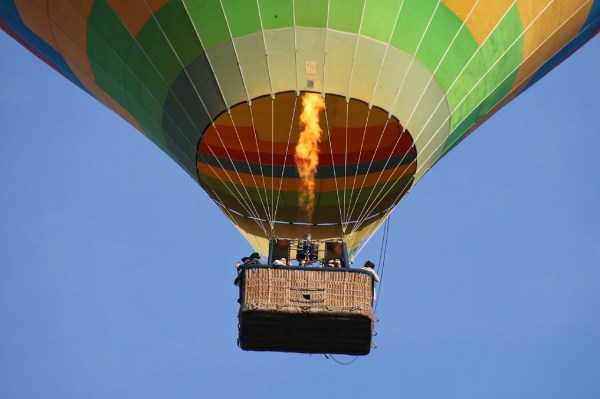
up close look at a hot air balloon
Norma went on her first and only hot air balloon ride (complimentary stock photo from Pixabay)

But after Norma’s story was reported on the Good News Network, followed by a CBS Evening News Story , the Page began adding  followers by the thousands.

The were alarmed, even fearful, of what they perceived as an intrusion on their privacy. Until now, they had deliberately avoided media in their isolated lifestyle. Then they began noticing how Norma’s story was resonating with people in a way they had not expected.

“We had suddenly and dramatically found ourselves in the middle of an international conversation about the meaning of life, illness, dying and love. We were learning on the fly how to open ourselves to holding so much raw emotion.”

Her story opened their lives to new people and situations they never imagined would happen. Rather than being a burden, Norma’s growing fame became the vehicle for them to grow closer to her, each other, and a whole new set of friends all over the country and the world.

“We had the support of people all over the world and that was breathing new energy into our days. Here were so many people pouring out their deepest fears, losses, and desires to us. They told us of their caregiving struggles. They shared with us their innermost desires- to make peace with their recently deceased father, to tell someone “I love you.”

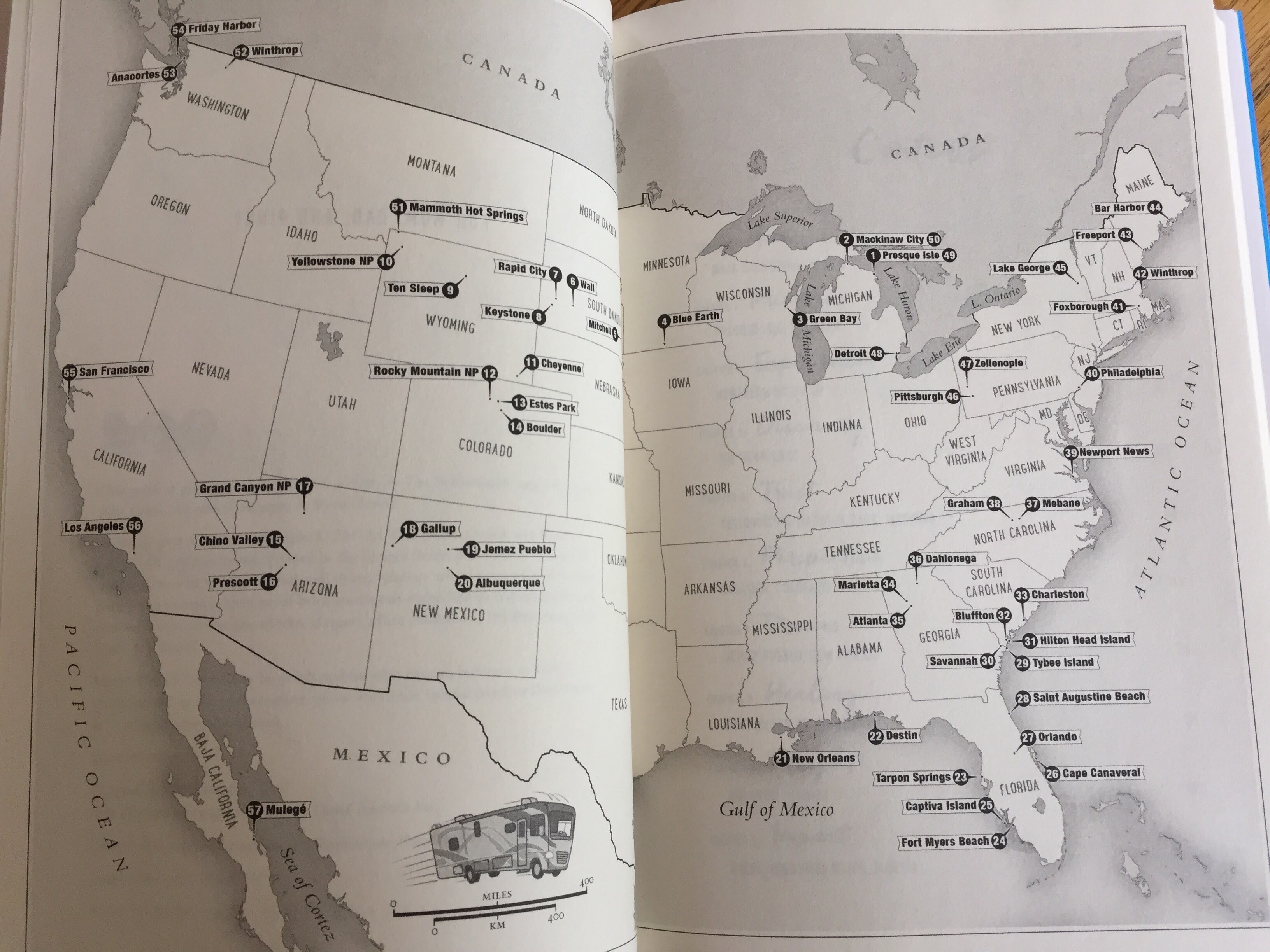
Throughout the story Tim and Ramie share about the places Norma visited (see map), people she met, from the common to famous, the foods she tried, sometimes for the first time, and activities she tried, also many for the first time, like riding a horse. They and the new friends they made shared food, fun, love, and laughter.

map of the United States
Norma visited all the sites marked on this map

But they also touch on the serious issues we all deal with sooner or later- aging, frailty, complex illness, terminal illness, end of life decisions, palliative care, death, and grief. They learned some important lessons about human relationships which they illustrate beautifully in their transparent writing.

“We learned how to greet people with open minds and open hearts…the lines that separate people into different boxes-religion and politics and race and age-blurred and faded and eventually disappeared. We got to see the truth in people, including in Norma: her glow, her tenacity, her joy, and her confidence.”

Tim and Ramie wrote the book after Norma’s death. They each took turns writing different chapters, and Ramie took all the photographs that illustrate it. But in a way Norma herself wrote the book, since it was the way she faced the final months of her life that produced the lessons her family learned and share with us in this book.

Norma kept a journal during their travels and after she died Tim and Ramie, with close friends, read it, and were somewhat surprised at what she wrote. Or rather, what she didn’t write.

“She did not write about cancer or fame- the two big themes of the trip for us. She did not write about the fear of dying or illness at all. Instead, she talked about life, living, and the things that brought her happiness:a sturdy wheelchair, mama and baby goats, a good hair perm, and her trusty sidekick Ringo.”

I feel sad that Norma’s trip did not bring her though my town so I could have met her. But there will be “Normas” in my life that I will meet, and perhaps someday I will be a Norma myself. When that happens I hope I remember the lessons this book teaches.

“Joy begets joy, love begets love, peace begets peace.”

Continue to follow Norma’s family at the web site Driving Miss Norma

sharing the HEART of living well

I hope you enjoyed this look at Norma’s book and will share this post on the social sites you meet up with friends. Please check out some of my other book reviews. Links are in the menu on the side bar (may be below if on a phone or tablet).Or just search.

Dr. Aletha

Dr. Charles Krauthammer- eternal Washington Nationals fan

When I read Charles Krauthammer book, Things That Matter, one of the most important things I learned wasn’t about politics, medicine, or ethics, subjects he knew well and wrote about often. I learned that he was a die hard Washington Nationals baseball fan.

When I read Dr. Krauthammer’s book, Things That Matter, one of the most important things I learned wasn’t about politics, medicine, or ethics, subjects he knew well and wrote about often. I learned that he was a die hard Washington Nationals baseball fan.

Now I don’t follow baseball, but from what he explained, they have a reputation for not being a good team. Nevertheless, he attended the games regularly (remember, he had to use a wheelchair due to quadriplegia) and supported them wholeheartedly.

Nationals in the baseball World Series

So here it is fall of 2019 and his beloved team is in the World Series, first time ever. In an interview, his son Daniel said this.

“He would have loved it. He would have been as happy as a little kid. He went to nearly all the Nationals home games for the whole time they were in D.C. He would have been at every playoff game.”

Daniel Krauthammer

Daniel edited Dr. Charles’ final book, The Point of it All, published after his death. I review that book below.

Here is a link to Daniel’s interview with Fox News.

Charles Krauthammer’s son reflects on dad’s love for Washington Nationals as team plays first World Series

If you wondered why Pulitzer prize winning journalist Charles Krauthammer quit his medical career to write a political column for the Washington Post newspaper, you’ll learn the answer in his newest and sadly last book. He explained

“I left psychiatry to start writing…because I felt history happening outside the examining room door. I wanted to…because some things matter, some things need to be said, some things need to be defended.”

THE POINT OF IT ALL :
A Lifetime of Great Loves and Endeavors

Dr. Charles Krauthammer died in 2018. In 2016 he started a new book but in 2017 was diagnosed with cancer. Treatment was initially successful, but multiple serious complications kept him hospitalized for many months during which he continued writing with his son Daniel’s and his wife Robyn’s help.

But the cancer recurred and this time further treatment would not be successful. We can thank Daniel for honoring his father’s dying wishes and finishing the book and facilitating the publication of The Point of It All.

Daniel wrote a helpful introduction to the book, explaining how it was put together. He also offered some personal reflections about his relationship with his father, and some insight into Dr. Krauthammer’s character and personality that he tended to keep private.

“My father’s writing…is not just thought-provoking but also feeling-provoking. His writing opens the mind, combining passion with intelligence, beauty with concreteness. “

Book outline

The book collects some of Dr. Krauthammer’s Washington Post columns, transcripts of speeches he gave, and text of a book on foreign policy that he was writing but had not published.

Most casual readers of Krauthammer will want to read Part I-People, where he discusses such diverse topics as

  • Ronald Reagan
  • Thomas Jefferson
  • Australia
  • Memorials
  • Chess and Sports
  • The space program
  • Medicine
  • Part II -Man and Society
  • Part III-Politics, Foreign and Domestic
  • Part IV-Competing Visions-America’s Role and the Course of World History
  • Part V-Speaking in the First Person


You can read the book straight through, or skip around, reading whatever chapter titles catch your attention. It was hard for me to pass up titles like

  • Why I love Australia
  • Man vs. Computer:Still a Match
  • Pluto and Us
  • They Die with Their Right On
  • Thought Police on Patrol
  • Just Leave Christmas Alone
  • The Climate Pact Swindle
  • Beauty and Soul

My favorite part of this book was the shortest-Part V, the few essays he wrote about himself, something Daniel said he didn’t like to do and would not have included.

“I’ve never wanted to make myself the focus of my career.”

And so in Beauty and Soul, he credits his wife of over 40 years with his success.

Her (Robyn’s) beauty and soul have sustained me these many years. I was merely the scribe.

Dr. Krauthammer, upon accepting a writing award

THE POINT OF IT ALL-A BOOK REVIEW

As a physician, I am intrigued and inspired knowing  Dr. Krauthammer completed medical school and residency after and despite sustaining a spinal cord injury which caused quadriplegia (paralysis from the neck down, preventing use of his arms and legs).   (This no doubt made his treatment and recovery from cancer surgery all the more difficult.) 

According to his son Daniel, his father also did not like to publicize or dwell on his or anyone else’s disability. He preferred to focus on what he could do, not on what he couldn’t do.

This excerpt is from a Washington Post column that is included in this book.

After watching videos in which  The price of fetal parts was discussed over lunch, Dr. Krauthammer wrote

“Abortion critics have long warned that the problem is not only the obvious — what abortion does to the fetus — but also what it does to us.

It’s the same kind of desensitization that has occurred in the Netherlands with another mass exercise in life termination: assisted suicide. It began as a way to prevent the suffering of the terminally ill. It has now become so widespread and wanton that one-fifth of all Dutch assisted-suicide patients are euthanized without their explicit consent.

ultrasound image of a 4 month old fetus
a prenatal ultrasonographic image of fetus at the four-month point in its gestation; public domain image used courtesy of the CDC/ Jim Gathany

There is more division about the first trimester because one’s views of the early embryo are largely a matter of belief, often religious belief.

One’s view of the later-term fetus, however, is more a matter of what might be called sympathetic identification — seeing the image of a recognizable human infant and, now, hearing from the experts exactly what it takes to “terminate” its existence.

The role of democratic politics is to turn such moral sensibilities into law. This is a moment to press relentlessly for a national ban on late-term abortions.”

THINGS THAT MATTER: Three Decades of Passions, Pastimes and Politics

My review of his memoir THINGS THAT MATTER has been one of my most viewed posts. If you haven’t read it I recommend it also.

Charles Krauthammer-THINGS THAT MATTER

I enjoyed listening to  Dr. Krauthammer’s memoir THINGS THAT MATTER: Three Decades of Passions, Pastimes, and Politics  

This book is a collection of  his more memorable opinion pieces as well as a memoir of his life, including medical school, his life-changing injury, psychiatric medical practice, his  journalism career, hobbies (chess and baseball) and life with his family.

A life with no regrets

Dr. Krauthammer wrote his last piece for The Washington Post barely two weeks before his death and that post concludes his final book. Dr. Krauthammer wrote,

“I leave this life with no regrets. It was a wonderful life — full and complete with the great loves and great endeavors that make it worth living. I am sad to leave, but I leave with the knowledge that I lived the life that I intended.”

Thanks for exploring the HEART of health with me.

Thanks for reviewing the life of the late Charles Krauthammer with me. Please share your reactions to Dr. Krauthammer’s work and share this post with your friends.

Dr. Aletha