As a practicing family physician, I occasionally saw patients concerned about a tick bite. Most of the time, they had already removed the tick but were concerned about the possibility of an infection. I was usually able to reassure them that the tick had not been attached long enough to transmit a disease. If they had symptoms or were not sure how long the tick had been on their body, I would prescribe an antibiotic to cover the most likely infection.
Humans can catch infectious diseases in multiple ways. The pathogens that make us sick can enter our bodies through water, food, the air, and even direct contact with other people or their bodily fluids like blood.
Another source is contact with animals, including ones we may not see. The vast majority of these, the vector-borne diseases, are caused by ticks, mosquitoes, fleas, flies, and lice.
Ticks are small arachnids in the mite family that feed on the blood of mammals and birds. Ticks can transmit bacteria, viruses, and parasites that can cause illness in humans and animals
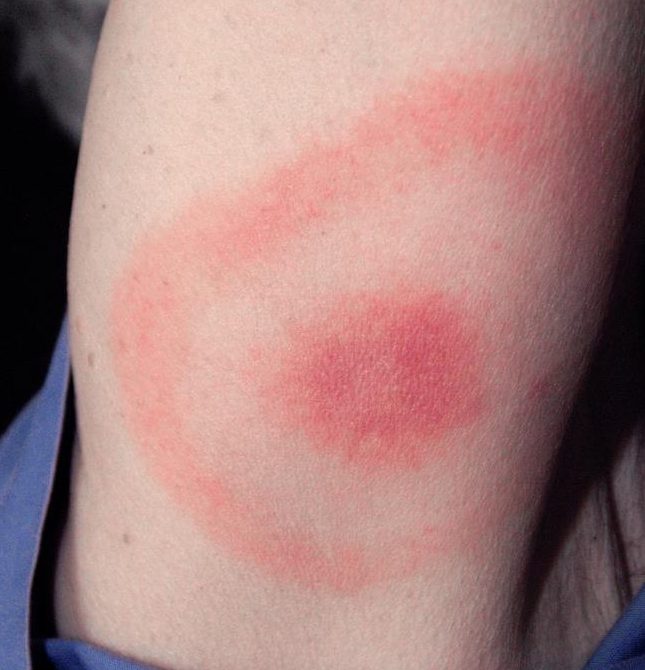
The most common tick-borne diseases in the U.S. include Lyme disease, anaplasmosis, babesiosis, and Rocky Mountain Spotted Fever. Symptoms typically include flu-like fever, chills, and fatigue, but can also involve unique indicators like a “bullseye” rash (Lyme disease). Most bacterial infections are successfully treated with antibiotics, making early diagnosis crucial. [1, 2, 3, 4]
Ticks can also cause non-infectious diseases. Tick paralysis is caused by a toxin in the tick’s saliva. Symptoms include weakness or even paralysis that gradually moves up the body.
Another example is the alpha-gal syndrome, AGS, discussed in this article. People with AGS can have an allergic reaction after eating red meat or being exposed to products containing alpha-gal.
Tick bites are surging in the US this year. Here’s what to know.
by Amelia Twyman, Oklahoma Voice
July 6, 2026
WASHINGTON — The prime time for ticks is here in the United States, and after an especially active start to the season, experts are urging the public to stay alert and take preventive measures.
Monthly emergency department visits for tick bites in April spiked to their highest level since 2017 and continued to remain high throughout May and June, according to the Centers for Disease Control and Prevention’s tick bite tracker.
Though it’s hard to predict what the rest of the season will look like, given that tick activity depends on a number of different factors, there has definitely been a recent geographic expansion of the area ticks inhabit, said Pilar Fernandez, a disease ecologist and assistant professor at Washington State University.
The tiny blood-suckers, which tend to thrive in warmer climates, are spreading to places that used to be too cold for their existence, she said during a July 1 SciLine media briefing, as temperatures rise in the United States and around the world.
With more ticks comes a greater risk of individuals developing tick-borne diseases such as Lyme disease, Alpha-gal syndrome and anaplasmosis. That’s why researchers are encouraging people to know their facts and learn how to protect themselves from bites as they venture outdoors.
What’s going on this year?
According to the CDC, an estimated 31 million people are bitten by ticks each year, with most encounters taking place between April and October. But in 2026, ER visits began rising as early as March.
Weekly ER trips for tick bites are also up in every U.S. region except for South Central as of June 28, the online tick tracker shows.
Global warming is certainly one reason behind this recent surge in tick activity, though Fernandez said the whole picture is much more complicated.
Because ticks can live for up to two to three years, it’s difficult to understand the delayed seasonal effects of increased temperatures or precipitation on their population, she said.
Other factors including local environmental conditions and how much time people spend outside can have an impact on annual tick encounters, she added.
Every spring and summer, she said, people ask her if it’s going to be a “big year” for ticks, which is “a really hard question to answer, because it’s not equal across all locations.”
Most tick cases are recorded in the Northeast and Midwest, but different species of ticks are found in every region of the country. And as the population expands into areas where people are unaware of how to protect themselves and unaccustomed to checking for bites, the threat of contracting a tick-borne infection grows, Fernandez said.
Tick-borne diseases
Ticks carry pathogens that they then pass on to humans by biting into their skin and feeding on their blood. An untreated tick bite can lead to the development of one of nearly 20 different human diseases in the U.S., the most common of which is Lyme disease — about 476,000 patients are treated annually, according to the CDC.
Another tick-borne infection that has been on the rise is Alpha-gal syndrome, which causes people to experience a serious allergic reaction after they eat red meat or other animal products that contain the sugar molecule alpha-gal. It is most commonly associated with the lone star species of tick distributed throughout the Northeastern, Southern and Midwestern United States.
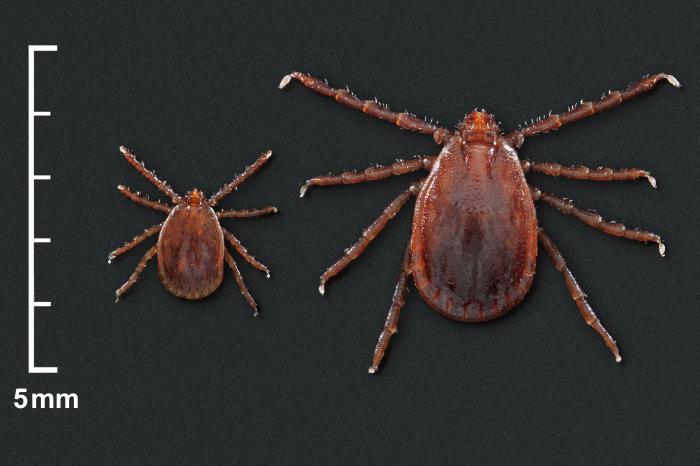
CDC, James Gathany, public domain
Initial symptoms of tick-borne illnesses are unspecific and often the same as those that come with regular sickness, such as a fever, headache, muscle aches and joint pain, according to Alvaro Toledo, an associate professor in the Department of Entomology at Rutgers who also spoke at the July 1 media briefing.
“Physicians need to be vigilant and aware if they receive a patient with symptoms that are compatible with a tick-borne disease,” he said.
What if you find a tick?
If one discovers a tick on the skin, Toledo said the proper response is to first quickly remove the tick with tweezers by pinching and pulling it up in a vertical motion, then disinfecting the area and monitoring for signs of sickness.
People should not, on the other hand, deal with a tick by burning it off or applying petroleum jelly to the bite, said University of Wisconsin-Madison Assistant Professor Adela Oliva Chavez, a tick researcher, at the briefing.
“Those are myths,” she warned.
Ticks typically do not transmit infection until after they have been attached to the skin for 24 hours, which is why the CDC recommends people aim to remove the pests as soon as possible within the first day.
However, experts say the most effective way to prevent tickborne disease in humans is by limiting exposure to ticks in the first place.
Toledo said people should use chemical sprays such as permethrin on their clothing and classic bug repellents on their skin to keep ticks away. It’s also a good idea to wear long, light-colored clothing when spending time in forests and other highly vegetated areas where ticks are abundant.
But, he added as a reminder to the public, there is “no zero-risk zone anywhere when you go out … even in your backyard, risk is not zero.”
Individuals can further reduce their chance of acquiring a tick bite by checking their pets just as often themselves, according to Oliva Chavez. Dogs and cats can easily bring ticks into the house from outside, and if they aren’t yet attached to the animal’s flesh, they can make their way onto humans, she said.
Oklahoma Voice is part of States Newsroom, a nonprofit news network supported by grants and a coalition of donors as a 501c(3) public charity. Oklahoma Voice maintains editorial independence. Contact Editor Janelle Stecklein for questions: info@oklahomavoice.com. Article reprinted here under Creative Commons license.
Cover Image
from the Public Health Image Library, CDC
“Keeping your furry pets healthy includes keeping them clean, as well. Together, this family was in the process of washing their Labrador retriever outside in the fresh air. With help from two neighbor girls, the mother, young daughter, and son, were all soaping down the dog’s coat, while the father was steadying the pet using a leash and his hand.
By washing down his coat, chances for the animal to bring contaminants indoors, is highly reduced. After returning from the outdoors, pets can bring allergens, disease vectors such as ticks and fleas, and pathogens from other animals indoors, thereby exposing the entire family to these dangers. One should remember to wash his/her hands after finishing this activity.”
CDC/ Dawn Arlotta, public domain
Exploring the HEART of Health
Thank you for reading this post. Please follow this blog and me on social media.
I share information and inspiration to help you transform challenges into opportunities for learning and growth.
Add your name to the subscribe box to be notified of new posts by email. Click the link to read the post and browse other content. It’s that simple. No spam.
I enjoy seeing who is new to Watercress Words. When you subscribe, I will visit your blog or website. Thanks and see you next time.
Dr. Aletha
- About Dr. Aletha
- How to Use this Site
- Make Your Life Easier
- Search by Category
- Share the HEART of health
- my Reader Rewards Club
- RoboForm Password Manager