The 24th anniversary of the Oklahoma City bombing was marked on April 19, 2019. 168 people died, and hundreds were injured, changing the state and the nation forever. The memorial and museum tell stories of hope, including a bombing survivor who became a doctor, and three women who studied trauma and helped survivors worldwide.
updated April 15, 2024
April 19, 2019 marked the 24th anniversary of the terrorist bombing of the Alfred P. Murrah Federal Building in Oklahoma City, Oklahoma. Oklahoma City is the capital of my home state and was my home for 7 years while I attended medical school and completed my residency in Family Medicine at the University of Oklahoma Health Sciences Center.
From the bombing, 168 people died, hundreds were injured, and our state and our nation were changed forever. Never had there been such an act of horror and carnage on U.S. soil.
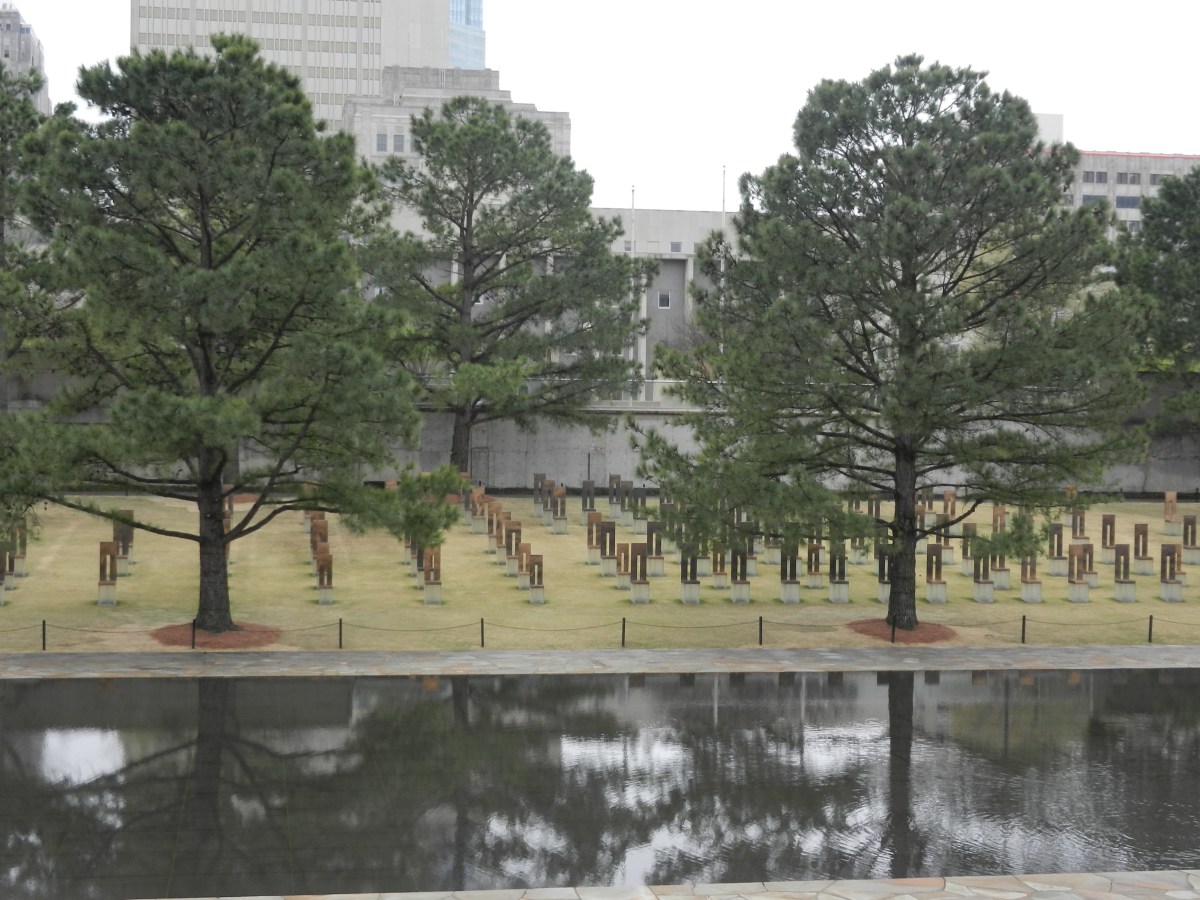
I’ve written here about the bombing and showed you pictures from the site which is now a memorial and museum. I’m doing that again but this time with news about 4 women who have turned the event into something positive.
OKLAHOMA CITY NATIONAL MEMORIAL AND MUSEUM
A woman survived to become a doctor
Twenty-three-year-old Madison Naylor was among the infants being cared for at the YMCA daycare located next door to the federal building at the time the bomb exploded. The building was heavily damaged but she and the other children survived.
“I remember when I was very young, I had a feeling that I had been really close to death, …I hope I can be something good that came from something so horrific.”
Madison Naylor, bombing survivor
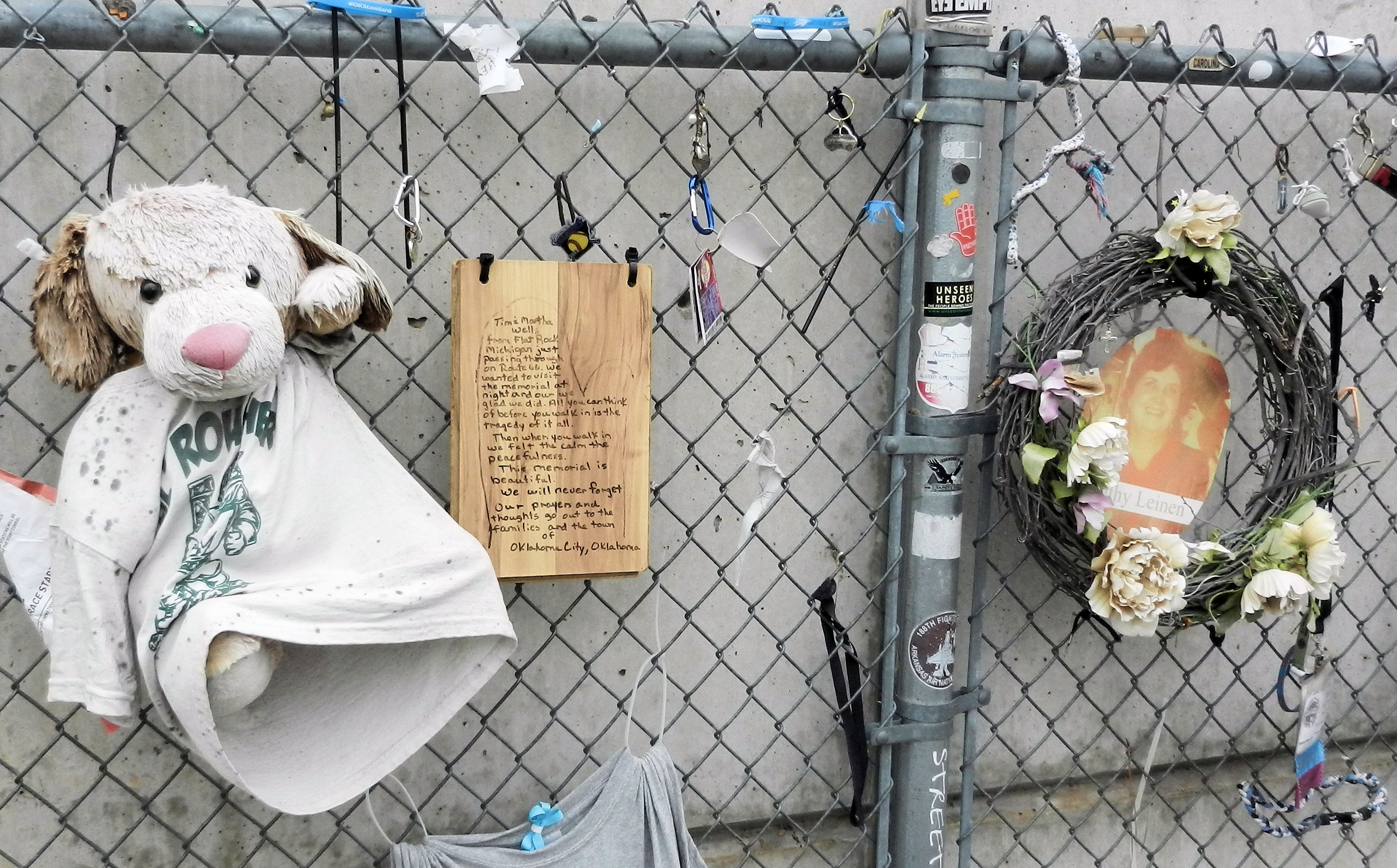
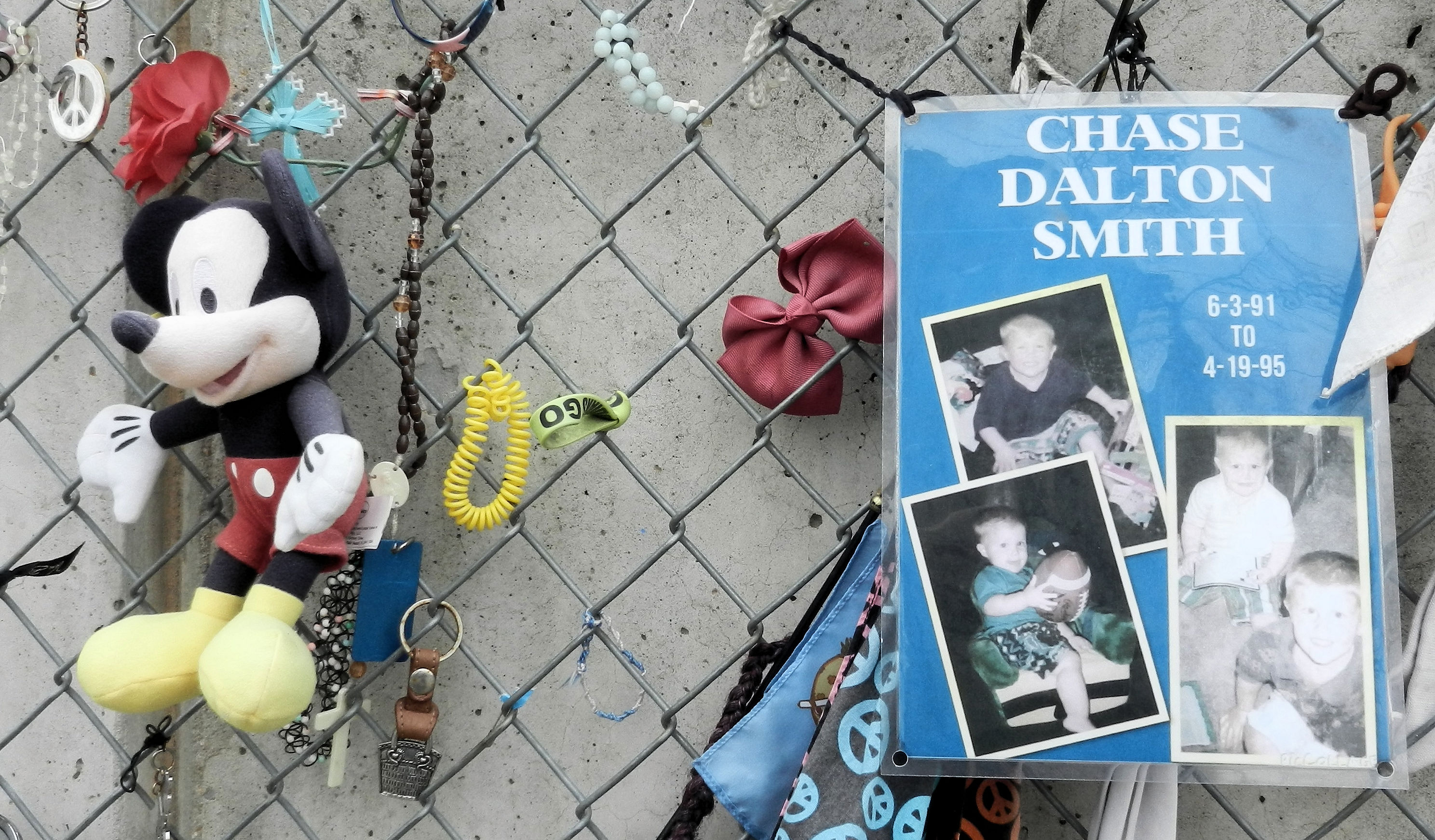
some of the memorials hung on the fence that surrounded the bombing site have been left intact.
Madison grew up learning about the bombing and medicine. Her father and aunt are both physicians and now she is a first-year medical student at my alma mater, the University of Oklahoma College of Medicine. (She graduated, and is now a resident physician in pediatrics.)
“I know the bombing is still a part of people’s lives here. It’s humbling to be associated with such a tragic event. I hope that I can be a positive face going forward.”
Madison Naylor, medical student
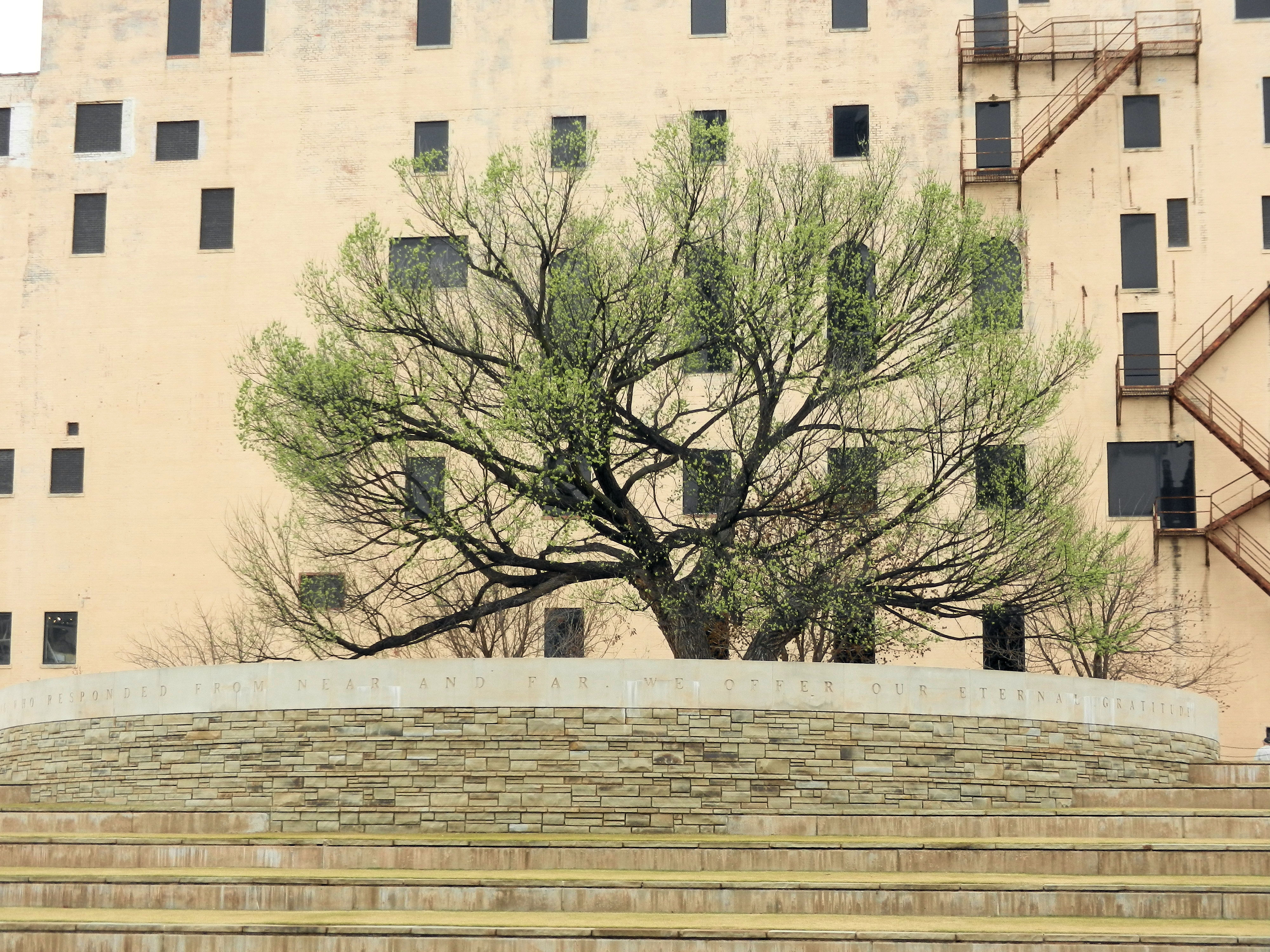
The SURVIVOR TREE remained standing when everything around it was destroyed by the bomb. It survives to this day.
“I just want to be the kind of person who leaves the world a better place than I found it.”
Madison Naylor, MS1
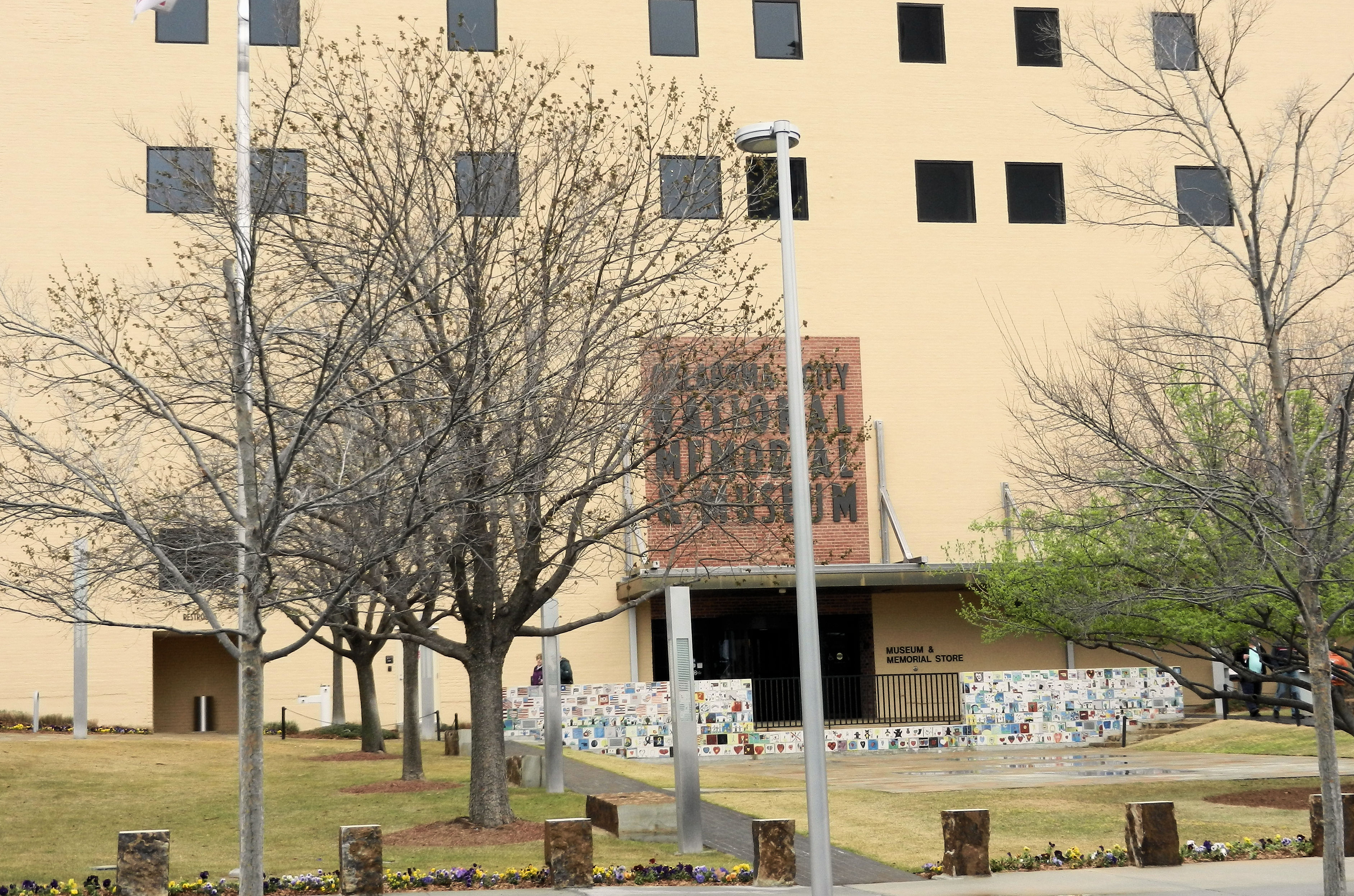
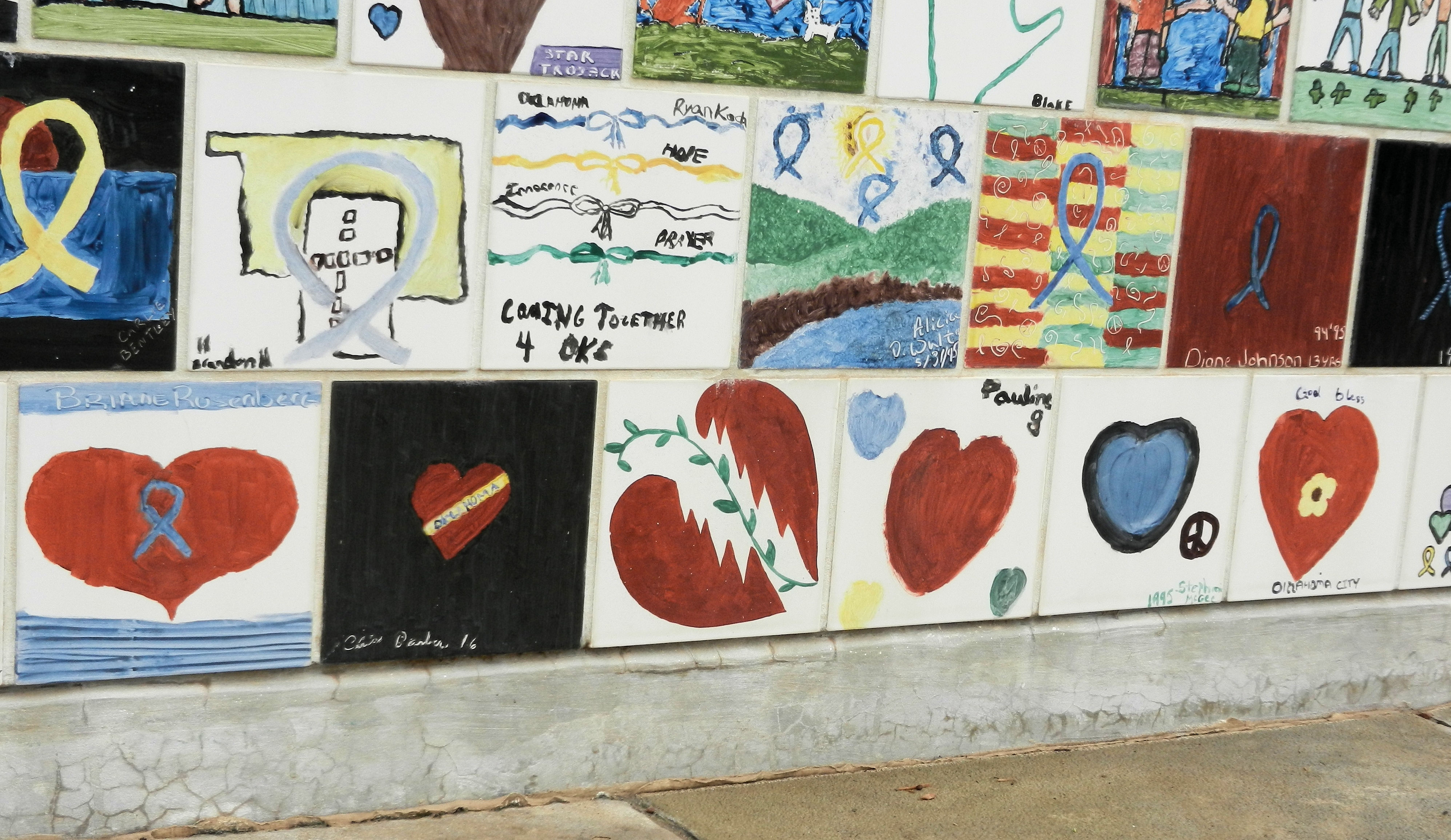
TILES PAINTED BY CHILDREN FROM AROUND THE WORLD AND DONATED TO THE MUSEUM ARE DISPLAYED AT THE ENTRANCE
Women who treated and studied the survivors
The bombing changed not only Oklahoma City, but also our state, and our entire country. It was the worst terrorist event on U.S. soil until 9/11. All of us were touched in some way, but especially three women who worked in the Department of Psychiatry and Behavioral Sciences.
“None of us was thinking about studying disasters…But we kept studying …the Oklahoma City survivors over the years..Then started helping with disasters elsewhere.”
Betty Pfefferbaum, M.D., J.D. department chairman
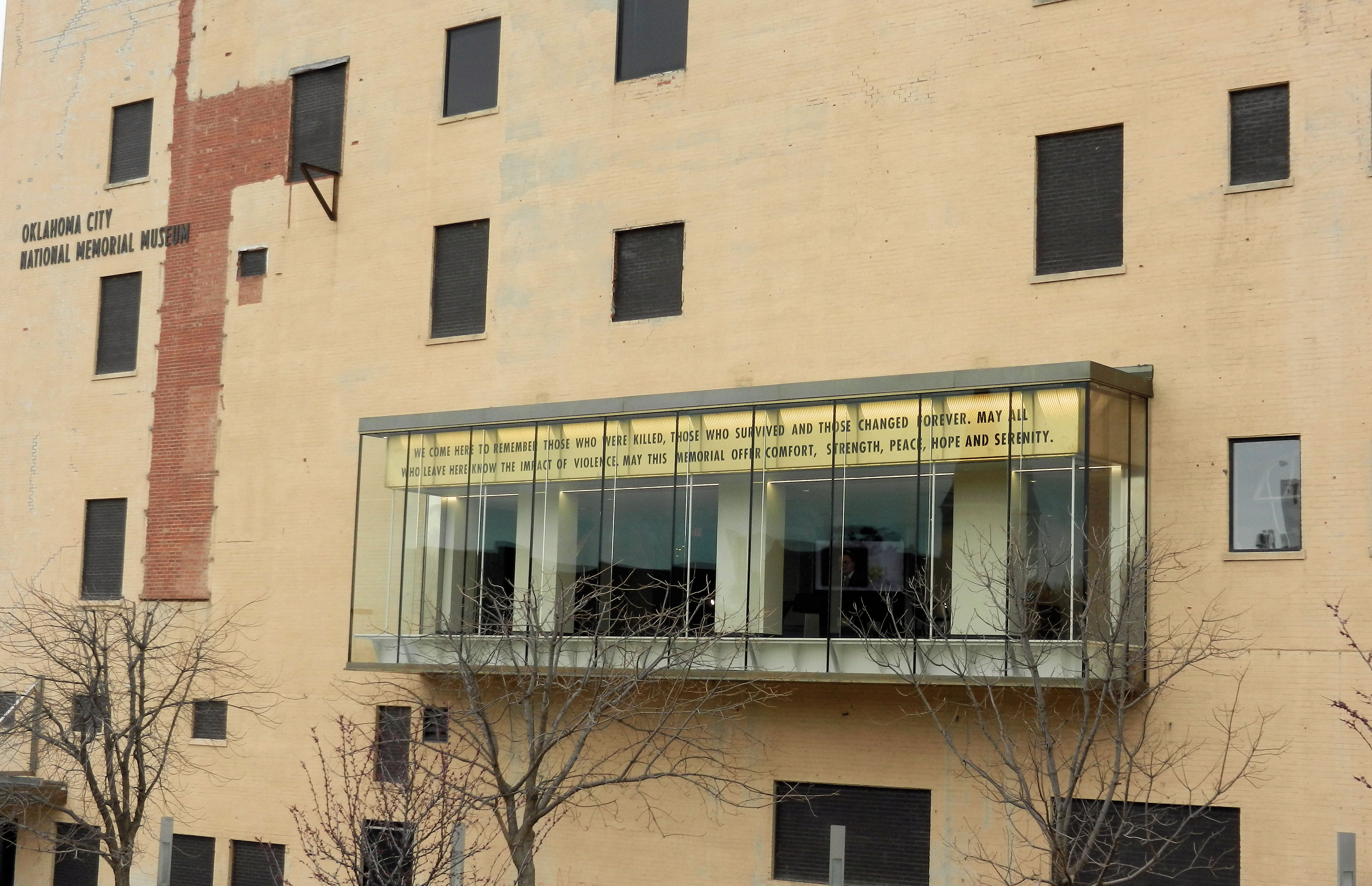
This window in the museum overlooks the memorial.
Dr. Pfefferbaum, along with colleagues Phebe Tucker, M.D., and Sandra Allen, Ph.D. treated and studied trauma victims from the bombing and shared their findings with other doctors who use it to treat survivors around the world.
Lessons learned from the OKC disaster trauma
Disasters affect many different groups of people beyond those at the site-family, first responders, the community
Terrorism victims have higher than average rates of post-traumatic stress disorder (PTSD), anxiety, and depression than people who never experienced it.
Some people develop a biological response to disaster causing a higher resting heart rate than those not affected.
Dr. Allen developed an intervention to help children of trauma process their thoughts and feelings. Sometimes children think they have to hide their feelings or act out when they are hurting. This program helps them process those feelings and learn how to cope.
At a church across the street from the memorial
The work has rippled out into the world in ways that none of them could have imagined…
OU Medicine magazine
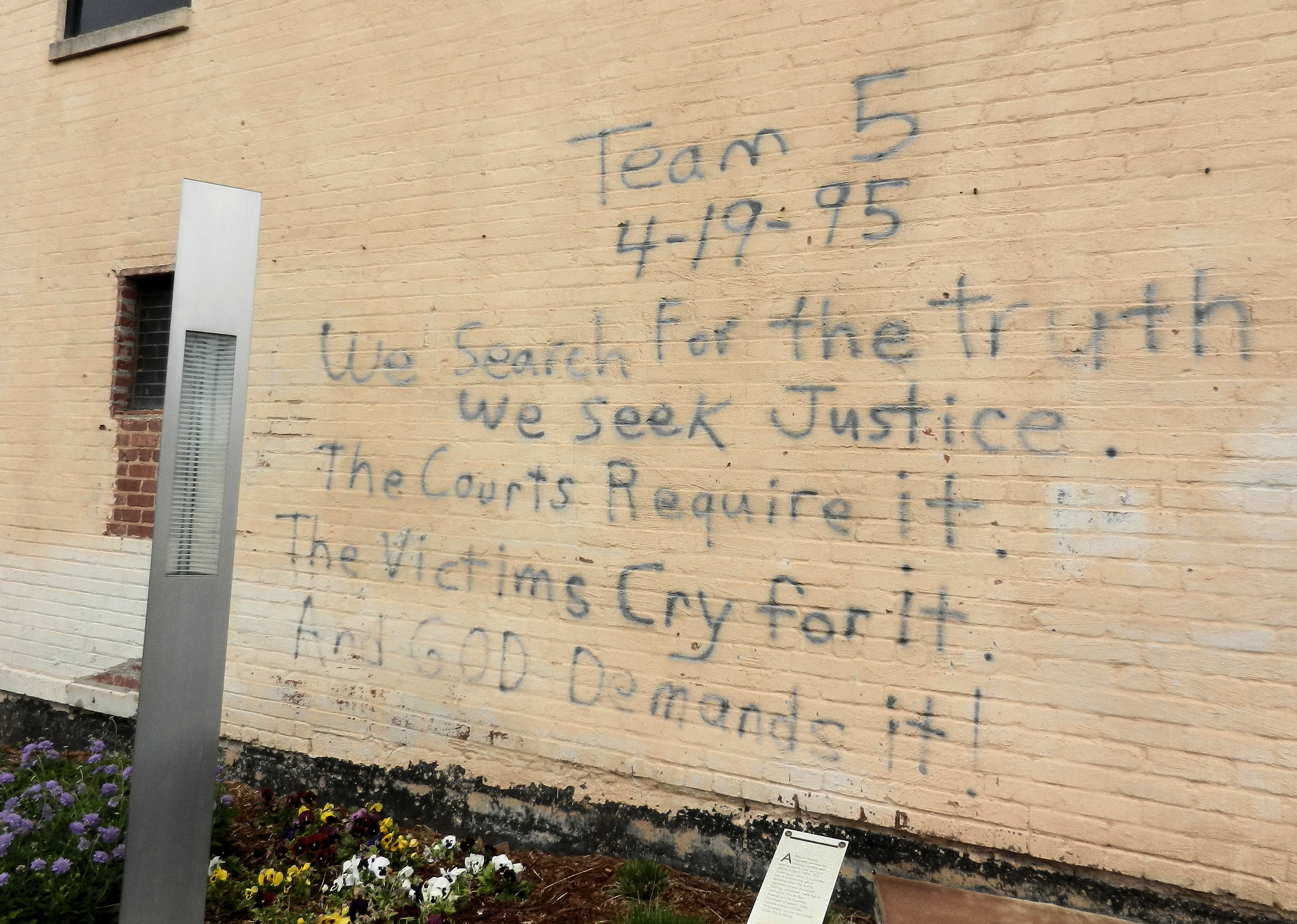
Words written on the wall of the former Journal Record Building which sat across from the federal building. These words, painted by a rescue team who searched for survivors that day, remain as a silent witness of the horrible event.
photos in this post taken by Dr. Aletha in Oklahoma City, Oklahoma
Thanks to OU Magazine and KFOR for sharing these stories.
exploring the HEART of health
Dr. Aletha
lemons into lemonade
I am delighted that Janice Wald, author and blogger at Mostly Bloggging, called this her “favorite post ” when I submitted it at her Inspire Me Monday Linky Party. Please visit Janice’s blog where you can learn about writing, blogging, productivity, marketing, and more.
It isn’t often that I see news-related posts left here and even rarer that, when I do, they are so inspirational. The post really exemplifies the expression, “Turn lemons into lemonade.”
Janice Wald, Mostly Blogging
Use these links to share the heart of health wherever you connect.
Even though the September 11, 2001 terrorist attacks on the United States happened long ago, there are still lessons to remember and to learn. This post highlights some of the literature that preserves that knowledge.
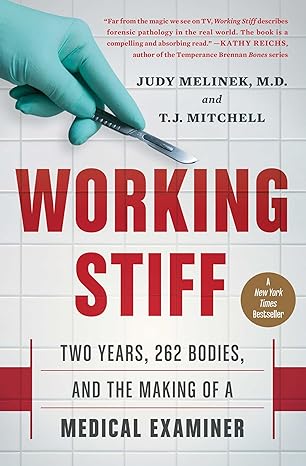
The terrorist attacks on September 11, 2001 prompted a profuse body of literature, including one by a woman physician forensic pathologist trainee.
The author, Judy Melinek, M.D., wrote this account of her training as a forensic pathologist, a physician specialist who investigates sudden, unexpected or violent deaths. Her husband, T.J. Mitchell co-authored.
When she applied for a position in New York City at the NYC Office of the Chief Medical Examiner (OCME), Dr. Judy Melinek never imagined that decision would plunge her into the nightmare of September 11, 2001. She was at the ME office that day when the Twin Towers were attacked and fell, killing thousands of people.
The main job of a medical examiner is to investigate death by examining a corpse- an autopsy. They look for evidence of the cause of death, whether due to disease or trauma, and time of death, recent or remote. They hunt for signs that the death was self or other inflicted. Sometimes they need to establish the identity of the corpse. Such was the case after September 11.
She and the other staff collaborated with the team of investigators who worked night and day identifying the remains of victims, a task she vividly describes in the book. This was basically their only job since the cause of death was for the most part irrelevant, and impossible to determine.
Sometimes they had only a small body part, as little as a finger, to extract DNA to identity a victim. Such identification was critical to bring closure to the families who lost loved ones, people who left for work that day, and never came home.
DNA fingerprinting is a chemical test that shows the genetic makeup of a person or other living things. It’s used as evidence in courts, to identify bodies, track down blood relatives, and to look for cures for disease.
WebMD.com
The structure of DNA and genetic information. from U.S. Government Works
Dr. Melinek describes not only the science of what she was doing, but also the emotion behind it; how she and the other medical examiners and staff felt about their work. She describes how it affected her relationship with her husband and young son, the problem of explaining to him what she was seeing and experiencing on a daily basis. She didn’t have the heart to tell him how many trailers full of partial bodies there were, after he saw just one and was shocked.
She also discusses other cases she worked on. As a forensic pathologist, Dr. Melinek understands why and how people die, and therefore also knows how people can avoid dying unexpectedly. Pathologists tend to be blunt, straightforward and to the point, as when she writes,
“So don’t jaywalk.
Wear your seat belt when you drive.
Better yet, stay out of your car and get some exercise.
Watch your weight.
If you’re a smoker, stop right now. If your aren’t, don’t start.
Guns put holes in people. Drugs are bad.
You know that yellow line on the subway platform? It’s there for a reason.
Staying alive, as it turns out, is mostly common sense.”
Working Stiffmoves at a quick pace, in a conversational style. When she uses medical jargon, she explains it in simple terms. She describes the cases she investigated in detail so those with weak stomachs (no pun) may want to skip this read.
Having experienced her father’s unexpected death when she was 13 years old, she was no stranger to it, and she learned more from the 262 autopsies she did during her training. As she says in this engaging memoir,
“To confront death every day, to see it for yourself, you have to love the living.”
“In City of Dust, Anthony DePalma offers the first full accounting of one of the gravest environmental catastrophes in United States history.
The destruction on 9/11 of two of the world’s largest buildings unleashed a vortex of dust and ash that blotted out the sun and has distorted science, medicine and public policy ever since. The likely dangers of 9/11’s massive dust cloud were evident from the beginning, yet thousands chose not to see. Why? As the sickening results of exposure became evident, many still refused to recognize them. Why? The consequences are still being tallied in the wasted bodies and disrupted lives of thousands who gave their all when the need was greatest, but whose demands for justice have been consumed by years of politics and courtroom maneuvers.
Separating reality from myth – and doing so with exceptional literary style and grace, DePalma covered Ground Zero for The New York Times for four years. DePalma introduces heroic firefighters, dedicated doctors and scientists, obsessive city officials, partisan politicians, aggressive lawyers, and compassionate judges and reveals the individual decisions that destroyed public trust, and the desperate attempts made to rebuild it.
The dust that was the World Trade Center has changed everything it touched. This is the story of that dust, the 9/11 disaster after the disaster, and what it tells us about ourselves and our future.”
(Amazon review)
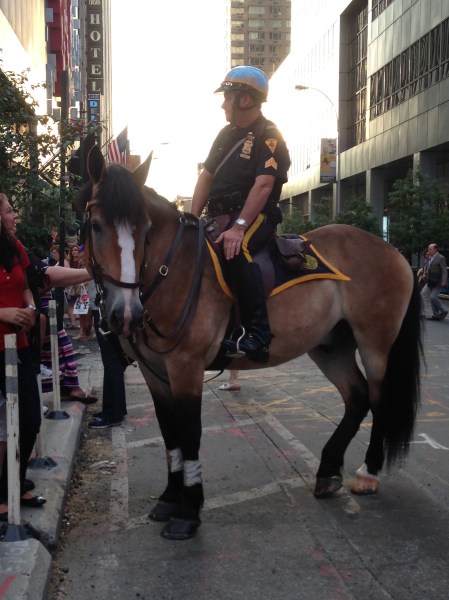
a New York City police officer and his horse represent the city proudly
“Written in conjunction with the documentary Rebirth, a full decade in the making, an uplifting look at the lives of nine individuals whose lives were forever changed by the largest tragedy our nation has ever faced.
In Project Rebirth, a psychologist and a journalist examine the lives of nine people who were directly affected by the events of September 11, 2001. Written concurrently with the filming of the documentary, it is uniquely positioned to tackle the questions raised about how people react in the face of crippling grief, how you maintain hope for a future when your life as you knew it is destroyed, and the amazing ability of humans to focus on the positive aspects of day-to-day living in the face of tragedy.”
(Amazon review)
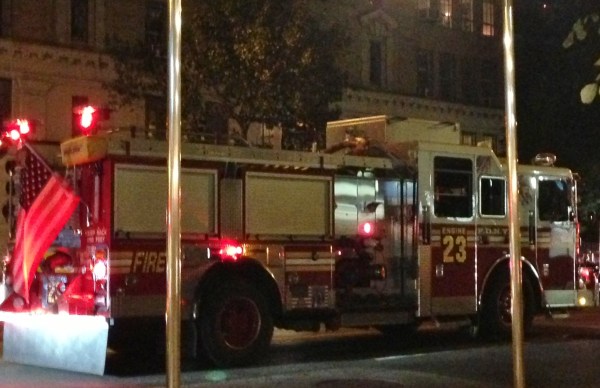
honoring the brave FDNY firefighters who rescued survivors and those who lost their lives doing so
former National Coordinator of Disaster Volunteers for the American Red Cross
“You never know when your life is going to change.
My red business suit was almost buttoned, and I was rehearsing my presentation for the Milford, Connecticut Red Cross board of directors, even though my mind kept wandering to my wedding just nine days earlier in Walt Disney World. An urgent call from my new husband to come to the television interrupted my wedding day dreams.
As soon as I saw the images of the first plane hitting the World Trade Center, I knew that my plans for the day – maybe even my life – had changed.” (excerpt from article)
“What do Ossler’s insights reveal about finding meaning and purpose in the thick of chaos and personal tragedy?
Chaplain Ossler chronicles the best of humanity—acts of courage and goodness in the midst of unimaginable devastation. As terrorist attacks continue to assault humanity, Triumph Over Terror reveals how your spirit can triumph over terror’s reign, and how you can help others suffering from trauma and loss.”(Amazon review)
(This blog post contains several affiliate links, a commission is paid if used to make a purchase. Thank you.)
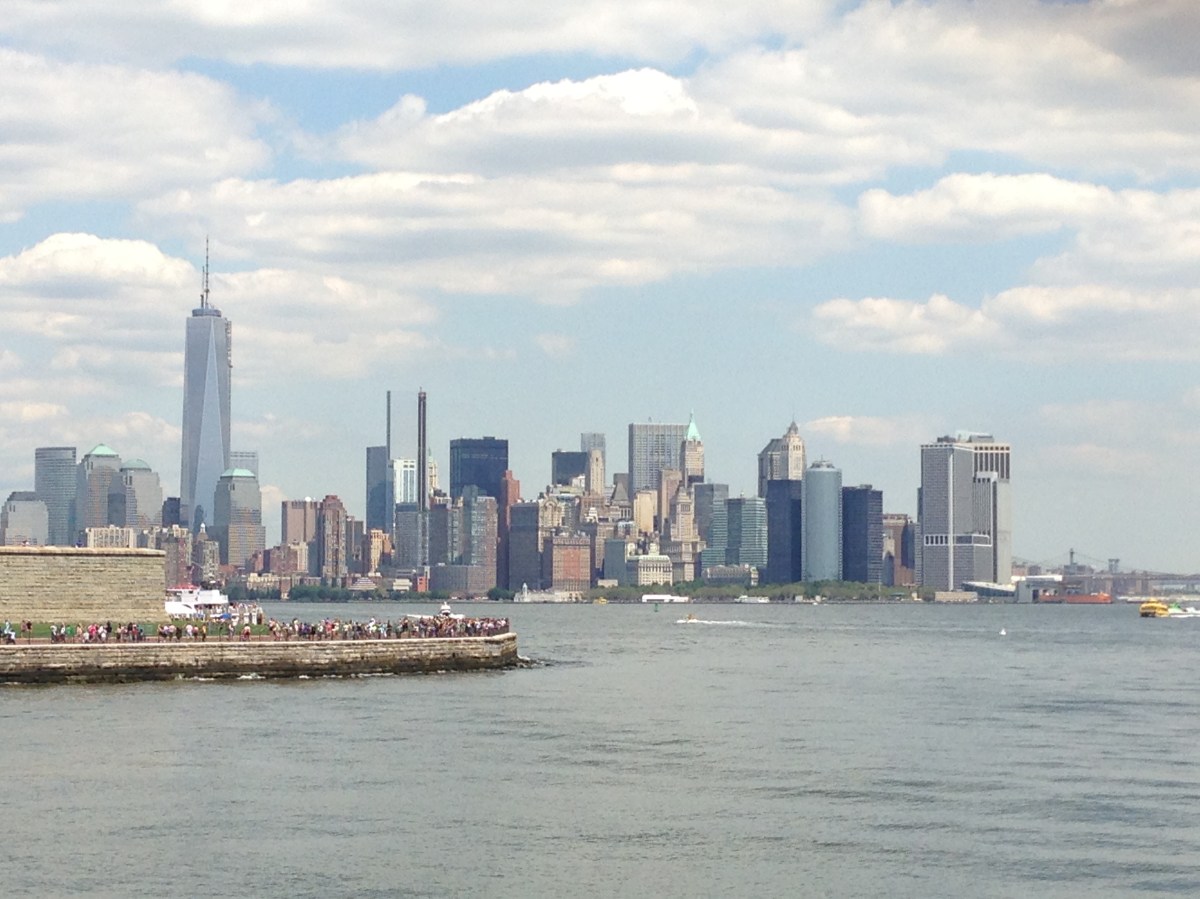
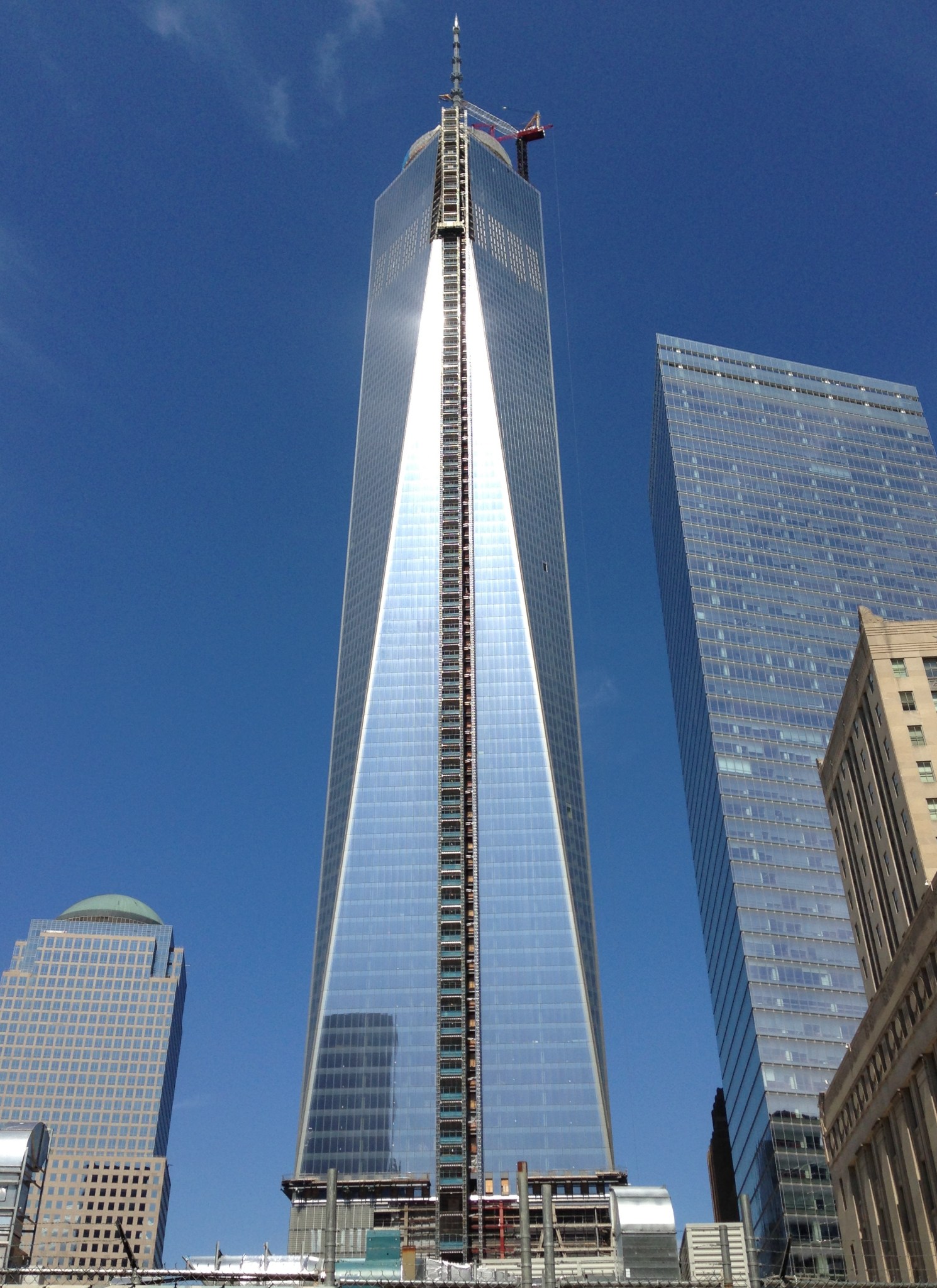
One World Trade Center, photo taken 8/16/2013 by Dr. Aletha
exploring the HEART of health in history
I’d love for you to follow this blog. I share information and inspiration to help you transform challenges into opportunities for learning and growth.
Add your name to the subscribe box to be notified of new posts by email. Click the link to read the post and browse other content. It’s that simple. No spam.
I enjoy seeing who is new to Watercress Words. When you subscribe, I will visit your blog or website. Thanks and see you next time.




 watercress words by Dr Aletha