“no fear in love”

Author of the popular The Chronicles of Narnia fiction book/movie series, C.S. Lewis was a writer, teacher, and lay theologian. His books on Christian belief are read and quoted widely, years after his death.

from 1 John 4:16-21, English Standard Version  Bible

So we have come to know and to believe the love that God has for us. God is love, and whoever abides in love abides in God, and God abides in him.

By this is love perfected with us, so that we may have confidence for the day of judgment, because as he is so also are we in this world.

 There is no fear in love, but perfect love casts out fear. For fear has to do with punishment, and whoever fears has not been perfected in love.

We love because he first loved us.

If anyone says, “I love God,” and hates his brother, he is a liar; for he who does not love his brother whom he has seen cannot  loveGod whom he has not seen.

And his commandment we have from him: whoever loves God must also love his brother.

You can read the English Standard Version free at ESV.org

quote about love from C.S. Lewis
graphic from Lightstock.com, stock media site, an affiliate


(This post has several affiliate links. )

Author of the popular The Chronicles of Narnia fiction book/movie  series, C.S. Lewis was a writer, teacher,  and lay theologian. His books on Christian belief are read and quoted widely, years after his death.

In The Four Loves, Mr. Lewis explains 4 types of love-affection, friendship, erotic love, and the love of God

In A Grief Observed Lewis reflects on his own grief following his wife’s death after their brief marriage


Dear friends, I hope all is well with you and that you are as healthy in body as you are strong in spirit. 

3 John 2 , NLT


always sharing the heart of health, Dr. Aletha


cheesy-free faith-focused stock photos

Lightstock-quality photos and graphics site- here. 

(This is an affiliate link)

World Vision helps children in some of the toughest, most dangerous countries, restoring lives and preserving futures. Support World Vision and help protect children today.

Supporting Veterans with Poppies | The American Legion’s Mission

National Poppy Day in the United States commemorates the service and sacrifice of veterans, symbolized by the poppy flower. Lt. Col. John McCrae’s iconic poem “In Flanders Fields” inspired the tradition, and the American Legion Auxiliary distributes paper poppies in exchange for donations to support veterans.

updated May 24, 2024


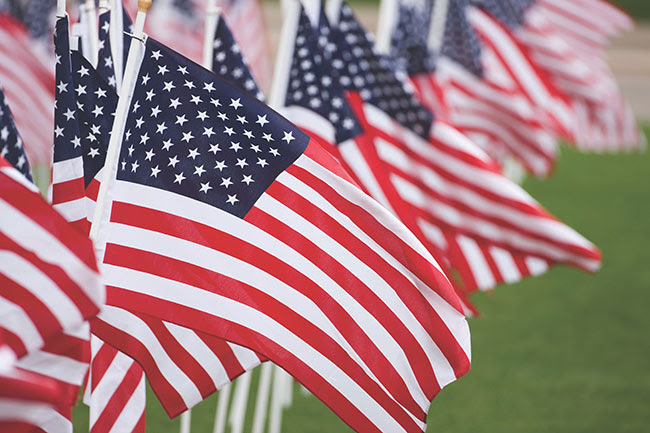
The Friday of Memorial Day weekend is observed as  National Poppy DayIn the United States,  the last Monday in May is Memorial Day, now a holiday weekend.

Another American remembrance day features poppies -Veterans Day, always observed on the 11th day of the 11th month, November.

In the early 1920s the American Legion Auxiliary adopted the poppy as the American Legion Family’s memorial flower. The poppy, a simple red flower, symbolizes the service and sacrifice of veterans of World War I and veterans in other eras.

ALA members distribute millions of paper poppies annually across the country in exchange for donations used to assist disabled and hospitalized veterans in our communities.

armed forces emblems over a field of poppies

Why poppies?

I love the story of the poppies because it has a medical connection.

In the battlefields of Belgium during World War I, poppies grew wild amid the ravages of war. The overturned soils of battle covered the poppy seeds,  allowing them to grow and forever serve as a reminder of the bloodshed of war.

Out of this conflict came a poem, associated with poppies.


In Flanders Fields

The now-iconic poem, In Flanders Fields, was written by a military physician, Lt. Col. John McCrae.

Originally from Canada, Dr. McCrae was an English and math teacher, and a poet, before he attended medical school. He moved to England where he was practicing when World War I broke out. He was called to serve as a brigade surgeon.

I suspect that as a physician, he was deeply pained by treating the wounded and losing those he could not save.

“In April 1915, McCrae was stationed in the trenches near Ypres, Belgium, in an area known as Flanders, during the bloody Second Battle of Ypres.

Amid the tragic warfare, McCrae’s friend, twenty-two-year-old Lieutenant Alexis Helmer, was killed by artillery fire and buried in a makeshift grave.

The following day, Dr. McCrae, after seeing the field of makeshift graves blooming with wild poppies, wrote his famous poem “In Flanders Field,” which would be the second to last poem he would ever write.”

(from John McCrae at poets.org)

Listen to Leonard Cohen recite In Flanders Fields

In Flanders Fields

by Dr. John McCrae, 1872 -1918

In Flanders fields the poppies blow
Between the crosses, row on row, 
That mark our place, and in the sky, 
The larks, still bravely singing, fly, 
Scarce heard amid the guns below. 

We are the dead; short days ago
We lived, felt dawn, saw sunset glow, 
Loved and were loved, and now we lie
In Flanders fields. 

Take up our quarrel with the foe! 
To you from failing hands we throw
The torch; be yours to hold it high! 
If ye break faith with us who die
We shall not sleep, though poppies grow
In Flanders fields.

This poem is in the public domain.


The poppy is the official state flower of California.  Read

All About Poppies. 

Welcome Home Heroes- military sign
Thanks to the support of generous donors like you, The American Legion can continue to provide much-needed assistance to our veterans, service members and their families.

You can help veterans by donating at this link.

(This is not an affiliate link, this blog receives no commission.)

The American Legion Auxiliary Foundation

sharing the HEART of honoring service and sacrifice

I’d love for you to follow this blog. I share information and inspiration to help you transform challenges into opportunities for learning and growth.

Add your name to the subscribe box to be notified of new posts by email. Click the link to read the post and browse other content. It’s that simple. No spam.

I enjoy seeing who is new to Watercress Words. When you subscribe, I will visit your blog or website. Thanks and see you next time.

Dr. Aletha