
This information is current as of the date of original publication or update but may have changed by the time you read this. Do not use this information for diagnosis or treatment purposes. Before making health decisions, discuss with a qualified healthcare professional.
As we anticipate 2026, here is a look at what the federal government may do with healthcare in the United States.
This is a reprint of an article first published on KFF and shared here by permission.
The author is Drew Altman, President and Chief Executive Officer of KFF, a position he has held for over 30 years, founding the KFF organization in the 1990s. He is a leading expert on national health policy issues and an innovator in health journalism and the nonprofit field.
(Note: I have edited this article for length and readability. I linked to the original content so you can read the full sections. The photos are for illustration and are not affiliated with the original article on KFF. AO)
Health Policy in 2026
from Drew Altman, December 8, 2025
Forecasting the year ahead in health policy is always treacherous because events intervene and screw up even the best predictions. But my working theory is that the sharp partisan divide in Congress, and even sharper disagreement on health care policy, can produce only small-ball actions on health next year.
So, what should you watch for that will really matter for people, policy, and politics?
Voter Reaction to the ACA in the Midterms
First and foremost is the role that health care affordability will play in the midterms. Assuming there is no deal on the enhanced ACA (Affordable Care Act) tax credits, spiking premium payments in the Marketplaces will become the national symbol for voters of concerns about their health care bills.
Democrats will prosecute the issue to the fullest, and Republicans will generally try to shift the subject and fight on other issues. Health care affordability will be in the spotlight, but how important it is as a vote-and-turnout driver remains to be determined.

How ACA Enrollment Might Change
Second, again assuming there’s no deal on the tax credits, we’ll see how enrollees actually respond in the Marketplaces. What share of the 24 million enrollees switch to cheaper high-deductible plans? What is the impact of doing that on their financial security and health-seeking behavior? What happens to older and sicker enrollees who need better, more comprehensive coverage? How many millions choose to be uninsured in 2026 and who are they?
Medicaid Work Requirements
Third, states that have expanded Medicaid will be gearing up for Medicaid work requirements, which kick in in 2027.
Red states may be looking for flexibility to implement the toughest possible requirements and reduce their Medicaid rolls and spending.
Blue states will be looking for nooks and crannies in the law and the rules to lessen the impact in the hopes that Democrats seize control again in 2028 and reverse the requirements.
Having implemented state welfare work requirements myself, I know there is always some ability to shade implementation depending on the goals of a state.
In our case in New Jersey, we had little interest in kicking people off welfare (and into homelessness or deep poverty, which we’d also have to address). We did have a big interest in providing job training, childcare, transportation, and a pathway to jobs.
More Expensive Health Insurance
Fourth, after years of moderate increases, health costs will increase more sharply again. Employer premium increases may not touch double digits but could come close.
The average cost of a family policy for employers could approach $30,000. Cost-sharing and deductibles will likely rise again after plateauing for several years.
Employers and public payers are increasingly skittish about the costs of GLP-1s for weight loss. It’s possible GLP-1s could turn from today’s dilemma to a technology-diffusion success story of sorts. (Glucagon-Like Peptide-1)
Costs are coming down, pills are on the horizon, and payers are developing more sensible guidelines for their initial and long-term use.
In a country where the dam breaks on every effective new medical technology and it’s rapidly disseminated at high costs, GLP-1s could emerge as a more balanced and sensible example of technology diffusion. Like most new medical technologies, it still increases costs.
Drug and Hospital Costs Increase
Fifth, the Trump administration has put pressure on drug prices through a variety of initiatives. Probably the most important is Medicare drug price negotiations, which began in the Biden years, but together they are putting pressure on drug prices.
Still, retail drug spending is only 9% of overall health spending (16% for employers) and there is growing awareness that hospitals gobble up the single largest share of the health care dollar.
Proposals to cap hospital prices or put hospitals on a budget seem to be coming back into fashion again but are non-starters with Republicans in charge, as of course is single payer.
For 2026, we can look generally for greater attention being paid to hospital prices and possibly greater action at the state level, where several states have established hospital cost targets with varying degrees of teeth.
Prior Authorization Review
Sixth, people (and providers) hate prior authorization review. Will the administration’s voluntary effort to work with industry to streamline and pare back prior authorization result in any concrete relief for patients when it kicks in this year?
MAHA and Vaccinations
Seventh, four in 10 Americans say they identify with the MAHA agenda. We’ll learn more in the coming year about which tenets of this loose movement have staying power. (Make America Healthy Again)
Everyone is for exercise and for healthier food for kids (although I do still miss those Hostess Cupcakes and Twinkies that I had as a kid).
But people who have serious illnesses may grow tired of the central MAHA notion that they are personally responsible for disease and may increasingly make the connection between their own need for medical care and cuts in Medicaid and ACA coverage.
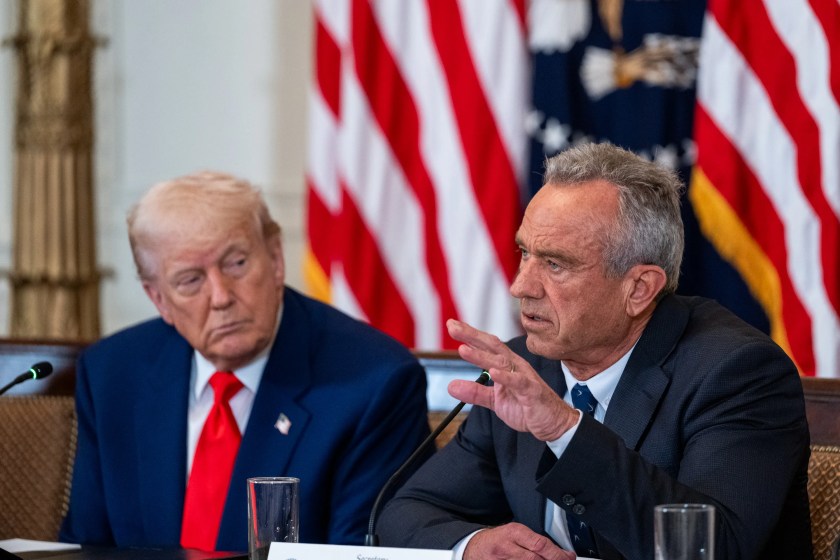
There is some overlap between MAHA and the anti-vax movement. Another thing to watch: will vaccination rates continue to decline as the administration chips away at universal vaccination and trust in vaccines?
Patients Using AI for Health
Eighth, AI means a lot for physicians, researchers, hospitals, insurance companies, and investors, with profound implications in some areas of medicine, such as radiology. But when will AI start having real meaning for the things people care about most: their costs and their ability to navigate the health system? (AI-Artificial Intelligence)
The implications and practical applications for consumers receive far less attention, as generally does the relatively low level of trust in AI. Possibly, 2026 will be the year when attention shifts more seriously to the consumer side of AI in health.
Conclusion
All told, it will be a big year ahead in health policy. And this list only just scratches the surface. (Others include the CDC, NIH, FDA, and Medicare.)
But there probably won’t be a lot of significant action in Congress. Still, every incremental change is a big fight in health care, and hard won, and in a hyper-partisan Congress, 2026 will be no different.
KFF Health News is a national newsroom that produces in-depth journalism about health issues and is one of the core operating programs at KFF—an independent source of health policy research, polling, and journalism. Learn more about KFF.
Subscribe to KFF Health News’ free Morning Briefing.
This article first appeared on KFF Health News and is republished here under a Creative Commons license.
How health policies may affect you.
Based on what you know now, how likely are these predictions correct?
Which of these issues are most important to your healthcare?
How will you respond to health policy changes that affect you? What information do you need?
How do you and your family contribute to “making America healthy again”?
Cover Photo
The cover image was created by the AI feature of Jetpack. (affiliate link)
Exploring the HEART of Health
I’d love for you to follow this blog. I share information and inspiration to help you transform challenges into opportunities for learning and growth.
Add your name to the subscribe box to be notified of new posts by email. Click the link to read the post and browse other content. It’s that simple. No spam.
I enjoy seeing who is new to Watercress Words. When you subscribe, I will visit your blog or website. Thanks and see you next time.
Use this link to search for other posts about

Dr Aletha
- About Dr. Aletha
- How to Use this Site
- Make Your Life Easier
- Search by Category
- Share the HEART of health
- my Reader Rewards Club
- RoboForm Password Manager










 watercress words by Dr Aletha