Expert Steps to Prevent and Manage Diabetes

This post introduces National Diabetes Month, aimed at raising diabetes awareness and promoting prevention and management. Diabetes causes high blood glucose due to insufficient insulin. Lifestyle changes, regular screenings, and medication adherence are essential for managing diabetes. Understanding risk factors and maintaining a healthy lifestyle can effectively prevent or delay diabetes onset and complications.

This information is current as of the date of original publication or update. It may have changed by the time you read this. I invite you to fact-check what you read here.

This information is not intended for diagnosis or treatment. Before making health decisions, discuss with your physician or other qualified healthcare provider to decide what is right for you.

National Diabetes Month

November is National Diabetes Month, designated to raise awareness of diabetes. Taking steps to prevent or manage diabetes may lower your risk of developing health problem related to diabetes.

Diabetes is a disease that causes too much of the body’s blood glucose, also called blood sugar, to accumulate in the bloodstream. Glucose is your body’s main source of energy. Glucose comes from the food you eat, and your body can make it.

Insulin, a hormone made by the pancreas,  helps glucose get into your cells to be used for energy. If you have diabetes, your body doesn’t make enough—or any—insulin, or doesn’t use insulin properly. Without insulin, glucose doesn’t reach your cells.

Diabetes isn’t just about the pancreas. Diabetes affects the eyes, kidneys, nerves, skin, and heart. Diabetes is also linked to some types of cancer.

Knowledge plus action can prevent diabetes health problems.

Stats to Know about Diabetes

As of 2019, 37.3 million people—or 11.3% of the U.S. population—had diabetes.

More than 1 in 4 people over the age of 65 had diabetes. 

Nearly 1 in 4 adults with diabetes didn’t know they had the disease.

About 90% to 95% of diabetes cases are type 2 diabetes.

Know About Pre-diabetes

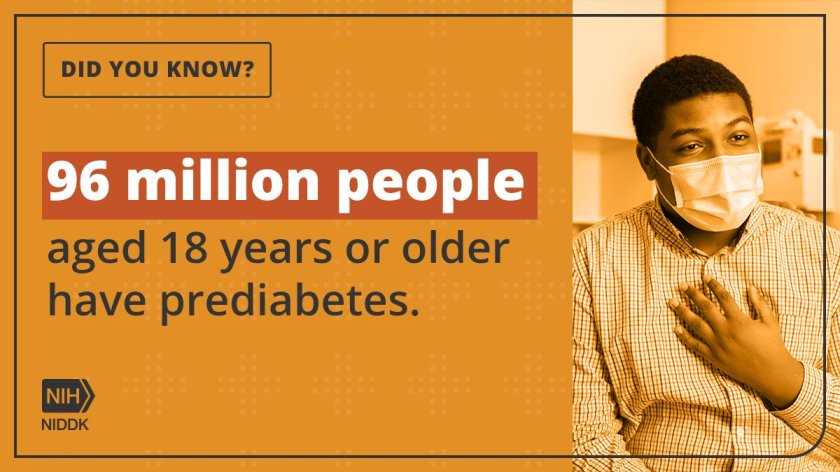
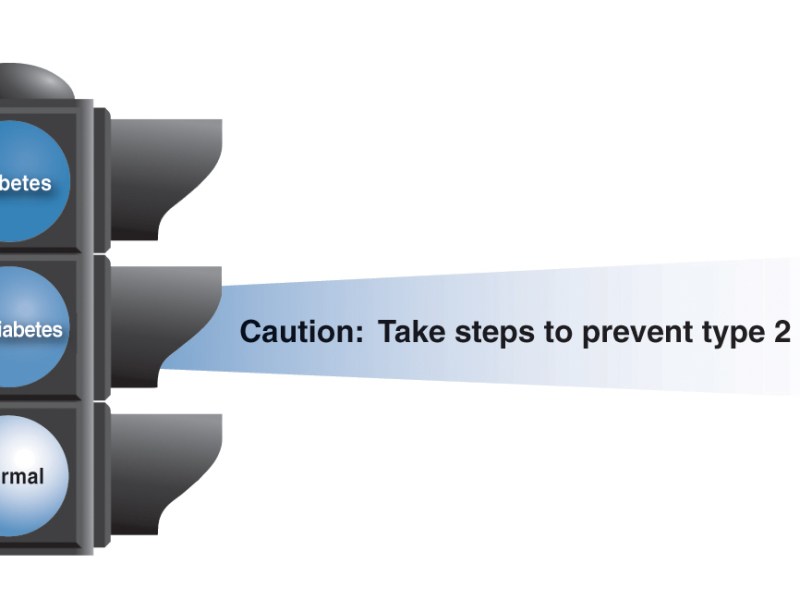
Prediabetes is defined as a blood sugar level that is in the higher end of the normal range, but not high enough to diagnose diabetes. While many of these people don’t develop diabetes, it does indicate a higher risk, so is worth knowing about and checking regularly. 

Since 2001, the National Institutes of Health (NIH)-sponsored Diabetes Prevention Program (DPP) research study has shown that intensive lifestyle interventions and select medications are cost-effective in preventing or delaying the onset of type 2 diabetes in adults with prediabetes. 

Learn Your Risk for Diabetes.

You are more likely to develop type 2 diabetes if you have overweight or obesity; are age 35 or older; have a family history of diabetes; are African American, American Indian, Asian American, Hispanic or Latino, or Pacific Islander; are not physically active; or have prediabetes.

The exact reasons these factors increase the chance of diabetes is not known. Scientists suspect genetics plays a role. Lifestyle may also impact one’s risk. 

Later in this post you can discover your risk for diabetes with a simple online test.

The ABCs of Diabetes 

Manage your blood glucose, blood pressure, and cholesterol levels.

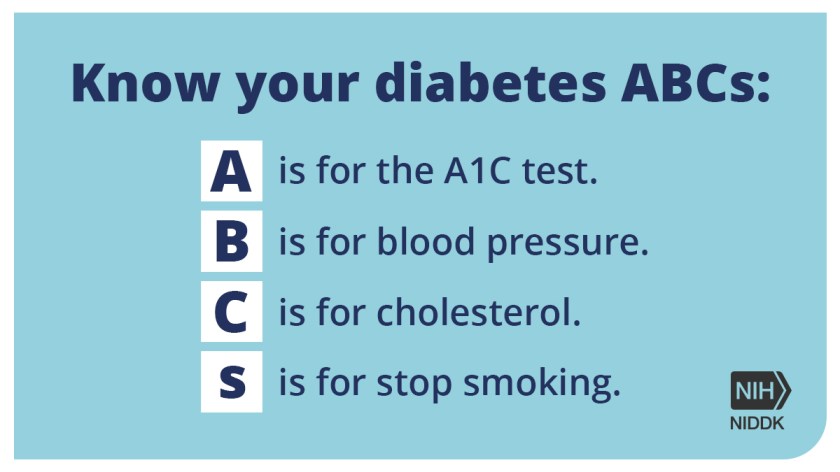
Preventing diabetes or managing diabetes as soon as possible after diagnosis may help prevent diabetes health problems. You can start by managing your diabetes ABCs.

A is for the A1C test (hemoglobin A1C) that health care professionals use to measure your average blood glucose levels. Some people with diabetes also use devices to track their blood glucose throughout the day and night.

  • B is for Blood pressure.
  • C is for Cholesterol.
  • S is for Stop Smoking

Ask your health care team what your ABCs goals should be.

Develop a Healthy Lifestyle

Lifestyle habits like planning healthy meals, being physically active, getting enough sleep, and not smoking may help you prevent diabetes or manage your diabetes ABCs.

You don’t have to do it all at once. Start slow and build healthier habits from there.

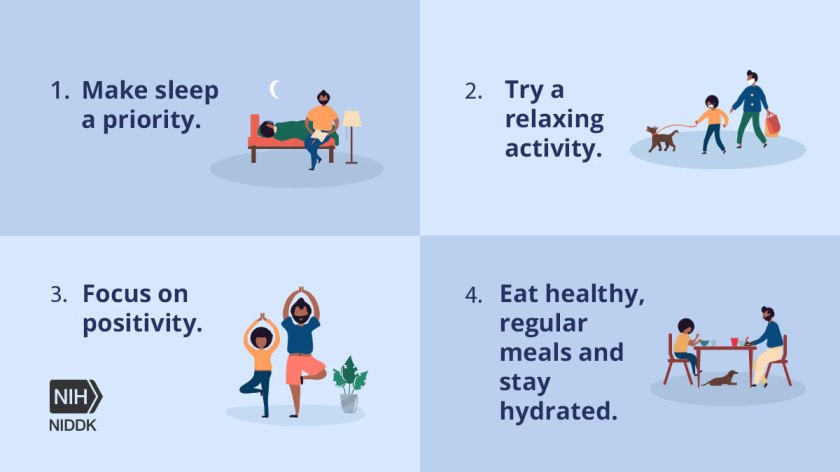
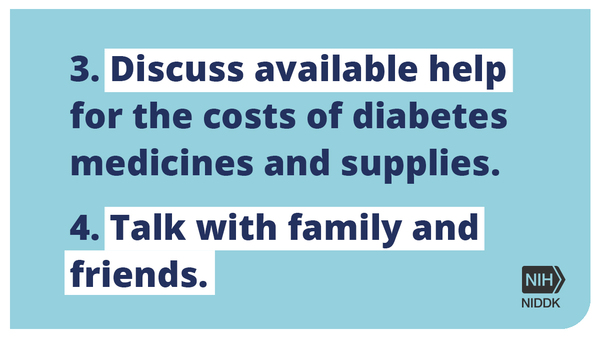
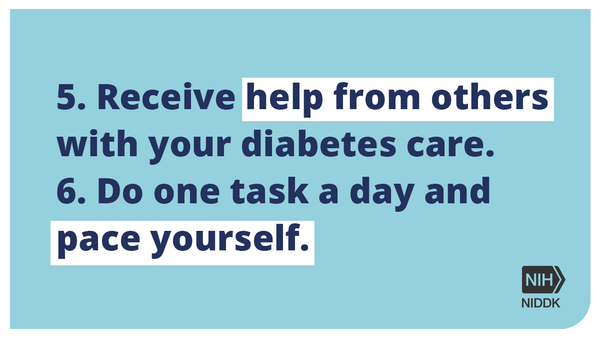
Four illustrations of a family with the text: 1) Make sleep a priority, 2) Try a relaxing activity, 3) Focus on positivity, and 4) Eat healthy, regular meals and stay hydrated.

Using Diabetes Medications 

Remember to take your medicines even if you feel healthy. Talk with your doctor or pharmacist if you have trouble taking your medicines on time or at the correct dose.

If you have trouble paying for medication, your doctor may suggest less costly alternatives. 

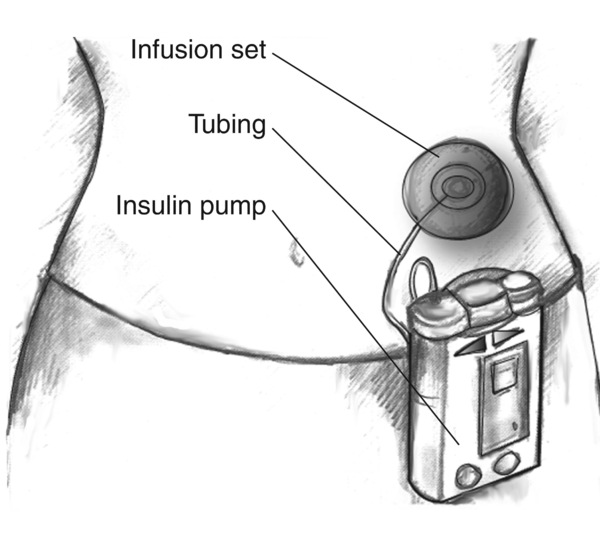
Insulin pumps contain enough insulin for several days. An infusion set carries insulin from the pump to the body through flexible plastic tubing and a soft tube or needle inserted under the skin.

Weight and Diabetes 

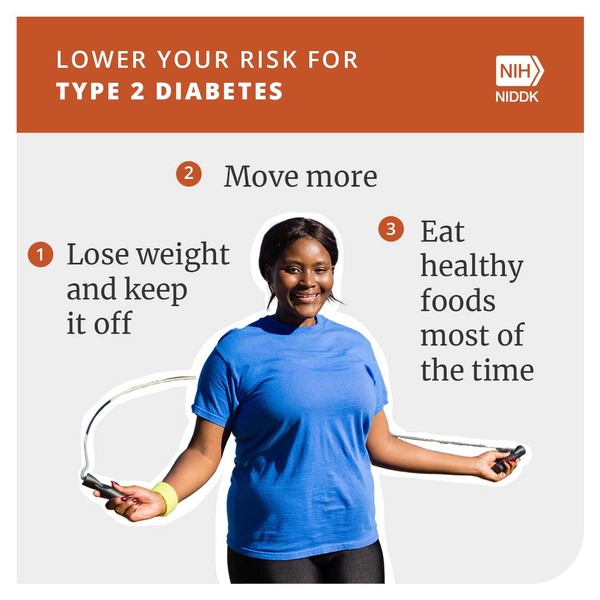
If you have overweight or obesity, ask your primary care provider if healthy eating, physical activity, or other weight-loss treatments may help you manage your weight.

You may prevent or delay diabetes by losing 5 to 7 percent of your starting weight. Use the Diabetes Risk Management Calculator to determine how much weight you can lose to help reduce your risk of developing type 2 diabetes.

Manage Stress and Emotions

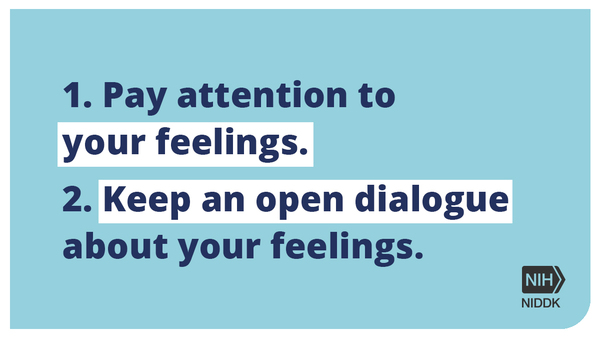
Managing diabetes can be hard. If you feel down, sad, or overwhelmed, learn about healthy ways to cope with stress. Consider talking to a mental health counselor or joining a support group.

Work with your Healthcare Team.

Managing diabetes takes a team. Your health care team may include a primary care provider, diabetes specialist, registered dietitian, or certified diabetes educator.

Ask your primary care provider if you should talk with other health care professionals about preventing or managing diabetes. These might include specialists for

  • feet-podiatrists,
  • skin-dermatologists,
  • heart-cardiologists,
  • eyes-opthalmologists.

Diabetes medicines, devices, and office visits can be expensive. A social worker or a member of your health care team may be able to help you find community resources or financial help for diabetes care.

Your health insurance provider may offer additional services to manage diabetes. Some employers offer preventive medicine services to their employees and their dependents.

Post Images and Graphics

The images and graphics are public use from the National Institute of Diabetes and Digestive and Kidney Diseases, National Institutes of Health. I drew most of the content from the NIKKD website and added my insights.

The National Institute of Diabetes and Digestive and Kidney Diseases (NIDDK), is part of the National Institutes of Health. NIDDK research creates knowledge about and treatments for diseases that are among the most chronic, costly, and consequential for patients, their families, and the Nation.

Cover Image

The cover image of this post was created by JetPackAI available with WordPress.

Awareness and Action

There is much more to know about diabetes but the main point I hope you take away from this post is the importance of getting screened for diabetes. Take this short test to assess your risk.

Assess Your Risk

What was your score? Mine was 5 out of 10, that’s considered high risk. I knew that because my father had diabetes and developed heart disease as a result. I lost him to his disease many years ago. I wish his diabetes had been discovered sooner and that he had done more to keep it well controlled.

Once you are screened, ask your health care provider how often it should be repeated. There is no one right answer, it depends largely on your risk factors. Anytime you feel seriously ill, especially if you have any of the symptoms of diabetes, you should be tested again.

Testing for diabetes is a simple blood test, relatively inexpensive, so there is no reason not to test adults. Children and teenagers need testing less often, unless there are significant risk factors.

Learn more about diabetes signs in this post

10 Silent Signs of Diabetes

Diabetes mellitus type 2, often linked to obesity, complicates blood glucose control for overweight individuals. It contributes to serious complications such as heart disease, kidney failure, and neuropathy. Early diagnosis and effective management through lifestyle changes and medication are crucial. Everyone should be aware of symptoms and high-risk factors for diabetes.

Exploring the HEART of Health

I’d love for you to follow this blog. I share information and inspiration to help you turn health challenges into health opportunities.

Add your name to the subscribe box to be notified of new posts by email. Click the link to read the post and browse other content. It’s that simple. No spam.

I enjoy seeing who is new to Watercress Words. When you subscribe, I will visit your blog or website. Thanks and see you next time.

Use this search box for related posts on this blog or other topics of interest to you.

Dr. Aletha

Public Health Under Fire: HHS and CDC Tensions Explained

In this post I review HHS Secretary Robert Kennedy Jr. at the Senate Finance Committee regarding his dismissal of CDC Director Dr. Susan Monarez and concerns over his anti-vaccine stance. This culminated in resignations from senior CDC officials alarmed by political interference affecting scientific integrity and public health safety.

updated September 20. 2025

This information is current as of the date of original publication or update. It may have changed by the time you read this. I invite you to fact-check what you read here.

This information is not intended for diagnosis or treatment. Before making health decisions, discuss with your physician or other qualified healthcare provider to decide what is right for you.

Kennedy visits the Senate

On September 4, 2025, HHS Secretary Robert Kennedy Jr. appeared before the Senate Finance Committee and was heatedly questioned about several issues. Most of his testimony centered around his firing of the newly confirmed CDC Director Dr. Susan Monarez.

He was also grilled on his seeming lack of support for vaccination as an important public health measure. They questioned why he appointed several antivaccine scientists to the Advisory Committee on Vaccines. Even the Republican Senators who had voted for his appointment expressed frustration with his leadership.

In this post I explain some of what lead to this confrontation.

Trump appoints a CDC Director

After being without a CDC Director since he took office in January 2025, President Trump and the Senate confirmed Dr. Susan Monarez. This is the first time in history that a CDC Director needed Senate approval.

President Trump posted this on social media about his choice for CDC director.

“Dr. Monarez brings decades of experience championing Innovation, Transparency, and strong Public Health Systems. She has a Ph.D. from the University of Wisconsin, and PostDoctoral training in Microbiology and Immunology at Stanford University School of Medicine.

“As an incredible mother and dedicated public servant, Dr. Monarez understands the importance of protecting our children, our communities, and our future. Americans have lost confidence in the CDC due to political bias and disastrous mismanagement.

Dr. Monarez will work closely with our GREAT Secretary of Health and Human Services, Robert Kennedy Jr. Together, they will prioritize Accountability, High Standards, and Disease Prevention to finally address the Chronic Disease Epidemic and, MAKE AMERICA HEALTHY AGAIN!”

President Trump and Secretary Kennedy at the MAHA commission meeting

That was in July 2025. Something changed by late August.

I share this article published by KFF Health News. It was written by Dr. Celine Gounder, a physician and medical journalist who specializes in infectious diseases and global health. She was a member of the COVID-19 Advisory Board of President Joe Biden.

(I have edited the article slightly for length.)

Senior CDC Officials Resign After Dr. Monarez’s Ouster, Citing Concerns Over Scientific Independence

Written by Dr. Céline Gounder August 29, 2025

Four senior officials with the CDC, Centers for Disease Control and Prevention, announced their resignations in recent days, citing what they described as growing political interference in the agency’s scientific work, particularly regarding vaccines.

Two of them — Dr. Debra Houry, the CDC’s chief science and medical officer, and Dr. Demetre Daskalakis, who led the National Center for Immunization and Respiratory Diseases — stepped down on Aug. 27, hours after the White House announced the firing of CDC Director Susan Monarez.

Dr. Monarez, confirmed by the Senate in late July, was removed less than a month into her tenure.

White House spokesperson Kush Desai said Monarez “was not aligned with the President’s agenda of Making America Healthy Again.” Monarez’s attorneys argue that the dismissal is unlawful, as only the apresident can remove a Senate-confirmed director.

On Aug. 28, Jim O’Neill, the deputy secretary of the Department of Health and Human Services, was chosen to serve as acting CDC director. In an internal email sent to CDC staffers Secretary Robert F. Kennedy Jr. confirmed O’Neill as the acting CDC director without addressing Monarez’s departure. 

“I am committed to working with you to restore trust, transparency, and credibility to the CDC,” Kennedy told CDC employees, later writing that

“President Trump and I are aligned on the commonsense vision for the CDC: Strengthen the public health infrastructure by returning to its core mission of protecting Americans from communicable diseases by investing in innovation to prevent, detect, and respond to future threats.”

HHS Secretary Robert Kennedy, Jr.

Concern for Vaccine Policy

Houry and Daskalakis said they had become increasingly uneasy about how vaccine policy was being handled. Both pointed to preparations for the Advisory Committee on Immunization Practices, ACIP, meeting, which recommends vaccine schedules.

Houry said they feared “some decisions had been made before there was even the data or the science to support those. We are scientists, and that was concerning to us.”

Daskalakis added that he was “very concerned that there’s going to be an attempt to relitigate vaccines that have already had clear recommendations with science that has been vetted,” which he warned could undermine public trust. “If you can’t attack access, then why not attack trust? And that’s what I think the playbook is,” he said.

“there’s going to be an attempt to relitigate vaccines that have already had clear recommendations with science that has been vetted,

If you can’t attack access, then why not attack trust? And that’s what I think the playbook is,”

Dr. Demetre Daskalakis

Lack of communication and transparency

Both officials cited instances in which evidence reviews were altered or withdrawn. A CDC analysis of thimerosal, a vaccine preservative, was briefly posted before being taken down at the HHS’ direction.

“If there’s something that doesn’t line up with the recommendations, then that information will be taken down, and it’s not there for the public to see for openness and transparency,” Houry said.

The two also criticized the lack of direct communication between CDC scientists and HHS leadership. Daskalakis said his team was never invited to brief Kennedy on measles and COVID-19.

When asked about Kennedy’s calls for “radical transparency,” Houry and Daskalakis learned about changes to the COVID-19 vaccine schedule for children through social media, not through internal channels.

“The radical transparency manifested itself by a Twitter post, which is how Dr. Houry and I learned that the secretary had mandated the change in the children’s vaccine schedule for COVID,” Daskalakis recalled.

“What is the background that led to that decision? And we were denied access to that information. So, I don’t think that that’s radically transparent,” Daskalakis said.

CBS News and KFF Health News reached out to HHS for comment on some of the allegations made by Houry and Daskalakis but did not immediately hear back.

Scientists Raise An Alarm for Public Health

Both officials said they had no jobs lined up when they resigned. Houry described the decision as an effort to raise the alarm about the direction of the agency.

“For us, this was really sending out a bat signal,” Houry said. “We were the very senior scientists and career leaders at CDC. We thought this was the time to stand together and try to do what we could to raise the alarm around public health in our country.”

Daskalakis said remaining at the CDC under current conditions would have made them complicit in what he called the “weaponization” of public health.

“The safety has already been compromised. … We are flying blind in the U.S. already. If we continued … we would be complicit and would be facilitating the ability to go from flying blind to actively harming people,” he said.

Houry emphasized the severity of the moment by noting that she left without a backup plan.

“My leaving without a job was really just showing how dire the circumstances had become,” Houry said.

Daskalakis said his decision was also shaped by his medical oath.

“As a physician, I take the Hippocratic oath: First, do no harm. I am seeing ideology permeating science in a way that is going to harm children and adults. … I think we are seeing things that are happening that are making our country less prepared to be able to respond to the everyday pathogens … but also … to the next big thing.”

Both also expressed concerns about their personal safety in the current climate.

“The environment we live in … stoked by misinformation, especially from people considered by some to be health authorities, makes me worried for all of us in public health,” Daskalakis said. “I am concerned, but that’s part of our job … to be brave and continue to speak the truth even when we are outside of the CDC.”

Photo by Photo By: Kaboompics.com on Pexels.com

Gun Violence-Another Public Health Issue

The resignations came weeks after a shooting outside the CDC’s Atlanta headquarters, which law enforcement linked to COVID misinformation.

Houry said the White House response to the shooting was muted. Kennedy toured the site but later gave an interview expressing distrust of experts.

“That was after the attack. It was based on COVID misinformation. So this is when we were trying to build trust,” she said.

Daskalakis added that while Kennedy later described mass shootings as a public health crisis, he believed the secretary should address misinformation as a root cause.

“The misinformation about the COVID-19 vaccine — that has been documented by the Georgia Bureau of Investigation” as the reason for the CDC shooting. “I would really recommend that the secretary actually do take his own advice and actually address the core problem that led to that shooting as well,” he said.

He also noted that the CDC’s gun violence prevention programs had been sharply reduced. “We talk about violence as a public health problem.

It is, and there’s things we can do to prevent it. Unfortunately, the majority of that program, the staff are terminated,” he said.

“We talk about violence as a public health problem.
It is, and there’s things we can do to prevent it. Unfortunately, the majority of that program, the staff are terminated,”

Dr. Daskalakis

The firings and resignations have sparked calls for oversight. Independent Sen. Bernie Sanders of Vermont called for a bipartisan investigation, Democratic Sen. Patty Murray of Washington urged Kennedy’s removal, and Republican Sen. Bill Cassidy of Louisiana — who voted to confirm Kennedy’s appointment as HHS secretary — said the developments would “require oversight.”

The events come as the FDA narrowed eligibility for updated COVID-19 vaccines to older adults and people with risk factors for severe COVID.

KFF Health News is a national newsroom that produces in-depth journalism about health issues and is one of the core operating programs at KFF—an independent source of health policy research, polling, and journalism. Learn more about KFF.

Subscribe to KFF Health News’ free Morning Briefing.

This article first appeared on KFF Health News and is republished here under a Creative Commons Attribution-NoDerivatives 4.0 International License.

Dr. Monarez Speaks to the Senate

On September 17, 2025, “She testified that she was ousted last month because she refused to cede to Health Secretary Robert F. Kennedy Jr.’s demands to pre-approve vaccine recommendations for the public and fire career scientists.

“He just wanted blanket approval,” Monarez told members of the Senate Committee on Health, Education, Labor and Pensions on Wednesday. “Even under pressure, I could not replace evidence with ideology.”

Monarez described a string of events that she said eventually led to her dismissal, culminating with a “tense” meeting in late August when she clashed with Kennedy over his plans for an influential CDC committee that issues recommendations on vaccines.”

Read the full report from NPR at this link

Ousted CDC director testifies she was fired for resisting pressure from RFK Jr.

Learn about the CDC

I hope you will take the time to learn more about the Centers for Disease Control and Prevention. According to the website, the

  • CDC is the nation’s leading science-based, data-driven, service organization that protects the public’s health.
  • CDC puts science into action to help children stay healthy so they can grow and learn; to help families, businesses, and communities fight disease and stay strong; and to protect the public’s health.

The professionals at the CDC cannot do their job alone. They need the support of elected and appointed government officials and the people they serve.

Health and safety threats are often new and unpredictable, like a viral pandemic or natural disaster, and multiple agencies need to work together to successfully manage threats. Cooperation and support are needed. Blaming and accusations are unproductive and unprofessional and contribute to lack of trust by the people they serve.

Post Graphics

The two graphics about vaccines are currently on the CDC website. The cover photo of CDC headquarters is also on the site.

Exploring the HEART of Health

I’d love for you to follow this blog. I share information and inspiration to help you turn health challenges into health opportunities.

Add your name to the subscribe box to be notified of new posts by email. Click the link to read the post and browse other content. It’s that simple. No spam.

I enjoy seeing who is new to Watercress Words. When you subscribe, I will visit your blog or website. Thanks and see you next time.

Medical stethoscope and heart on a textured background

Dr Aletha