Hell and Back-a breast cancer story

Hell & Back is a memoir by pediatric ENT (ear, nose, throat) physician Tali Lando Aronoff, M.D. who finds her perfect life upended in ways she never imagined would happen to her.


The sorrows of death compassed me, and the pains of hell gat hold upon me: I found trouble and sorrow.


Psalm 116:3, KJV, public domain


Wife and mother

Just based on the title, you know this isn’t a happy story.

The main character, Tali, seems to have the perfect life. She is a pregnant young woman with a husband who adores her and two beautiful children. They have good jobs, a nice house, a nanny who is good with the kids. She has a loving and supportive extended family.

Then her father is diagnosed with an incurable brain tumor. She develops life threatening preeclampsia. She has an emergency caesarean section, delivering her baby prematurely.

Then she finds a lump in her breast. It is cancer- that has already spread.

Oh, did I tell you she is a physician with a busy surgical practice?

Hell & Back: Wife & Mother, Doctor & Patient, Dragon Slayer

by Tali Lando Aronoff, M.D.

Hell & Back is not a novel. It is a memoir by pediatric ENT (ear, nose, throat) physician Tali Lando Aronoff, M.D. who finds her perfect life upended in ways she never imagined would happen to her.

(By way of disclosure, I have never met Dr. Aronoff. After reading about her, I asked for a complimentary copy (PDF) of her book in exchange for a review. This blog post has affiliate links which will help fund this blog if a purchase is made. )

Doctor and patient

A physician’s illness can be awkward, both for us and for those who take care of us. Other doctors may assume we know more about our diseases than we do and fail to give us the same information they would give to “real” patients. We, on the other hand, often try to help them out by diagnosing ourselves, or minimizing our symptoms because we don’t want to bother them, or seem like complainers. Either approach impacts our care negatively.

But being a physician can be an advantage and it certainly was for Dr. Aronoff since she had friends who specialized in breast surgery, oncology (cancer), radiation therapy, and plastic surgery, all of which she would need. Recently out of training,  they had the most up to date knowledge in their fields. They helped her get to the right doctors, including getting appointments quickly.

But being a physician didn’t spare Dr. Aronoff pain from her mastectomy and the expanders (used to make room for eventual breast reconstruction). She still had to cope with  the debilitating side effects of chemo- fatigue, nausea,appetite loss, and hair loss- all the while caring for 3 small children.

A physician’s friends and family may assume that because we are healers, we are brave, strong, and can take care of ourselves. Dr. Aronoff found her closest friends understanding and supportive, and many went above and beyond, driving her to appointments, taking her kids to activities, and bringing meals.

“The naked truth”

When she lost her hair, she tried wearing wigs and found them uncomfortable so opted for scarves instead. This made her illness obvious, so when she went out in public people noticed her. She described becoming a “Synagogue Celebrity”, with people in her community posting sightings of her on Twitter because she “looked so good”.


“I smiled at praises..inside though, I was slipping, retreating into myself. But I didn’t dare let them see. With time and practice, I learned to navigate and embrace the dichotomy. I realized that projecting courage may not reveal the whole truth, but it’s not always a lie either.
Eventually, as the months passed, I regained my courage, I still had fight in me. So, I saved the naked truth for a handful of my trusted few.”

Daughter and doctor


Dr. Aronoff shared a poignant yet humorous moment celebrating Chanukah with her extended family while in the middle of chemotherapy that made her nauseated and weak.  She knew this would be the last time they would celebrate with her father, who had a terminal malignant brain tumor, so she made the 3 hour car trip to her parents’ home.


“In the glow of candlelight, I watched my father from the corner of my eye, burning his image onto my brain. I knew in my gut it would be the last year we’d celebrate together. We sang the ancient chant Hanerot Halalu about the miracle of the small jug of oil that burned for eight days. My family sure as hell needed some miracles these days too.”  

When the evening was over, they loaded the kids into the car for the long ride home.


“Alex (her husband) and I smiled at each other optimistically, anticipating a smooth ride back home with sleeping children. I hugged everyone goodbye and kissed my father lightly on the cheek. And just when I thought I was in the clear…(her daughter) Scarlett leaned over and vomited all over me!”

Who should read this book and why

Despite pieces of levity, this book is serious and hard hitting at times. Dr. Aronoff does not mince words, nor does she shy away from frank talk about intimate issues and raw emotions. If 4-letter words offend you, you may not want to read this book.

Dr. Aronoff’s book outlines the basics of diagnosis, staging, and treatment of breast cancer but I don’t think she intends it as a definitive patient guide. She does not imply that her experience is what other breast cancer patients should expect; rather she emphasizes that every patient’s journey may be different.

If you have had breast cancer, you may or may not identify with her experience. If you have not had cancer, her experience may motivate you to get a screening mammogram, explore your genetic risk, and consider what you can change in your lifestyle to decrease your  risk of getting breast cancer. (I’ll include some references for this at the end.)

“Dragon Slayer”

I won’t leave you hanging; this story has a happy ending. Dr. Aronoff is now disease free, and back working at her practice.She is a “survivor” but the threat of a recurrence will always loom over her. She may never know for sure if she is “cured”.

I invite you to visit her website to see photos of her before, during, and after treatment, and to read a sample chapter of her book.

Interlude-Women’s Cancer Stories

Dr. Eleonora Teplinsky talked to Dr. Aronoff for her podcast series Interlude. Listen to the interview at the above links.

Check out these breast cancer resources

Breast cancer screening

Understanding your breast cancer risk


Breast cancer is not exclusively a women’s disease, it happens to men also.

Risk factors for breast cancer in men

The Susan G. Komen Foundation offers this printable resource

Coping with a Breast Cancer Diagnosis


Informacion en espanol- Cáncer de mama

Shop To Fight Breast Cancer! Every Purchase Helps Give Free Hospital Mammograms To Women In Need!

Again thanks to Dr. Aronoff for giving me her book and sharing her story with all of us. I think we all have learned something that might help us or someone we know.

Dr. Aletha

From Doctor to Fashionista- the journey to Shelfie Shoppe

you might expect that once in practice, doctors would work at it for life, and most do. But a significant number don’t. After all those years, some doctors realize that medicine is not for them, either because they don’t find the work satisfying and fulfilling, or because their personal and family life suffers, or a combination of these and other factors. Several months ago I shared a guest post from another woman doctor who faced a similar dilemma. She solved her problem in an unconventional creative way. Here is her story, followed by an update.

Physicians spend from 10 to 15 years, sometimes more, in school and advanced training before beginning practice. Even though we begin receiving a stipend during residency, compared to the number of hours required, the financial return is minimal. Most physicians are in their late 20s to early 30s before earning a salary comparable with their training. And they often start out hundreds of thousands of dollars in debt.

So you might expect that once in practice, doctors would work at it for life, and most do. But a significant number don’t. After all those years, some doctors realize that medicine is not for them, either because they don’t find the work satisfying and fulfilling, or because their personal  and family life suffers, or a combination of these and other factors.

Doctors solve this dilemma in various ways. Some redirect their career to a different specialty, which usually requires going back into training and completing yet another residency. Some change to a non-clinical medical position- administration, teaching, consulting. Some continue using their medical knowledge by  writing, speaking, consulting, teaching, in a non-healthcare setting.

One physician did none of these. Several months ago I shared a guest post from another woman doctor who faced a similar dilemma.  She solved her problem in an unconventional creative way. Here is her story, followed by an update.


My Unexpected, Crazy Journey from Medicine to Fashion

By Joanne Jarrett MD

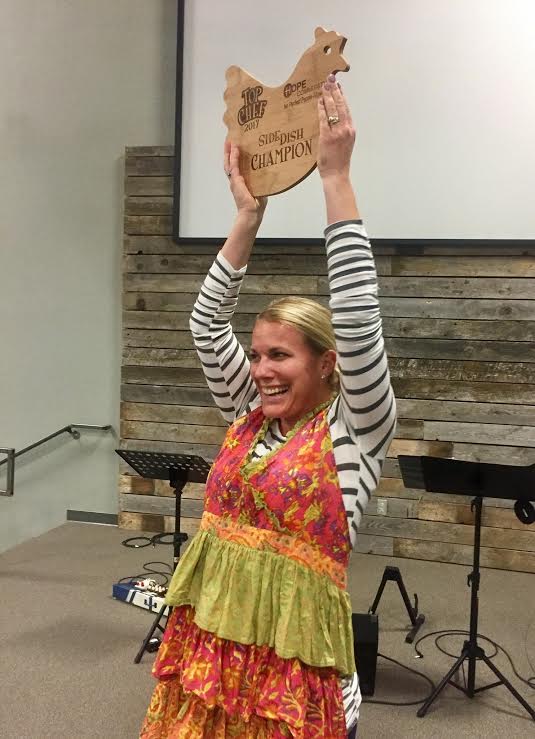
woman in an apron holding a wooden sign-
Dr. Jarrett enjoys cooking too.

“Hi! My name is Joanne Jarrett, and I am a retired family physician. Not the “golden years” kind of retired, but rather the “retired sounds better than I quit” kind.

a career in the making

If you’d told me in my twenties that I would be designing loungewear for women and preparing to move to a farm in rural Montana in my mid-forties, I’d have said you had the wrong girl. I was a determined, sharp, ambitious, successful medical student and resident, and I was planning to have it all.

My husband and I wanted kids, but that would have to wait until all of our training was complete. We took turns going through our residency programs, and we moved home to Reno, Nevada from a two year stint in Lincoln, Nebraska with 24 weeks of my first pregnancy under our belts and a new practice to run.

Needless to say, my being a stay-at-home mom was not plan A for our family.

a fast track career

When I became pregnant, I was working a full time family practice, seeing patients at 3 hospitals before and/or after my full day, doing urgent care some nights and weekends, and taking call for our large group a week at a time every 7 weeks. I knew that schedule was completely incompatible with motherhood, but we thought I’d work 2 or 3 days a week and have my mom nanny while I worked.

Then Delaney was born, and reality set in.

I realized that I didn’t have room inside of me to be the physician my patients deserved and to be the wife and mother I wanted for my family. I already knew that during those 6 years of marriage before kids I worked hard all day, gave every bit of myself away piece by piece, and then came home and offered my husband the crappy leftovers. He knew how hard I was trying and didn’t complain much.

It worked, but a baby tipped the scales. We couldn’t both work jobs where emergencies make the schedule predictably unpredictable. I was exhausted and knew there was no way I could face the emotional lability and intellectual demand of being a physician in my state. And I loved being with that baby girl. When I was away from her I felt an undeniable tug back.

Then Bailey arrived less than 2 years later and it was decided. I was staying home. For good.


a career crossroads

At first, I was in survival mode and didn’t care about the changes I saw in myself. I just wanted sleep and ice cream. But eventually I started to wonder if who I used to be would ever matter again and how to find her.

Over a decade in, that woman is back. But she’s better than she used to be. More patient. More settled. More fulfilled. Less scared. Looking back, I’ve transitioned from professional to harried new mom to seasoned household CEO, self respect and vigor for life mostly intact!

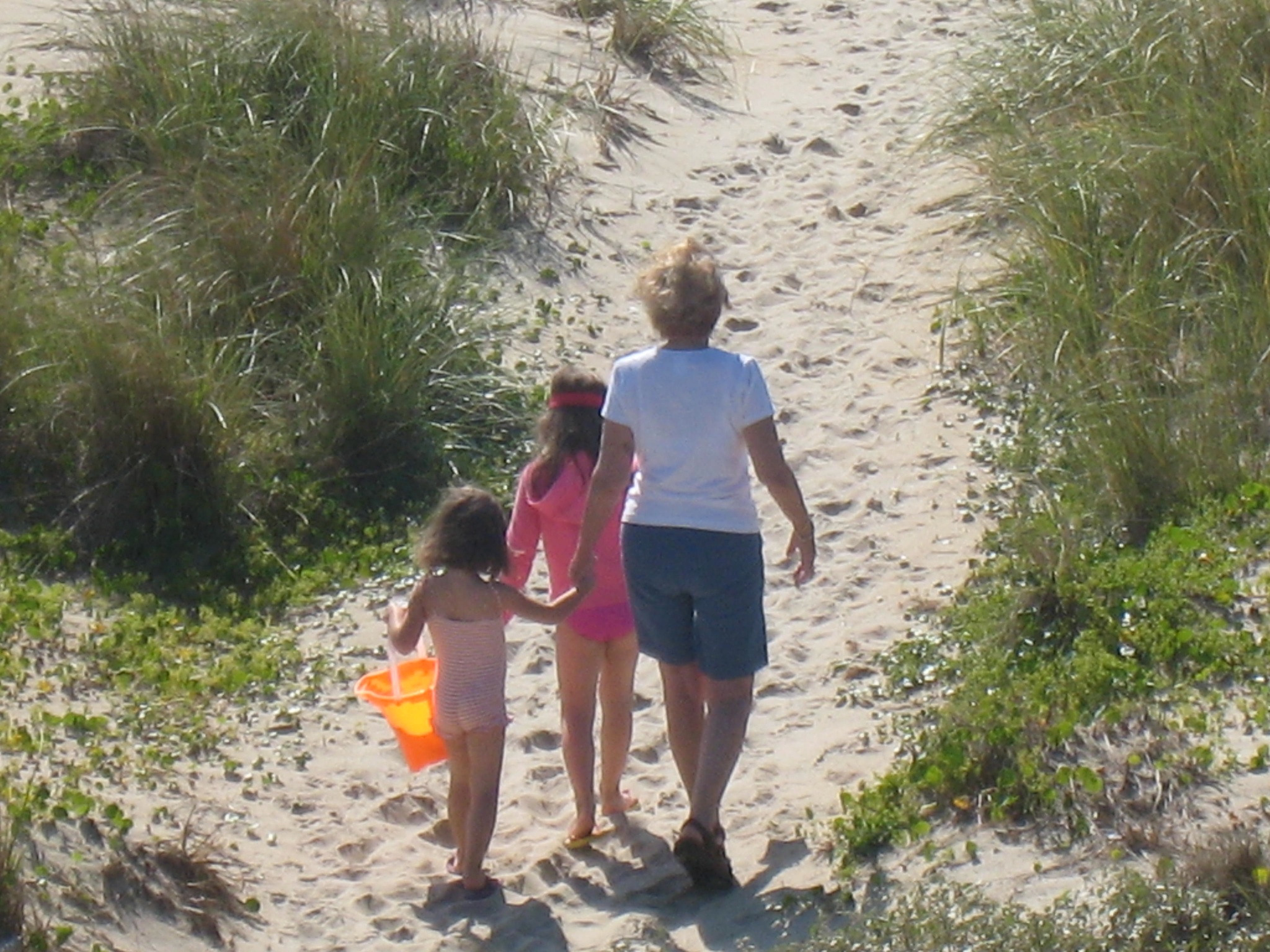
a woman walking with two girls on sand
Dr. Joanne’s grand mother  with her daughters

Running my family has been pretty much all consuming, but I’ve always had a creative side and, through the years, I have developed hobbies that foster that. Scrapbooking made sense when the kids were babies. Combining creativity with a means of wrangling the millions of photos we were taking was a win win.

A limited decorating budget and a very picky décor taste lead to me borrowing my mom’s sewing machine and making an entire house worth of curtains, learning on the fly.

And I have always had a thing for wrapping a beautiful gift. To the point where I have a whole wall full of paper, ribbons, and other do-bobs to help me wrap a stunner at a moment’s notice.

Sewing flat, square things like curtains and pillow covers slowly evolved into kids’ costumes and then street clothes. I have a thing for fabric, and the combination of creativity and precision that following a pattern requires satisfies my creative flair and my bent towards the analytical.

I began altering clothes in my closet to better fit my (ever varying, eye roll!) shape and began seeing the potential in clothes instead of the mere reality of what was on the hanger.

I also have a passion for downtime. This wasn’t always the case. Scott and I have been married 20 years, and at first I had no idea how to relax. Saturday would come and I’d say, “What do you want to do today?”

From the couch, he’d say “this!”

My skin would crawl .I just didn’t know how to have a recovery or leisure day.

Well, I’ve learned well! You’ll never catch me hanging around at home in my jeans and underwire bra. Huh-uuuuh! As soon as I get home at the end of the day, I head straight to my closet to get into my cozy clothes. I live in them when I’m home. Even if I’m busy with this and that, I like the psychological change triggered by putting on those comfy clothes.

But those clothes aren’t perfect. I’m setting out to change that! We need a little coverage and support despite that fact that the bra is off the team at home. I discovered shelf-bra camis and began wearing them as loungewear and pajamas. I could never figure out why this concept wasn’t expanded into other pieces.

a career changes directions

After years of googling “shelf bra pajamas” and “shelf bra nightgown” and coming up with nothing except slinky lingerie (get real!!), I decided to design a line of cozy loungewear for women who want to be comfortable at home in something soft, cute, flattering and supportive. Something that feels and looks great to wear in the “no bra zone” but that is fit for public consumption should the need arise. I figured if I couldn’t find them, I’d make them and maybe other ladies will like them too.

And not all shelf bras are created equally, if you know what I mean. I set out to design the perfectly soft but flattering shelf that has enough thickness for coverage and enough separation to look great. I embarked upon a know-nothing journey into apparel production and have learned an entirely new industry over the last year.

I call the line “Shelfies.” Shelfie Shoppe launched on May 8th , 2018 taking preorders as part of a Kickstarter campaign to fund the first production run.”

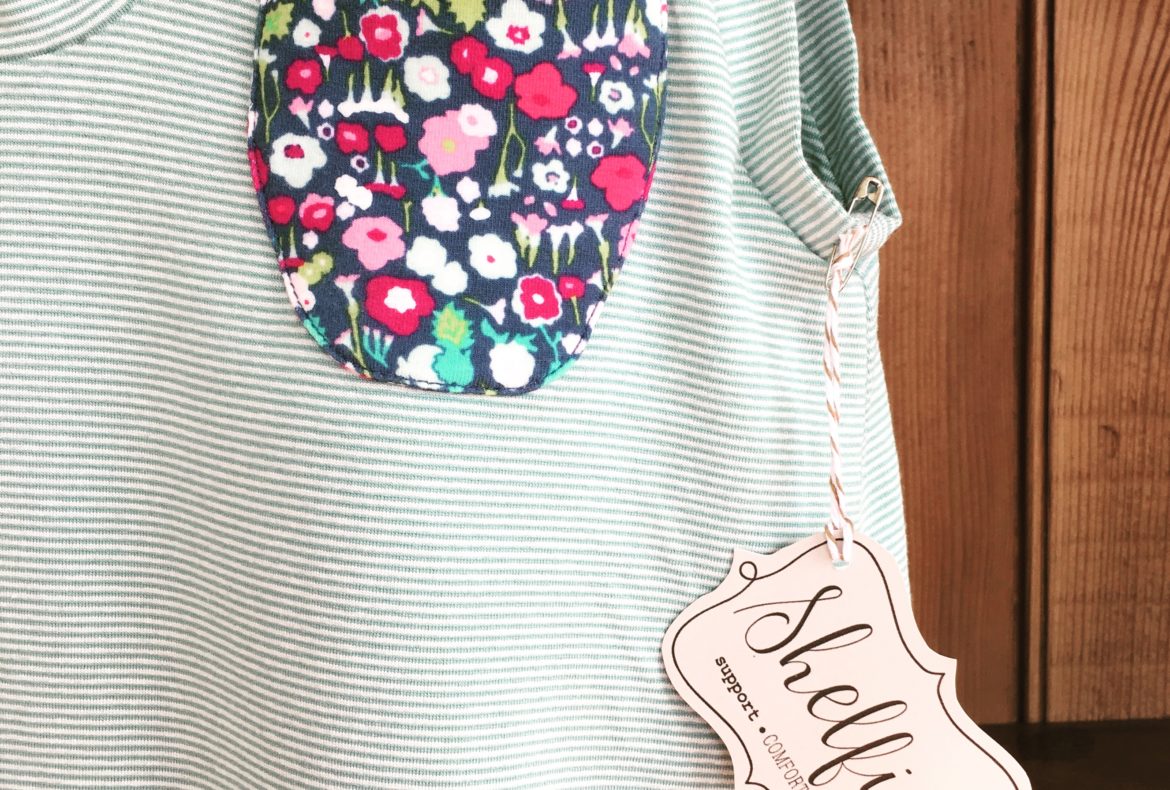
a shirt with a tag-shelfie

Like infatuation, excitement is fleeting. Strength of will and commitment will get me to the finish line.

Joanne Jarrett, M.D.


Where Shelfie Shoppe is now

In March 2019, Joann posted an update about the project on her blog (although she had been sending updates to her Kickstarter supporters, like me, all along). In the update she details all the bumps and unexpected detours that repeatedly slowed down her journey. I encourage you to read about it at the link I will give you, but here is a sample of what got in the way of progress.

  • She had to change factories when the one she contracted with lost too many employees.
  • A fabric she counted on using was unexpectedly not available.
  • A pattern piece wasn’t fitting correctly.
  • They had the wrong bra pads.
  • Her family moved and while staying temporarily in a camper, she didn’t have WiFi, making communication with her suppliers almost impossible.

What Joanne has learned on her journey

“It has been said that the most common cause of failure for entrepreneurs is simply giving up. After this roller coaster, I can see how that happens.

Discouragement can feel like eminent defeat, but they are not one and the same. I have allowed myself to get down-hearted at times, but difficulty is not a worthy adversary to my determination and perseverance. I am excited about Shelfie Shoppe, but like infatuation, excitement is fleeting.

Strength of will and commitment will get me to the finish line and excitement will be there to meet me.”

What we can learn from Joanne’s example

When the circumstances of life leave us feeling
• impatient
• unsettled
• unfulfilled or
• scared
we may need to evaluate if change is necessary.
It may not be as drastic a change as she made, but even small steps can get us to a place where we can use our talents and passions to create a life that satisfies us and blesses others.

However, we can expect bumps and snags along the way, which may seem like insurmountable problems but can be opportunities for learning and growth that we didn’t anticipate.

Here is Joanne’s update. Check it out and follow her blog to find out what happens next. And when I get my shelfie dress from her, I’ll post a photo and tell you all about it.

HERE’S THE LATEST IN THE CLOTHING LINE SAGA. KICKSTARTER CAMPAIGN SUCCESS AND THE BUMPS THAT FOLLOWED!

Dr. Aletha

Maybe you’d like to start a blog. Try WordPress.com; I did and here I am. (This is an affiliate link. )

WordPress.com