Vital questions you should ask about immunization

This coronavirus pandemic is serious. We don’t yet have a vaccine or effective treatments. To protect ourselves, our familes, and our entire communities we should all be practicing social distancing and other hygiene measures as we wait for a safe, effective vaccine and treatments.

The sickness and deaths COVID-19 has caused makes immunization more important than ever. While social distancing, hand hygiene, and a clean environment are vital, a safe and effective vaccine will bolster those measures. Around the world, scientists are working on a vaccine for this novel coronavirus.

Fewer and fewer people have had experience with serious infectious diseases like measles, rubella, polio, and diphtheria, so maybe that explains why in recent years immunization rates for many diseases have plummeted. Also due to misinformation about the value and risk of immunization, some people lost confidence in vaccines to protect us against disease without causing significant side effects or adverse events.

As a result, we still have outbreaks of measles and whooping cough (pertussis) and seasonal influenza disease and deaths. The threat of a new virulent disease due to a novel coronavirus highlights the value of immunization.

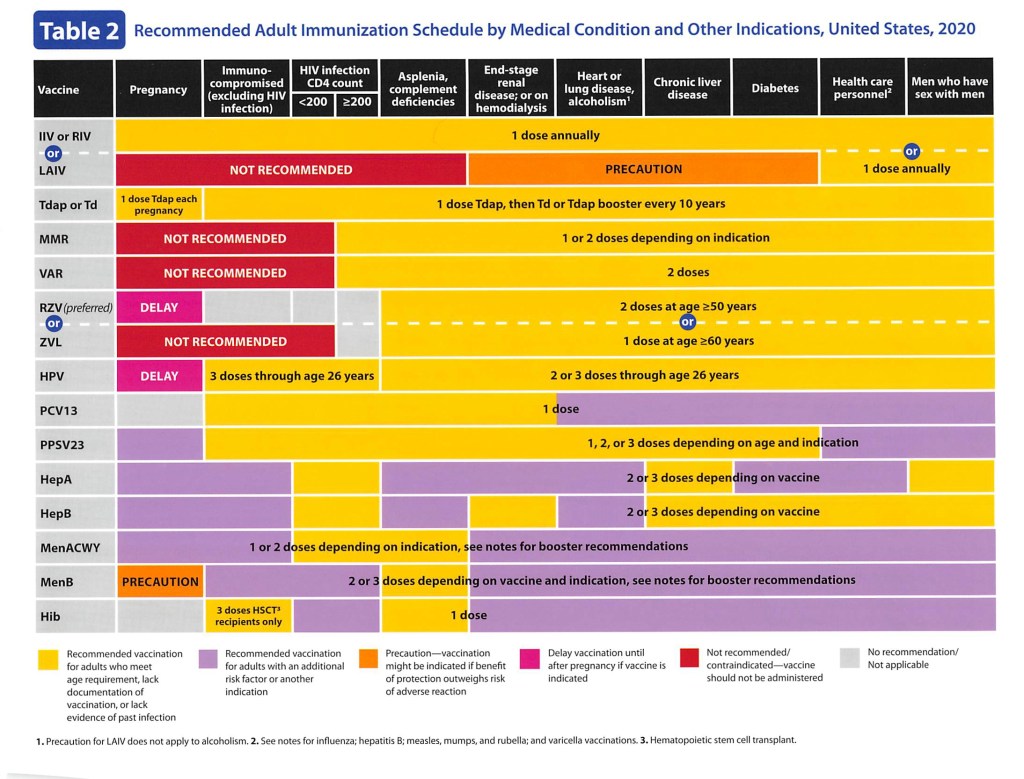
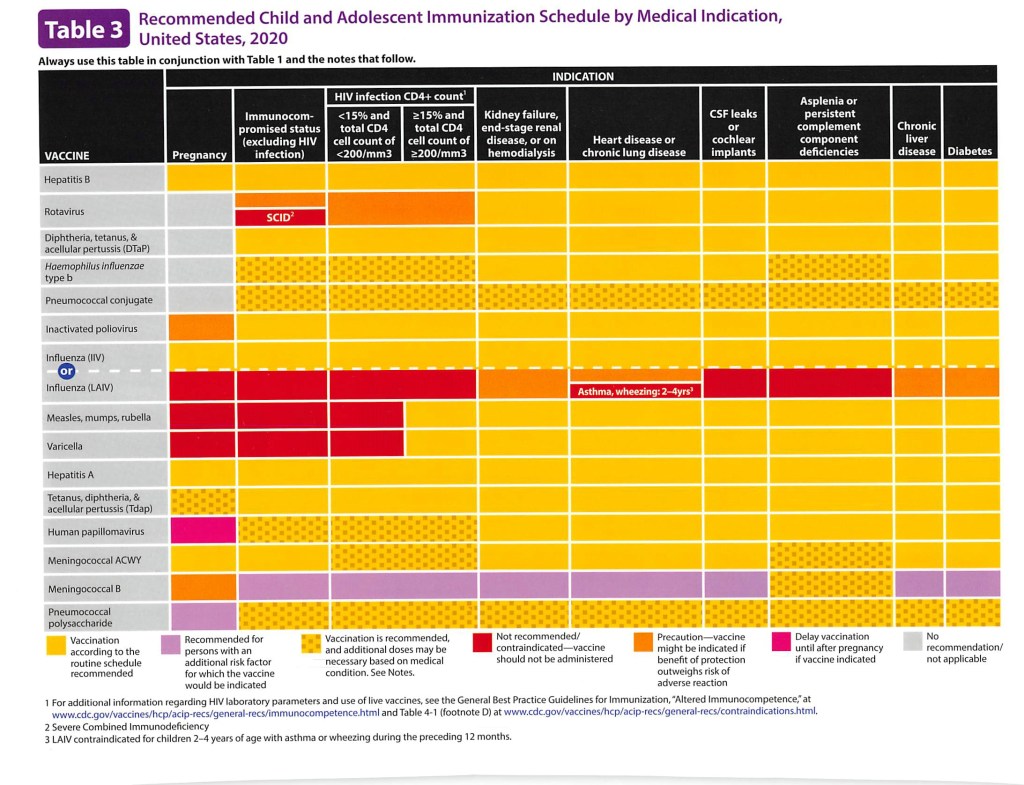
immunizations by age

On the first two charts, vaccines are listed on the far left column. On the top row, find your age, then scroll down to find the vaccines appropriate for you.


RECOMMENDED ADULT IMMUNIZATIONS 2020
RECOMMENDED CHILD AND ADOLESCENT IMMUNIZATIONS 2020

questions to ask about vaccines and the immunization process include.

  • What contagious diseases am I likely to be exposed to or at risk for?
  • What are the risks of those diseases?
  • What are the risks of a particular vaccine for me?
  • What are the risks versus benefits of immunization?
  • What else can we do to prevent an infection?

vaccines by medical condition

On these charts vaccines are also listed on the far left column. Across the top row are various medial conditions that should be considered along with age in recommending a particular vaccine. It’s just as important to know what vaccines you should not receive as those that you should.
2020 vaccination recommendations from the CDC

Please visit the CDC website for complete details about the various vaccines and discuss your need for immunizations with your and your children’s physicians.
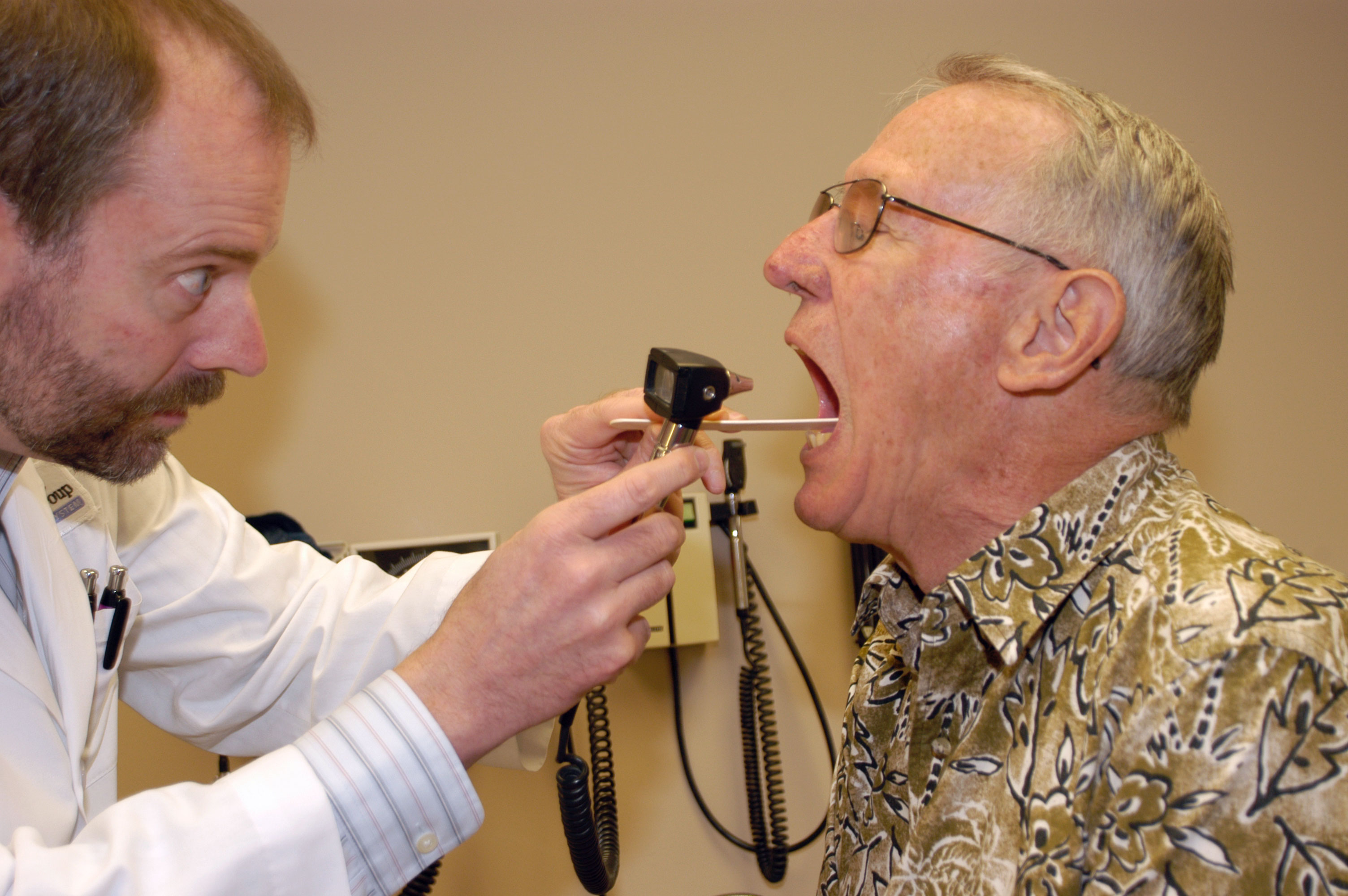

“Am I contagious?”

Most of us have gone to work, school or social events with symptoms suggestive of infection- a cough, runny nose, upset stomach- putting our friends and colleagues at risk. Isolation of sick people and quarantine of their contacts slows the spread of infectious disease and is helping to contain the COVID-19 pandemic.

Even before COVID-19, patients visit me with new onset symptoms, or symptoms that have been present several days, and ask “am I contagious?” Most of the time I can’t tell them definitely whether they are or not. When in doubt, it’s best to not expose other people unnecessarily, especially those who are most susceptible.

This coronavirus pandemic is serious. We don’t yet have a vaccine or effective treatments. To protect ourselves, our familes, and our entire communities we should all be practicing social distancing and other hygiene measures as we wait for a safe, effective vaccine and treatments.

RESOURCES FOR understanding COVID-19
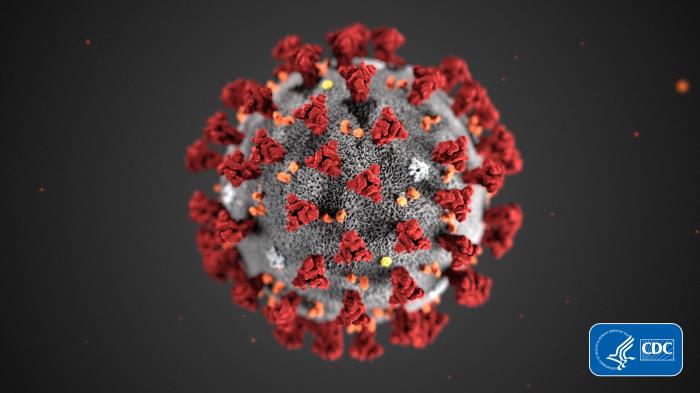
an electron microscope image of the coronavirus
used with permission, CDC.GOV

Tips from your Family Doctor

CDC-Coronavirus Disease 2019

exploring and sharing the HEART of health

Thanks for reading and sharing this important information about protecting the HEART of health.

Dr.  Aletha 

These may be good options as long as we need to stay in our homes.

a way to exercise at home

a way to get medical supplies delivered

a source for food if you don’t have local delivery

homeschool resources

Pets and their people-together safe at home with COVID-19

But for some people, especially those who live alone, pets may provide much needed companionship and relief of stress and anxiety during this unsettling time.

While sheltering at home during this COVID-19 outbreak, many people are spending more time than usual with their pets. If you spend much time on social media you’ve seen the memes of pets who miss the privacy they usually enjoy when people are away.

But for some people, especially those who live alone, pets may provide much needed companionship and relief of stress and anxiety during this unsettling time.

To date, there is no evidence that pets can spread the virus (coronavirus) to people.

CDC

When animals are more than pets

Dogs have been used to help visually impaired persons for hundreds of years, but now they and other animals assist people with other types of disabilities, as well as provide companionship and comfort.

Besides “guide dogs” who assist blind persons, other categories of animal helpers include

emotional support animals

An emotional support animal (ESA) is a companion animal which provides therapeutic benefit, such as alleviating or mitigating some symptoms of the disability, to an individual with a mental or psychiatric disability. Emotional support animals are typically dogs and cats, but may include other animals.

cat lying on the ground next to green shrubs

service animals

A service animal is any dog that is individually trained to do work or perform tasks for the benefit of an individual with a disability, including a physical, sensory, psychiatric, intellectual, or other mental disability.

Psychiatrist Dr. Vania Manipod, blogger at freud and fashion  explains how these terms apply to psychiatric illnesses in her blog post here-

Therapy Pet-Friendly Guide

In the United States, there is no evidence to suggest that any animals, including pets, livestock, or wildlife, might be a source of COVID-19 infection at this time. However, because all animals can carry germs that can make people sick, it’s always a good idea to practice healthy habits around pets and other animals.

CDC
woman on a horse
a rare experience for me-riding a horse

The Americans with Disabilities Act, ADA, “requires State and local government agencies, businesses, and non-profit organizations (covered entities) that provide goods or services to the public to make “reasonable modifications” in their policies, practices, or procedures when necessary to accommodate people with disabilities. The service animal rules fall under this general principle.”

Other countries may have different laws so if you plan to travel abroad with your animal assistant, you should check the laws for your destination prior to arrival to avoid any problems with your animal’s entry or departure.

Remember that animal assistants are not just pets, they are working; so we should not distract them or interfere with their duties when we encounter them, as this report warns.

Guide dog handlers are urging the public to resist the temptation to pat the working animals regardless of how cute they are.

The Veteran’s Health Administration uses horses to help veterans deal with PTSD.

I know from my own experience with rescued Arabians, who as a breed have a reputation of being easily excited, that they help me be calm and unhurried around them. It is almost as if they provide me with biofeedback and reflect back to me what my own degree of tension might be.

Dr. Hans Duvefelt

Read more at his blog “A Country Doctor Writes”

If Nothing Else Works, Try a Horse

And for some veterans, “living with wolves” saves their lives.

If you are sick with COVID-19 (either suspected or confirmed), you should restrict contact with pets and other animals, just like you would around other people. Although there have been no reports of pets becoming sick with COVID-19 in the United States, it is still recommended that people sick with COVID-19 limit contact with animals until more information is known about the virus. This can help ensure both you and your animals stay healthy.

CDC

For more information about pets and COVID-19, talk to your pet’s veterinarian and refer to the CDC website for recommendations.

If You Have Animals

These two stayed with us while their owner was on a trip. We thought we were taking care of them, but we received just as much as we gave.

And a resource from the American Medical Veterinary Association

SARS-CoV-2 in animals, including pets

exploring the HEART of health with pets

Dr. Aletha