
A simple way to help your doctor beat burnout

“What would you say to your doctor on your deathbed?”


What would you say to your doctor on your deathbed?

Would you remind them of the times you waited weeks  for an appointment or sat  in the waiting room long past your scheduled appointment time?

Would you ask them why they didn’t try harder to cure you? Would you ask why all the tests and medicines they ordered didn’t work to save your life?

Or would you ask, “How was your vacation?”
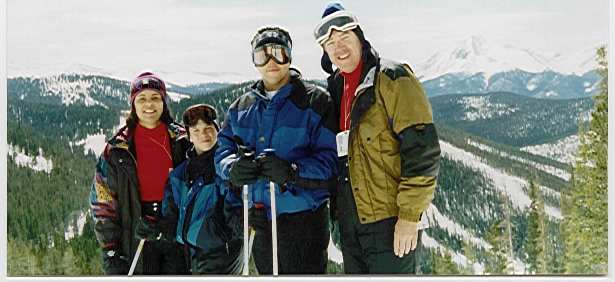
family skiing on mountain
one of many vacations with my family 


A patient named Rosemary

One woman did. In a JAMA  essay (Journal of the AMA), Dr. Wendy Stead , an internal medicine physician, described her patient, Rosemary, who “never had a bad interaction with any of her health professionals. After a clinic visit, or hospital stay, she will rave about the excellent care she received from the many teams involved.”

“This is not because we are all such exceptional caregivers.” she admitted. “It is because of the kind of patient she is..the kind who probes for the person behind the doctor.

When Rosemary was terminally ill, Dr. Stead left on a family vacation, fearing that her patient would die while she was gone. As soon as she returned, she went to Rosemary’s home to visit one last time.

Now so weak, Rosemary was confined to bed, and could barely speak. As Dr. Stead leaned over the bed straining to hear her, Rosemary asked,  “How was your vacation?”


Probe for the person behind the doctor

 

Dr. Aletha dancing
I actively pursue a hobby-ballroom dancing.


Do you know if your doctor has children or grandchildren?

What hobbies they pursue?

Who is their favorite sports team?


My husband and his eye doctor share an interest in  the Oklahoma City Thunder basketball team. At each visit, he and Dr. Nanda spend a few minutes discussing the team’s progress, good or bad.  It makes what otherwise would be a dry, routine visit into a special occasion. I think Dr. Nanda enjoys it as much as Raymond does.

Chesapeake Arena
Chesapeake Arena, home of our beloved Thunder Basketball team – Dr. Nanda has season tickets and follows the team closely.


When I was expecting my second son, William and Audrey became my patients. William had multiple serious health conditions but he was always positive and never complained.

During his frequent office visits, they never failed to inquire about the progress of my pregnancy. After I delivered they always asked about my new baby boy.

When I walked into the exam room, William’s first words were always, “How are you Doc?” And the next words were, “How’s the baby?”- even though by the time William passed away, my “baby” was in kindergarten.
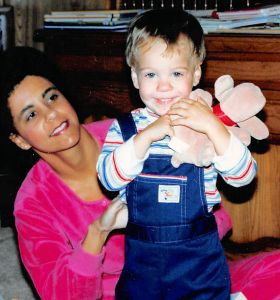
woman with a toddler
Me with “the baby”


Seeing doctors and patients as people

For physicians, our patients’ “social histories” help us understand factors in your life that impact your health -where you live, your job, your family, your hobbies . Besides that, we enjoy getting to know you, especially the things that make you and your life unique and interesting. Dr. Stead points out that when our patients learn our social history we “build an even stronger bridge that goes both ways.”

Now you probably won’t have the time or interest to “probe” every doctor you see, maybe just those you see regularly . Exchanging a few social words can make the encounter more satisfying for both of you. Some of us will be more open about sharing our personal lives, and some subjects may be off limits. But I don’t think any of us will object to honest, caring interest in our lives outside of medicine.

“As healthcare professionals we like to think of compassion as a limitless resource, but some days even the deepest well can feel like it’s running dry. Patients like Rosemary refill the well. They make us better doctors for all our patients.” Dr. Stead 


Burnout- bad for doctors and patients

Leaders in the medical community recognize the high and increasing rate of burnout in physicians. In burnout, physicians feel exhausted,  lack enthusiasm about work, lose motivation, and feel cynical about the value of the medical profession. Some estimate as many as 50% of physicians in the United States experience burnout.

Perhaps even more common among physicians is compassion fatigue, which can affect anyone involved intensely in helping others. Compassion fatigue occurs when a helper begins to feel overwhelmed and stressed from their efforts to relieve the pain and suffering of those they help. As they give more of themselves and neglect self care, they in turn become traumatized by their own efforts.
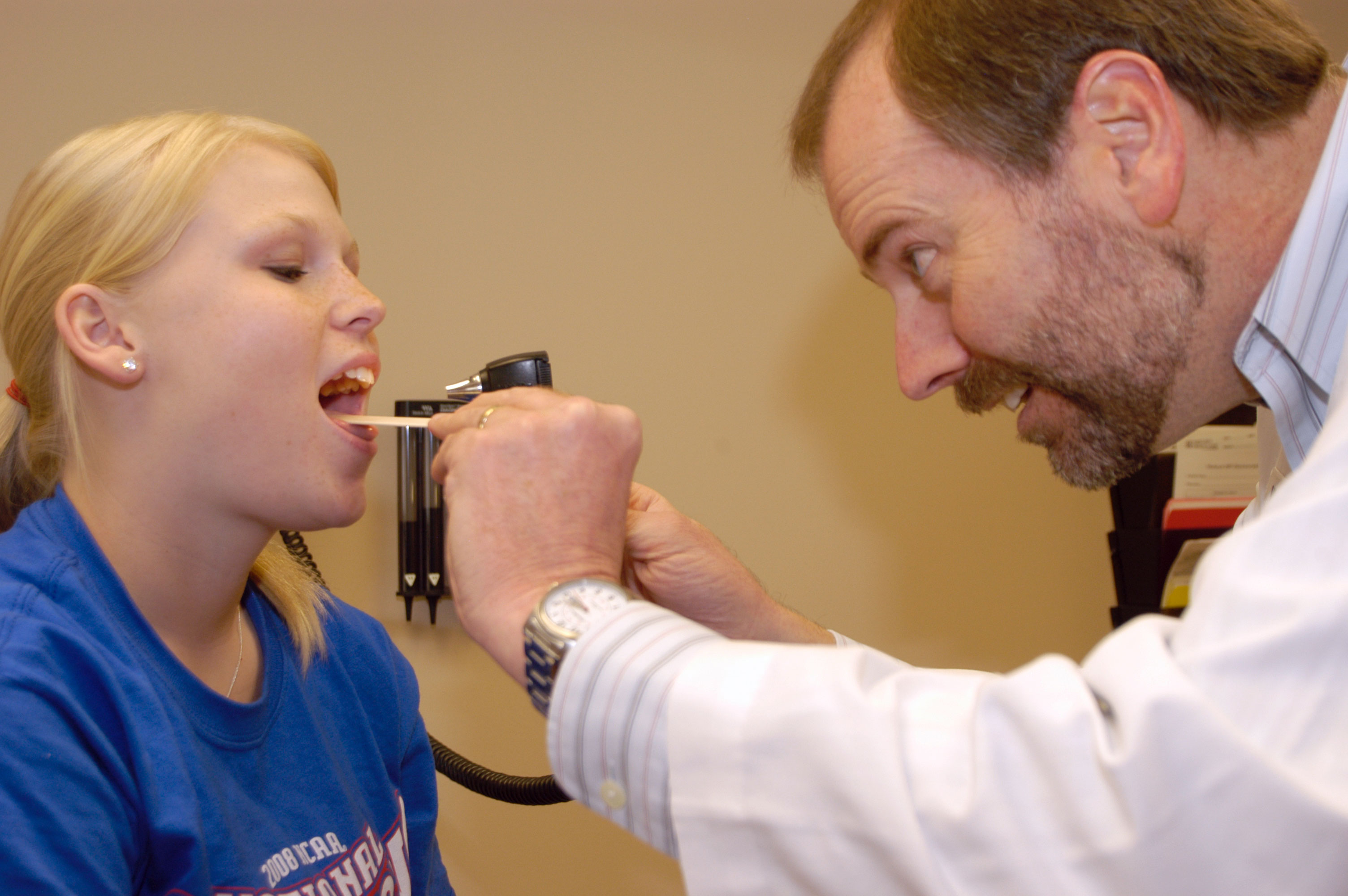
(Photo credit-American Academy of Family Physicians)


Doctors on the “front lines” of medicine -family physicians, emergency physicians, internists, pediatricians, psychiatrists- are especially vulnerable to burnout and compassion fatigue as are other health care workers, police, social workers, teachers and disaster workers.


Why should you care about physician burnout and compassion fatigue?

Factors causing physician burnout include the technological and bureaucratic hassles in medical practice that hinder doctors from spending adequate and quality time with patients and interfere with our ability to care for patients in the way we believe is best.

Studies suggest that burnout causes physicians to spend less time providing direct care to patients, and that care may be less efficient and effective. 

 

According to observational studies of physicians at work, we spend 50% of our time doing paper/computer work about the care we provide the other 50% of the time. (photo credit- American Academy of Family Physicians)


March 30 is National Doctor’s Day, a day designated by Congress to honor doctors.

One way you can honor your doctor is by trying to connect personally next time you visit. By doing so, you may get a glimpse of the “person behind the doctor” ; empathy can go both ways. If you see your doctor as a person with a life not that different from yours, you may see your interaction as a partnership and  find it easier to communicate .

And better communication can lead to better care for you. See my previous post

3 keys to effective communication with your doctor

Why patients sue their doctors

Dr. Aletha examining an infant on a volunteer trip
Volunteering to serve where we are most needed is one way physicians can recover from burnout and compassion fatigue.


Read  here about how government regulations contribute to physician stress

And here about efforts to reverse and prevent physician burnout


Thanks for exploring the HEART of health with me. Please consider these affiliates which help this blog inform and inspire wellness and wholeness throughout the world.

Dr.Aletha a world globe with two crossed bandaids



Voting on Life, Liberty and the Pursuit of Health Care


Tuesday November 8th, we in the United States will elect a new president. It’s been a contentious , bitter campaign and we are all glad it’s almost over. But we should also be glad that we have the privilege of open discussion and disagreement and settling our differences by voting for our leaders. 


I hope you will review my previous post about the presidential candidates’ views and proposals concerning health care.  Here I am repeating a previous post that outlines the U.S. healthcare system.

I believe we have one of the best healthcare systems in the world  because of the people who work in healthcare- the people who devote years to education and training and who work tirelessly 365 days a year, 24 hours a day to make and keep us well.  Their commitment, compassion, dedication and competence benefits all of us and deserves our gratitude.


Statue of Liberty
Lady Liberty lifting her torch in New York harbor


Even though the United States does not officially have “socialized” health care, a large proportion of our medical care is funded by the federal government. Even though I know that, I was still surprised by statistics in a recent article, which stated that  the federal government accounts for

40% of healthcare  spending

$1.3 trillion /year

Covering 100 million individuals

Through 4 federal agencies

Department of Health and Human Services 

Department of Defense

Veterans Administration

Department  of Homeland Security

(JAMA (Journal of the American Medical Association), June 21, 2016)


The  United States Congress passed the Patient Protection and Affordable Care Act (ACA) in 2010 to guarantee basic health insurance to all citizens.  People who oppose the ACA ,aka Obama Care, dislike or even fear government involvement in medical care; they consider it interference, control, or even nationalization of the United States healthcare system.

I think many people, even physicians, don’t realize or forget, how involved the government already is in healthcare. As far back as the American Revolution the fledgling government extended health care benefits to the soldiers and veterans of that war; that system evolved into the current military health care system which covers service members and the Veterans’ Administration system for veterans.

a Veterans Administration clinic
a Veterans Administration clinic (photo by blogger)
American soldiers serving in Afghanistan

This year marked the 50th anniversary of two other government healthcare programs- Medicare and Medicaid.

Medicaid provides insurance coverage for adults and children who are unemployed or low income.  

Medicare covers disabled children and adults  and persons 65 years and older.

The numbers are rather staggering.

  • Together these programs cover at least 30% of Americans.
  • Together they comprise 25% of all federal spending.
  • Together they pay 40% of total U.S. health care spending.

An infographic from the Kaiser Family Foundation and JAMA explains this further.

Disabled children and adults may qualify for Medicare.
Children may be eligible for Medicaid if their families cannot obtain health insurance for them.

You may not be eligible for either of these programs now, but chances are eventually you or someone close to you will.

  • Anyone can become disabled from a serious illness or freak accident.
  • You or your spouse may lose your job and your employer sponsored health insurance.
  • Your child may have a disability that will prevent them from working when they grow up.
  • We may all live long enough to qualify for Medicare on the basis of age alone.  Your parents or grandparents are near or already at Medicare age.
Senior adults age 65 and older use Medicare.

It’s important to understand how Medicare works, since it’s not automatic; even if you qualify, you need to sign up to be covered (with a few exceptions). The rules are summarized here. Or consider an easy to understand book here. 


Several government agencies regulate, monitor,  promote and/or support  both public and private healthcare including-


Food and Drug Administration- FDA

Centers for Disease Control and Prevention- CDC

National Institutes of Health- NIH

Occupational Safety and Health administration-OSHA

Drug Enforcement Agency-DEA


medication capsules
The FDA regulates the development and sale of medications and medical devices and the DEA regulates dangerous and controlled drugs.

Congress has enacted several important laws that  concern health care such as

The Affordable Care Act- ACA

Health Insurance Portability and Accountability Act-HIPPA

Emergency Medical Treatment and Labor Act- EMTALA

Health Information Technology  for Economic and Clinical Health- HITECH

Americans with Disabilities Act-ADA

Family Medical Leave Act-FMLA


air ambulance landing at a hospital
EMTALA requires all hospitals to offer emergency treatment to any patient who arrives, regardless of ability to pay for that care


In the Declaration of Independence, the founders of the United States  created a nation based on the “self-evident truths”  of  “Life ,Liberty, and the pursuit of Happiness” as well as  to promote “Safety and Happiness” . 

In the Constitution they vowed to “promote the general Welfare” .


I wonder if they envisioned that would eventually include so much effort and money providing and regulating health care, most of which was not available or even imagined at that time? 


Comments welcome and encouraged!


Before you vote, you may want to review this related post.


How your vote may affect your health care next year.