
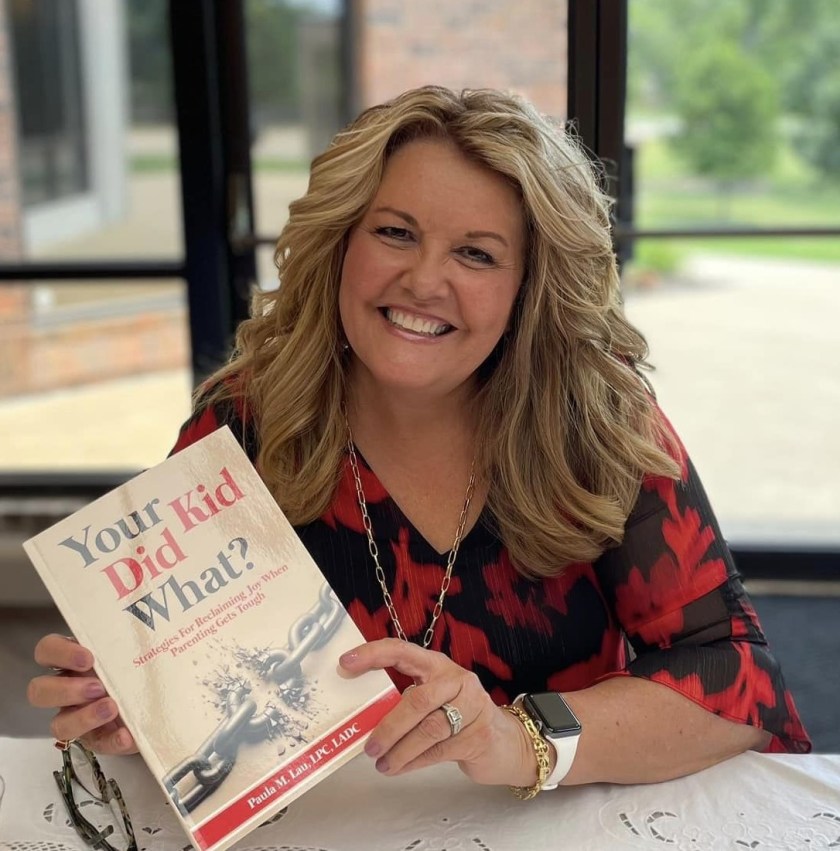
In a recent post, I reviewed a new book, Your Kid Did What? by licensed counselor Paula Lau, LPC.

In the book subtitled “Strategies for Reclaiming Joy When Parenting Gets Tough” Paula revealed her anguish when faced with an unexpected life choice by her adult son. She shared how she used her Christian faith and training as a professional counselor to regain peace of mind and hope for the future.
Paula has been sharing parenting insights on Facebook and Instagram and she writes articles for local publications. I am sharing information from one of those articles with her permission in this post.
Adapted from The Anxiety Beast
by Paula M. Lau, LPC
It is not unusual to hear kids say they are “anxious” or “I have anxiety.” You may feel troubled when your child says this, but for most teens this has become a common part of their communication with one another and does not necessarily indicate a mental health diagnosis.
Adults tend to express anxiety by saying, “I am stressed.” All of us have been conditioned through television, social media, and other sources to think anxiety may be a symptom of mental illness that a medical professional must address.
Anxiety Can Be OK
We are trying desperately to avoid anxiety, but if you are alive, you are going to experience anxious feelings from time to time. We need to teach our children that feeling anxiety is okay and it is a normal part of the human condition.
Remember a movie about Gremlins, fictional creatures that grew exponentially in the right conditions? Anxiety can be a Gremlin with a propensity to grow if fed the proper diet.
Anxiety for teens can express itself in different ways.
- physical complaints, such as head or stomach ache.
- trouble sleeping
- avoidance of activities or people
This can all be NORMAL behavior especially during the teenage years.
Handling Anxiety
If your child is telling you they feel anxious, here are things you can do to help
Explore the source
A conversation with your child allows them to tell you why they are feeling anxious. Be careful not to say, “Oh, that’s nothing! When I was your age…etc.” Asking questions like, “Tell me more about how you are feeling” gives your young person the opportunity to open up about their anxieties and fears.
Share your story
Let them know that being anxious is NORMAL , then tell them about times you were nervous at their age and how you overcame that fear.
Help them face their fears
After you find out why they are feeling anxious, you can talk about facing their fears. Let your young person know that adversity (anxiety) can make you stronger as you face your fears.
Tell them you believe they are capable and competent. Fear is an opportunity for them to grow in new ways even though the experience may be uncomfortable for a season.
Desensitization
Is there a way to expose your child to what they fear in a modified format until they are more comfortable? For instance, if they are nervous about going to high school, call the school and tour the facility before the first day of school.
Finding a non-threatening way to expose your child to the things they fear can help them process their feelings.

Allow them to problem-solve
Be careful not to helicopter in and fix stressful situations for your child. (There can be exceptions to this rule, but situations where you need to intervene are far less common.) Kids might see themselves as “broken’ and “not up to the task.”
Remember the teenage years (starting in middle school) are critically important when a young person begins to form their identity. They need to work out their problems with their friends, and teachers.
Your child will become competent as they sort their way through life and figure out what works and what doesn’t. That will require some anxiety on their behalf and yours!
Learning from anxiety
Parents must develop a tolerance for their child’s anxiety. We must let go so our children find their way in difficult circumstances. This can take amazing self-control, but our children benefit as they learn they can successfully face life challenges.

Paula’s book is also available at this link on Amazon.
Exploring the HEART of Health
I’d love for you to follow this blog. I share information and inspiration to help you transform challenges into opportunities for learning and growth.
Add your name to the subscribe box to be notified of new posts by email. Click the link to read the post and browse other content. It’s that simple. No spam.
I enjoy seeing who is new to Watercress Words. When you subscribe, I will visit your blog or website. Thanks and see you next time.
This post is not intended to diagnose or treat any mental or emotional disorder. Seek help from a mental health professional if you or your family have concerns about these issues.
Dr. Aletha
- About Dr. Aletha
- How to Use this Site
- Make Your Life Easier
- Search by Category
- Share the HEART of health
- my Reader Rewards Club
- RoboForm Password Manager




 watercress words by Dr Aletha