As a family physician, I explore the HEART of HEALTH in my work, recreation, community, and through writing. My blog, Watercress Words, informs and inspires us to live in health. I believe we can turn our health challenges into healthy opportunities. When we do, we can share the HEART of health with our families, communities, and the world. Come explore and share with me.
“The Spirit of the Lord GOD is upon me, because the LORD has anointed me to bring good news to the poor;
he has sent me to bind up the brokenhearted,
to proclaim liberty to the captives,
and the opening of the prison to those who are bound;
to proclaim the year of the LORD’s favor, and the day of vengeance of our God;
to comfort all who mourn;
All the Pretty Things by Edie Wadsworth
to grant to those who mourn in Zion—
to give them a beautiful headdress instead of ashes,
the oil of gladness instead of mourning,
the garment of praise instead of a faint spirit;
that they may be called oaks of righteousness, the planting of the LORD, that he may be glorified.
They shall build up the ancient ruins; they shall raise up the former devastations; they shall repair the ruined cities, the devastations of many generations.”
“the story of a Southern girl who went through fire to find her way home.”
Edie is a medical doctor who escaped poverty, a dysfunctional family, physical and emotional abuse only to find that wasn’t enough to cure the pain in her heart. In this memoir, she explains how she searched to find relief and to bring peace, hope and wholeness to her heart and her family.
“We have been snatched out of the fire of our brokenness in order to serve and love and bless the dear ones God has placed right in front of our eyes, the ones who need our very meager gifts and offerings the most-
the fatherless, the misfits, the prostitutes, the jailbirds-
and all those whose despair has rendered them hopeless.”
(By joining the book launch team, I received a free PDF copy of the book to review )
Talking to your doctor should be comfortable and therapeutic. #communication
For you to receive correct and effective medical treatment , your doctors need the right medical information.
I’ve written about doctor-patient communication before, because it’s the most important part of the encounter. No amount of lab tests, scans,or invasive procedures substitutes for the information we get from patients.
You may think doctors make a diagnosis based on lab tests or xrays. But much of the time, those tests only confirm what we already suspect based on your symptoms. If we misunderstand what you describe, or fail to get complete information we may start testing for something far removed from what is wrong with you.
Wrong information > wrong working diagnosis>wrong testing>wrong final diagnosis
Doctors are learning how to communicate better with patients. One key is using “plain language”rather than medical jargon. However, even plain language can be misunderstood. And with a plethora of medical information online patients know and use medical terms too. Communication between doctors and patients may never be perfect, but we can do better.
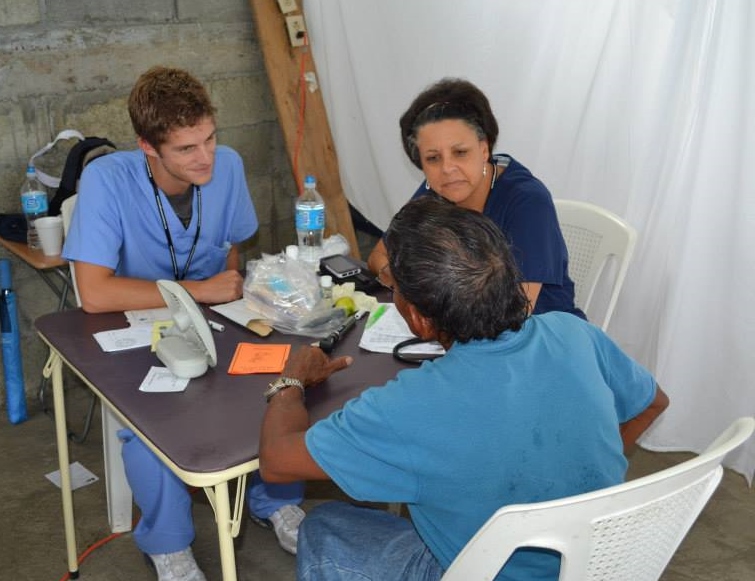
a patient encounter in a rural clinic in Panama
Here are some tips on talking to your doctor .
There are always exceptions. Doctors have different communication styles, and may interact differently than what I’m suggesting here. These are general guidelines.
GET TO THE POINT
Be clear and specific about why you are there; don’t expect your doctor to uncover a hidden objective.
Sometimes we can read between the lines and suspect you didn’t come because of a mole that hasn’t changed in 10 years. So if you’re there because you’ve been having chest pain and you’re worried it’s your heart, say so . Then we have time to give your concern the time it deserves .
GIVE DETAIL
All coughs are not created equal. Knowing your cough started yesterday rather than 6 months ago helps me determine the more likely cause.
Tell your doctor how long, how often, how severe, what helps, what worsens, your symptoms; that helps to narrow the possible causes.
Finish talking about your cough before starting to talk about the pain in your back.
A string of symptoms without detail is confusing and doesn’t give me enough information to evaluate any of them.
BE HONEST ABOUT YOUR MEDICAL HISTORY AND LIFESTYLE
Sometimes patients leave out important information due to forgetting, thinking it’s not important, embarrassment, or fear. But that may be the very piece of data I need to pinpoint what’s wrong.
So tell the doctor
If you can’t do something you’re asked to do,
if you can’t afford the medication,
if your insurance doesn’t cover something,
if you are afraid to go for the test
if you are seeing other doctors for anything,
how much you smoke,drink, or other habits
TALK BACK
Ask questions if you don’t understand something.
If you don’t, I may assume you do understand. Ask me to review what I told you. Put it in your own words and ask me if that’s what I meant.
BE SPECIFIC
Patients may use words or terms they assume I understand, but may mean something different to us.
“Heart attack” often means something different to patients than to doctors.
( Patients may use it to refer to any sudden heart problem, while doctors understand it to mean a specific event called a myocardial infarction.)
In general, avoid using diagnostic terms. Instead of saying, “I have a sinus infection.”, we need to hear “My nose is stuffed up, I’m sneezing, and my throat is scratchy.”
Some words your doctor may ask you to clarify-
Dizzy- do you mean off balance or spinning?
Tired- do you mean fatigued or sleepy?
Difficulty focusing – do you mean vision focus or mental focus?
Weak- do you lack energy or lack strength?
“I’ve tried everything.”- Tell me what “everything” is.
If you have received a specific diagnosis from a doctor, it’s helpful for us to know that; we may want to confirm it with appropriate questions, exam, review of your records, and possibly additional testing.
I know this one is tricky; you don’t want to offend me, maybe you’re afraid you won’t get good care if you complain. But I can’t fix problems if I don’t know about them.
If my care or care from my staff is unsatisfactory, please tell me. If you offer constructive criticism about specific problems, we can work together to solve them. And if it’s not something I can or will change, I will explain.









 watercress words by Dr Aletha