Mammograms-who, when, and why

breast cancer screening reminder-who needs it and when #BreastCancerAwarenessMonth

During Breast Cancer Awareness Month I want to remind you of physician recommendations for screening. Currently, the only test recommended for screening is mammography.

a woman having a mammogram done by a technician
image used courtesy of the Public Health Image Library, CDC

No other test has evidence that its use will decrease breast cancer deaths, although they may be useful for diagnosis in women who have breast symptoms.

These guidelines for screening  apply only to women at average risk of breast cancer, which is most women. They do not apply to women who have ever been diagnosed and/or treated for breast cancer, or to women who currently have symptoms related to their breasts, such as a lump, pain, discharge, or skin changes.

Guidelines for screening come chiefly from two organizations- The American Cancer Society (ACS) and the United States Preventive Services Task Force (USPSTF). Other organizations such as the American Academy of Family Physicians (AAFP) , of which I am a member, usually follow their recommendations .

 guidelines from the ACS

  • Offer annual screening to women age 40 to 44 years.
  • Perform a mammogram annually in women 45 to 54 years.
  • Perform a mammogram annually or every other year starting at age 55 years.
  • Continue screen mammography as long as a woman’s overall health is good, with a life expectancy of 10 years or longer.
  • Routine breast exams by either the patient  or a physician are not recommended.

 guidelines from the U.S. Preventive Services Task Force (USPSTF)  

  • For ages 40-49 years, individualize the decision to screen every 2 years
  • For ages 50-74 years, screen every 2 years
  • For ages 75 years and older there is no recommendation.

Both organizations recommend that physicians discuss the decision to screen or not to screen with patients and base the decision after considering possible harms versus potential benefit.These are guidelines for physicians to apply to each individual patient, not hard and fast rules.

a mammogram image
a mammogram revealing a breast cancer image source- National Library of Medicine, Open-i

Screening guidelines  are not used for high risk women- women with 

  • a history of previous breast cancer or ovarian cancer
  • a suspected or confirmed genetic mutation , BRCA, known to increase breast cancer risk
  • a history of radiation to the chest
  • a close family history of breast history, usually meaning parent, sibling, child, grandparent, aunt/uncle, or first cousin.
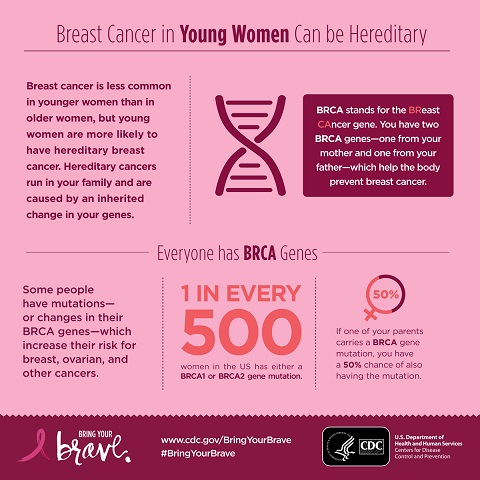
Breast cancer in young women can be hereditary.
graphic courtesy of the CDC, U.S. Department of Health and Human Services

Screening guidelines also do not apply to women with breast symptoms suggestive of cancer.

  • a lump in the breast or axilla (armpit)
  • pain, especially in only one breast
  • nipple discharge
  • persistent rash or skin changes over the breast

These women need appropriate diagnostic testing which might include

  • mammography,
  • ultrasound,
  • MRI, 
  • biopsy. 

Here are sources for more information

Breast Cancer

“Both women and men can get breast cancer, though it is much more common in women. Other than skin cancer, breast cancer is the most common cancer among women in the United States.”

Mammography 

“You should talk to your doctor about the benefits and drawbacks of mammograms. Together, you can decide when to start and how often to have a mammogram.”

Screening Guidelines

“Mammograms are not perfect tests. They can miss some cancers, and they can find lesions that may look like cancers but are not actually cancers (false-positive results), resulting in additional testing and procedures. They can also find very low-risk cancers that would never have caused any health problems if they were never found or treated (overdiagnosis).”

Breast cancer screening benefits and harms 

“Each woman also has different personal values, especially toward the idea of unnecessary medical tests and treatments.

Talk to your doctor if you are younger than 50 years and have questions about whether you should get a mammogram.”


Get involved by sharing  this information with friends and colleagues

and on social media.


And please consider the affiliates which help make this blog happen. Thank you.


Try Amazon Home Services

5 steps to manage stress and strain

A college graduate receives a gift certificate for a book, choosing a technical manual for his engineering career. This post reflects on the need for coping mechanisms for life’s stressors, sharing five essential steps to manage stress and strain. These steps include maintaining a routine, seeking social support, focusing on the positive, staying active, and nurturing one’s inner self.

As a college graduation gift, I gave a friend’s son a gift certificate to a bookstore. He has earned a  mechanical engineering degree and will work as a rocket structural engineer.

He sent me a nice handwritten thank you note (which few people do these days) and said he plans to use it to buy a book that other structural engineers recommend. The book is Roark’s Formulas for Stress and Strain.

Roark's Formulas for Stress and Strain- a book
Wouldn’t it be nice if there were a “formula” for handling the stress and strain of life?

Many health issues would resolve or be easier to manage if life stressors would just go away.  Three-fourths of the patients treated by primary care physicians have problems aggravated by emotional, social, or behavioral issues.

No quick fix to stress and strain

Life’s interruptions and disruptions won’t disappear, but you can make them less of a strain on your time, energy, and resources. There’s usually no quick fix but 5 steps can lessen their impact.

I learned the value of these steps when I dealt with the stress of a foot fracture that required surgery to correct and a longer convalescence than I expected. For someone who is used to being active, the prolonged inactivity stressed me both physically and emotionally. These 5 steps were already a part of my life, but consciously choosing them helped me cope with what would otherwise cause frustration and sadness.

5 steps to Manage Life’s Stress and Strain


1. Create and maintain a routine and schedule.

Having a plan for your time helps you feel more in control of your life.  Resist the tendency to become socially isolated or avoid activities you usually enjoy. 

a smartphone lying on a calendar page with a planner and cup of coffee
from Lightstock.com (affiliate) stock photo site

Times of crisis, loss, or illness may leave you feeling disconnected and adrift, but having a schedule provides structure and connection. When you are busy, you are less likely to feel overwhelmed and hopeless. 


2. Recognizing and reaching out to social supports

Your family and friends are your first line of support during times of stress and duress. It’s nice if we don’t have to ask for their support, but their lives are busy too, so don’t be hesitant to ask for help if you need it. If they don’t call you, call them.

2 women talking over coffee with open bibles
Conversation over coffee can be therapeutic. graphic from the Lightstock collection( affiliate link)

Other sources for help include your healthcare professionals;  don’t be embarrassed to share that you need social and emotional support. Your doctor can help you identify and get connected with community resources.

Look for help from your or your spouse’s job, your religious community, organizations you belong to, your school, and online resources for support- educational sites, forums, and support groups.  Although not as personal as face-to-face support, these are helpful if you are physically isolated or mobility is difficult.


3. Reframe by refocusing on the positive rather than the negative.

Recognizing and emphasizing the positive in life makes the problems less overwhelming and distressing. Look for something to be grateful for, or that brings a little joy into your day. It may be as simple as flowers blooming in your yard, your favorite tea and sweet, or a funny story in a magazine.  

balloons-get well IMG_2269.jpg
Balloons are nice, too.

Remembering and observing happy events, occasions, and celebrations can also be sources of renewed joy.

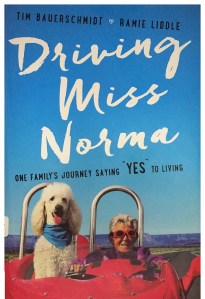
Norma, a woman facing terminal illness, reframed her crisis by finding joy in small things, like jigsaw puzzles, new foods, and a “good perm”. Read more about her at

Driving Miss Norma- a book review
Driving Miss Norma - a book cover


4. Stay active mentally and physically

Physical activity doesn’t have to be a chore, boring, or expensive. Many things can be done at home or in your neighborhood-walking, bicycling, cardio, yoga. If exercise isn’t your thing, try dancing, gardening, and swimming. 

If your physical mobility is limited,  try something stimulating mentally- sewing, crafts, games, puzzles, writing, and cooking are just a few possibilities.

checkerboard


5. Nurture your inner self

woman with hands bowed in prayer

Sometimes we need to withdraw from outward activities and stimulation for times of quiet rest and reflection.

You may find help from mindfulness, meditation, prayer, devotional reading, music, journaling,  or a combination of these approaches.

Breathing exercises can lessen anxiousness and tension.

I use the breathing exercises on my Fitbit App to relax and unwind after a long day.

Many people find using their phones a convenient way to read and meditate on the Bible. And it’s easy to do so with the Dwell Bible App.

With Dwell you can listen to and read the Bible and special devotional offerings for Advent, Lent, and throughout the year.


These affiliate links may help you deal with stress and strain. (At no extra cost to you, purchases through this link help me fund this blog.)

My Reader Rewards Club is a great way to earn free books and Bibles for yourself, friends, and family! Your journey to earning free faith-based products starts HERE.
(When you sign up through these links, I can earn free books too.)

Join my Reader Rewards Club
READ.REVIEW.REDEEM myReader rewards club

As a member, you’ll have access to inspiring literature, Bibles, special promotional offers, and much more. Earning points is easy—you’ll receive 25 points just for signing up!

RoboForm Password Manager.

You’re likely reading this post on a computer, tablet, or mobile phone, so you visit sites that require a password. How do you remember them all? You don’t have to if you use RoboForm Password Manager.

My husband introduced me to RoboForm years ago and I am glad he did. I have used it continually to remember my passwords so I don’t have to. It syncs to both my computer and my phone so my passwords are always available. It will even generate passwords for me.

Go to this link to try RoboForm Free; if you like it you can upgrade to RoboForm Everywhere version with all the features I mentioned above. With Roboform, you will have one less thing to feel stressed about.

Help with tech stress

If computer problems cause you stress, you may find help from my husband’s tech blog. He’s a computer guy with years of professional experience and he’s now sharing tips at

Exploring the HEART of Health

I’d love for you to follow this blog. I share information and inspiration to help you transform challenges into opportunities for learning and growth.

Add your name to the subscribe box to be notified of new posts by email. Click the link to read the post and browse other content. It’s that simple. No spam.

I enjoy seeing who is new to Watercress Words. When you subscribe, I will visit your blog or website. Thanks and see you next time.

Dr. Aletha