Science-our friend, not foe

This post highlights the importance of science and technology, emphasizing that progress and prosperity are directly tied to advancements in these fields. We are indebted to scientists for modern conveniences and medical advances. One is the significant medical impact of Henrietta Lacks’ cells, unknowingly donated and immortal, which have led to several major scientific discoveries.

Whoever desires progress and prosperity, whoever would advance humanity to a higher plane of civilization, must further the work of the scientist in every way he possibly can.

You might think this is a recent statement, but it is not. It was written over a hundred years ago. Here is an expanded version taken from the original source.

Take from the air every aeroplane; from the roads every automobile; from the country every train; from the cities every electric light; from ships every wireless apparatus; from oceans all cables; from the land all wires; from shops all motors; from office buildings every elevator, telephone and typewriter; let epidemics spread at will; let major surgery be impossible

all this and vastly more, the bondage of ignorance, where knowledge now makes us free, would be the terrible catastrophe if the tide of time should but ebb to the childhood days of men still living!…

Therefore, whoever desires progress and prosperity, whoever would advance humanity to a higher plane of civilization, must further the work of the scientist in every way he possibly can.

The Work of the Scientist. JAMA. 2022;327(9):882. doi:10.1001/jama.2022.0191

Originally Published March 4, 1922 | JAMA. 1922;78(9):649. (JAMA Revisited is transcribed verbatim from articles published previously, unless otherwise noted.)

Written in 1922, this author could not mention space flight, GPS, computers, CT and MRI scanners, modern drugs and surgical techniques, organ transplantation, DNA, and a myriad other modern conveniences we take for granted.

I don’t ride trains, I’m not sure what a “wireless apparatus” is, and I haven’t used a typewriter in years. I don’t understand the current aversion, suspicion, and contempt for those who study and work in the STEM fields-science, technology, engineering, and math.

But every time we use our mobile phones, computers, access the internet, or stream videos or music, we can thank the scientists who made it possible.

(This and other posts on this blog contain affiliate links that may pay a small commission to this blog, while you pay nothing extra, but only if you click, look, and make a purchase. Quite a deal for us both. )

Science books and reviews

I have reviewed or recommended several science books on this blog and this post gathers them together in one place. Bookmark this list post for easy reference later.
THE MUTANT PROJECT-a book review

At the same time, some of the more entrepreneurial see the potential for using genetic modification to selectively breed desirable and profitable human traits-high IQ, increased muscle mass, or designer skin color, and enhanced fertility, including choosing the gender of babies.

Keep reading

Despite the name, this book is not about COVID-19.
Pandemic- a book review

If you like history, current events, medical science, or just want to be more knowledgeable about why we should be concerned about infections , antibiotic resistance and vaccine phobia, you should read this book.

Keep reading
World of Wonders-a book review

This post reviews “World of Wonders” by Aimee Nezhukumatathil, a collection of mini memoirs celebrating the marvels of nature. Through personal stories and insights, the author connects human lives to those of other living creatures, inviting readers to appreciate Earth’s diversity. Supported by exquisite illustrations, the book offers a captivating exploration of the extraordinary world…

Keep reading
5 steps to understand statistics about health risks

The article discusses the role of statistics in understanding health outcomes, particularly in breast cancer and COVID-19. It highlights the importance of epidemiology in guiding medical decisions and emphasizes the need for clear communication of data to prevent misinformation. Understanding statistics can lead to better health choices and disease prevention.

Keep reading
Do you know how the universe started? Read what these men think.

I want to introduce you to my new guest blogger, Web developer, David Hynes.  David has a Bachelor of Science degree in Industrial Engineering and an MBA. Before retiring, he worked with my husband as a Senior Staff Information Analyst for a large oil company. He follows politics, technology and science and enjoys music and travel.  I enjoy David’s social media posts which are thoughtful and articulate. He recently commented about an engaging book he was reading and posted a summary of the main points from the first part of the book. He graciously gave permission…

Keep reading

The Immortal Life of Henrietta Lacks 

I haven’t reviewed this book but I read it and wondered why I didn’t know this story before, a true account of a simple but strong woman whose death gave a priceless gift to science- immortal cells.

“Her name was Henrietta Lacks, but scientists know her as HeLa. She was a poor Southern tobacco farmer who worked the same land as her slave ancestors, yet her cells—taken without her knowledge—became one of the most important tools in medicine: The first “immortal” human cells grown in culture, which are still alive today, though she has been dead for more than sixty years.

HeLa cells were vital for developing the polio vaccine; uncovered secrets of cancer, viruses, and the atom bomb’s effects; helped lead to important advances like in vitro fertilization, cloning, and gene mapping; and have been bought and sold by the billions. 

Yet Henrietta Lacks remains virtually unknown, buried in an unmarked grave.

As author Rebecca Skloot so brilliantly shows, the story of the Lacks family—past and present—is inextricably connected to the dark history of experimentation on African Americans, the birth of bioethics, and the legal battles over whether we control the stuff we are made of. 

Intimate in feeling, astonishing in scope, and impossible to put down, The Immortal Life of Henrietta Lacks captures the beauty and drama of scientific discovery, as well as its human consequences.” from Amazon

exploring the HEART of health through books about science

I hope you will bookmark this page in case you don’t have time to read all the posts.

I’d love for you to follow this blog. I share information and inspiration to help you transform challenges into opportunities for learning and growth.

Add your name to the subscribe box to be notified of new posts by email. Click the link to read the post and browse other content. It’s that simple. No spam.

I enjoy seeing who is new to Watercress Words. When you subscribe, I will visit your blog or website. Thanks and see you next time.
a world globe with two crossed bandaids

Doctor Aletha

And please check out my page full of suggestions to make your life easier.

REVENANTS-The Odyssey Home: a book review

Most people know and understand what war does to countries- changing boundaries, toppling governments, destroying infrastructure, wasting the land, bankrupting economies. Revanants speaks to the human cost for communities, families, and individuals-driving families apart, killing dreams, interrupting plans, wounding bodies and emotions, and destroying hope. On a global scale, war may be justified but in Revenants it is futile, wreaking havoc on these people’s lives.

REVENANTS-The Odyssey Home

By Scott Kauffman
Published by Moonshine Cove Publishing, LLC, 2015

When I started this book I didn’t know what revenant means; the author waits until chapter 33 to tell us.

“A revenant can be someone long forgotten and now remembered,or someone returning after a long absence; it can also mean a ghost.”

Note: the photos in this post are from my private collection and are not affiliated with the author or the book

The ghost in this case is a nameless disabled World War I veteran who never came home to his family. The main character, a 15 year old girl Betsy, sets out to learn his name, and thus to get him home before he becomes a literal ghost.

World War I happened in Europe from 1914 to 1918 although the United States didn’t enter until 1917. This story is set in 1973, a time when there were still many living WWI veterans who were by then in their 70’s and 80’s. In 1973 the United States was embroiled in another war, the Vietnam war.

My husband served in the Army in Vietnam and we have studied that war extensively, so we were surprised to learn the character Nathan, Betsy’s older brother, is based on a real person, who was the uncle of Mr. Kaufman’s late wife.

Captain Richard M Rees

Captain Richard M Rees was killed in action and awarded the Distinguished Service Cross on December 15, 1973 while performing duties as a member of a Joint Casualty Resolution Center (JCRC) team in South Vietnam, as agreed to at the Paris Peace Talks. The unarmed team came under attack in an area near Saigon while searching for the remains of an Army crewman who was presumed to have died when his helicopter was shot down in a rice paddy nearby. The site was thought to be secure and authorized, but later the Vietcong denied having been notified of the team’s activities.

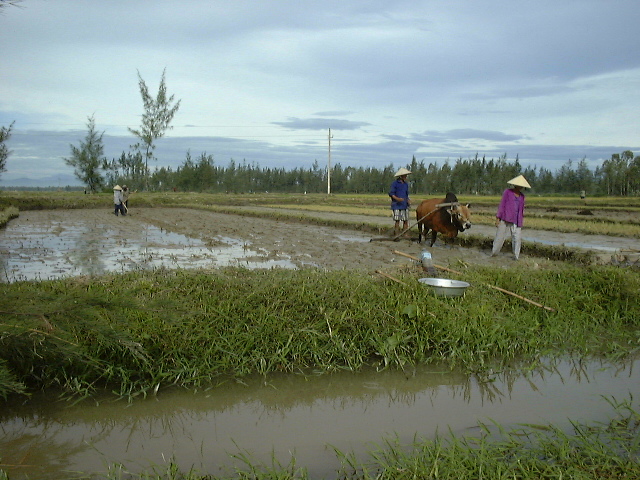
rice paddy with people in asian hats and a water buffaclo
a rice paddy in Vietnam

Three days after the American delegate to the Paris peace talks threw Nathan’s blood-stained jacket across the negotiation table and the day after the honor guard lowered his casket into the frozen earth at the cemetery, his Christmas box came. The doorbell rang and I ran stocking-footed downstairs where Mom slumped against the front door crumpled faced and still dressed in her flannel nightgown, the night’s snow wisping over her pale legs, Nathan’s box on the porch behind the postman who knelt beside her.

Betsy, in the book

After Nathan is killed in action in Vietnam, Betsy, her younger brother, and their heartbroken parents cope with his loss in differing ways. Betsy’s grief leads her to become a candy striper volunteer at a local VA (Veterans Administration) hospital, where her life intersects with an elderly wounded veteran in a complex and compelling way.

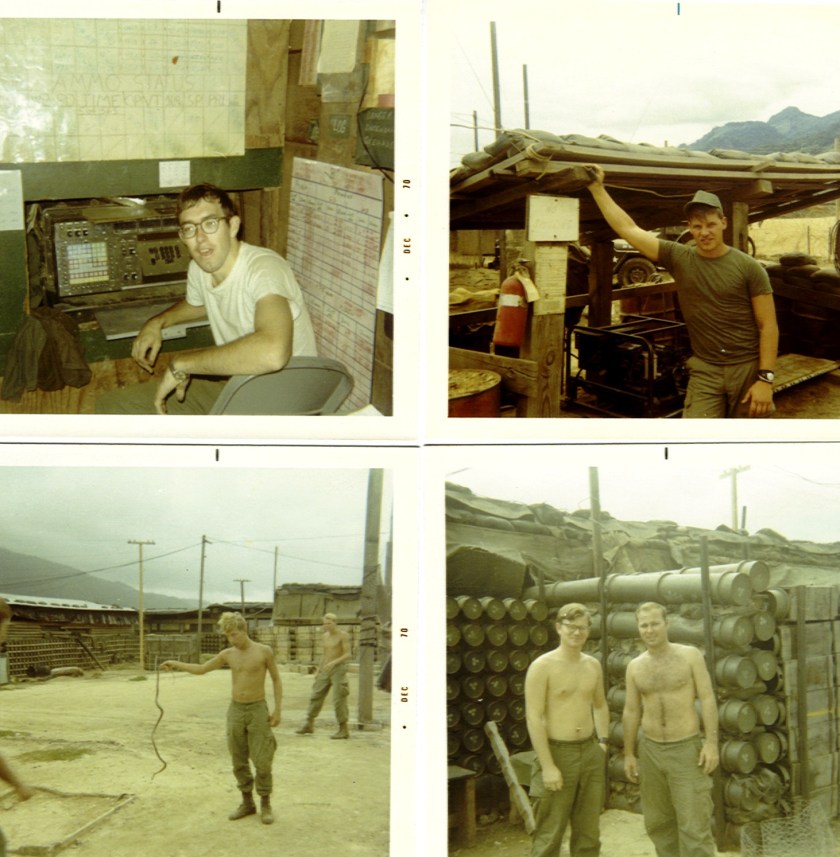
soldiers at a remote military base
My husband Raymond, upper left, served at LZ Cindy (landing zone), near the village of TraBong

Into this mystery, Scott Kaufman inserts a menagerie of other characters- a head nurse with a secret, an assortment of wounded veterans, a pot dealing hospital orderly, and a conniving politician with a longsuffering wife. He weaves a complex story through which their lives intersect. And often collide.

Most people know and understand what war does to countries- changing boundaries, toppling governments, destroying infrastructure, wasting the land, bankrupting economies. Revanants speaks to the human cost for communities, families, and individuals-driving families apart, killing dreams, interrupting plans, wounding bodies and emotions, and destroying hope. On a global scale, war may be justified but in Revenants it is futile, wreaking havoc on these people’s lives.

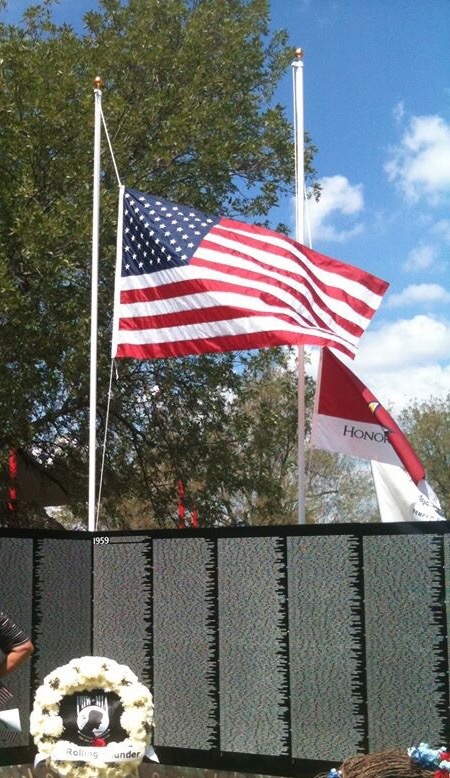
American flag waving at a Vietnam Veterans Wall replica
Vietnam Veterans Memorial Wall replica

The narrative reads as if it had been written in the 1970s with the vernacular and historical references of that era (which I can attest to since I lived it). The author bluntly expresses his disdain for wars and the governments that wage them. This may offend some readers, as may the way he portrays and refers to ethnic characters, especially the lone Black character (referred to as a Negro, as would have been the acceptable word in 1973). While this sounds offensive to 21st century ears, it helps create the setting for the events and enhance the impact of the book’s message.

So with that caveat, I recommend this book to anyone wanting to learn about and understand that difficult era in our history, through which many of us spent our youth. The WWI veterans are all long deceased and the Vietnam vets are now in their 70s. We can only hope they will eventually find the respect and peace that the “Great War” veterans were denied.

The author, Scott Kauffman

Scott Kauffman is an attorney in Irvine, California where he focuses practice on white collar crime and tax litigation with his clients providing him endless story fodder. He wrote a legal suspense novel IN DEEPEST CONSEQUENCES and just this year released SAVING THOMAS. He graduated from Ohio University in Athens, Ohio and was in the upper ten percent of his class at Lewis and Clark Law School in Portland, Oregon .

As a NetGalley reviewer, I received a digital copy of this book and agreed to write a review.

NETGALLEY MEMBER PROFESSIONAL READER

exploring the HEART of remembrance

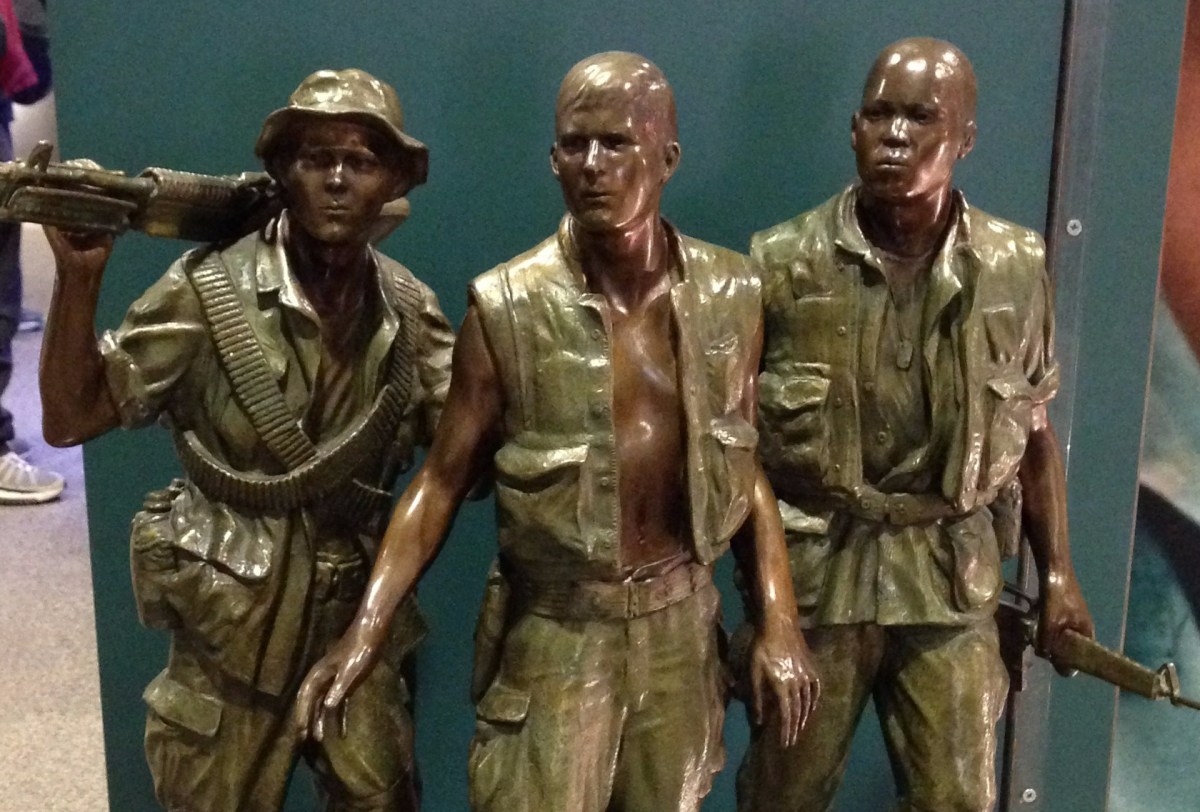
Thanks for reading my review of this book and for remembering and appreciating the sacrifices of real veterans and their families. If you’ve never visited a military memorial or museum, I encourage you to do so. Whereever you live, there is likely one near by. I took the cover photo on this post, it is a replica of the Vietnam Veterans memorial statue in Washington, DC.

Raymond published a book about his combat experience in Vietnam. You can read it on any Amazon Kindle E-reader or a free Kindle app on any device.

Battle for Tra Bong Vietnam: Events and Aftermath