Aching Joy- a book review

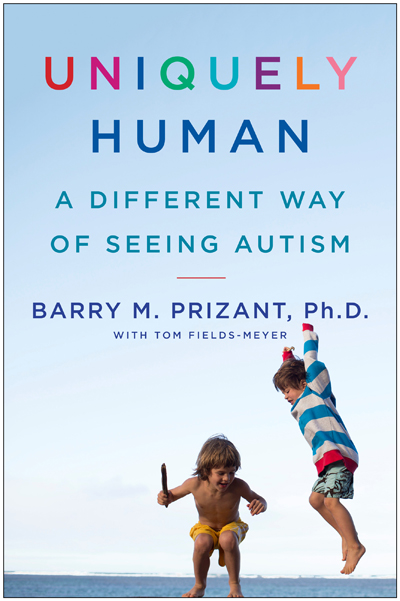
Jason Hague’s memoir “Aching Joy” explores faith, fatherhood, and autism through the lens of his son’s diagnosis. Despite initial denial and shaken faith, Hague finds solace in trusting a higher power. The book is a powerful journey through grief, hope, and ultimately, faith in the face of unexpected challenges.

updated March 4, 2024

In his memoir Aching Joy Jason Hague “writes and speaks about the intersection of faith, fatherhood, and autism”.

(In exchange for reviewing books for Tyndale House Publishers  I received a free copy. This post also contains affiliate links.) 

Aching Joy Book Promo 

Autism and Aching Joy

Jason Hague writes about his autistic son Jack’s diagnosis, therapy, and progress, but that is not the focus of this book.

(As Jason does in the book I will use the term “autistic” rather than “with autism”.)

Parents of autistic children often become focused on learning about autism, seeking treatments and services for the child, and celebrating any progress, victory, or achievement no matter how small.

Jason didn’t do that when first confronted with Jack’s diagnosis of autism. In denial of what the doctors said and other family members recognized, he grieved over what he saw as the death of the father-son relationship he had dreamed of.

Perhaps worst of all, his faith in an all-powerful loving God was shaken as it had never been before. Considering that Jason is a pastor, that was a crisis. 

Aching Joy is the story of Jason, and how he found his way back through the Land of Unanswered Prayer.


This is a book about the treasures I found in my darkness and the greatest of all was this: aching joy.  The Lord taught me how to sigh in pain,  how to weep in gladness,  and how to trust during days of hope deferred.

It was not an easy road to walk.  It still isn’t easy and it isn’t safe. Rather it is a confounding country full of myths and mirages. us here faith resembles denial settled this looks like a surrender and hope is the scariest creature of all.

Jason Hague

As Jason narrates his son’s cycles of regression, progress, and then regression again,  we also see the same happen to him;  his faith in God and answered prayer likewise waxes and wanes based on these and other life circumstances. He totters from expectation to disappointment,  from hopefulness to resignation, from faith to fear. 

But finally, he comes to terms with the roller coaster that autism can be and decides to put his trust not in a program, professional, or process,  but in a Person.


If there is an answer to the mysteries and tensions  in this unfinished life,  we will not find it in philosophy or poetry or self-help religion. Rather  we only find it in a Person.

Aching Joy  would be impossible if we were self- sustaining adults but fortunately we are much smaller than that. We are children of an eternal King. Courage and healing are in his hands and he waits for you to call.

He waits for you to tell him where it is you ache and to rest under the shelter of his touch. 

Jason Hague
Jason Hague, author of Aching Joy 

Jason Hague

At this link to his website, you will learn more about Jason, access his blog, and read the first two chapters of his book. 

Aching Joy is published by NavPress and distributed /marketed by Tyndale. 

exploring the HEART of health through reading
my Reader Rewards Club

My Reader Rewards Club 
As a member, you’ll have access to inspiring literature, Bibles, special promotional offers, and much more. Earning points is easy—you’ll receive 25 points just for signing up!

You can earn points when you:

  • Shop at Tyndale.com or NavPress.com
  • Refer a friend
  • Write reviews
  • Take surveys
  • Sign up for e-newsletters and e-devotionals
  • And more!

(By signing up through these links, I can earn free books that I may review for this blog.)

My Reader Rewards Club is a great way to earn free books and Bibles for yourself, friends, and family! Your journey to earning free faith-based products starts HERE.

I’d love for you to follow this blog. I share information and inspiration to help you turn health challenges into health opportunities.

Add your name to the subscribe box to be notified of new posts by email. Click the link to read the post and browse other content. It’s that simple. No spam.

I enjoy seeing who is new to Watercress Words. When you subscribe, I will visit your blog or website. Thanks and see you next time.

Dr. Aletha

Read more about autism in this previous post.

Are too many children autistic?

The apparent increased number of children with autism seems alarming-some call it an epidemic. It may represent our increased awareness, recognition, and knowledge about this disorder. And while this increase should raise concern, it can lead to increased research, treatment options, and more effective care for autistic persons.

Keep reading

Are too many children autistic?

The apparent increased number of children with autism seems alarming-some call it an epidemic. It may represent our increased awareness, recognition, and knowledge about this disorder. And while this increase should raise concern, it can lead to increased research, treatment options, and more effective care for autistic persons.

updated May 20, 2023

This information is current as of the date of original publication or update. It may have changed by the time you read this. I invite you to fact-check what you read here.

This information is not intended for diagnosis or treatment. Before making health decisions, discuss with your physician or other qualified healthcare provider to decide what is right for you.

Like other physicians and families of people with autism, I puzzle over the increased number of children and adults diagnosed with autism. And most all of us have theories about why we now believe 1 in 36 children have autism spectrum disorders.

People point out that “when they were children” they never knew of anyone with autism. There are those who are absolutely convinced that the increased numbers of autism followed the introduction of the measles-mumps-rubella vaccine, MMR. Others implicate genetics, environmental toxins, diet, and intrauterine brain trauma.

I found an article that offers a sound, well thought, and expressed explanation. It contains several points that I have identified and some I had not.

The article (updated in 2020) was published in Spectrum whose commitment is “to provide accurate and objective coverage of autism research.” Spectrum is funded by the Simons Foundation Autism Research Initiative. Senior News Writer Jessica Wright, Ph.D. in biological sciences from Stanford University, wrote the report. (Scientific American also published the article by permission.)

Autism Prevalence in the United States Explained

In the article, Dr.Wright concludes,

“The bulk of the increase (in autism rates) stems from a growing awareness of autism and changes to the condition’s diagnostic criteria.”

Identifying autism

First , let’s consider some terminology. Prevalence is an estimate of how common a disease or condition is in a particular population of people at any given time.

So the prevalence of autism in children would be

the number of children identified as autistic at any given time

divided by the total number of children alive at that time.

The currently accepted rate of autism is 1 in 36 children.

Autism prevalence depends on children being correctly identified as autistic. At any given time, some autistic children may not be identified, and some may be  incorrectly identified.

We do not have any totally objective tests available for autism yet. There is no blood test, scan, culture, imaging study, DNA test, or monitor to definitely conclude that autism is or is not present.

The definition of and criteria for autism have changed substantially since “infantile autism” was first identified by Leo Kanner over 70 years ago. Since 1980, the diagnosis is based on applying the criteria outlined in the Diagnostic and Statistical Manual of Mental Disorders (DSM). In the most recent version, DSM-5, released in 2013, autism, Asperger syndrome, and pervasive developmental disorder, formerly separate, are now a single diagnosis.

Autism Spectrum Disorder is characterized by

  • Persistent deficits in social communication and social interaction across multiple contexts
  • Restricted, repetitive patterns of behavior, interests, or activities
  • Symptoms must be present in the early developmental period (But may not yet be fully expressed or may be modified by learned behavior in later life)
  • Symptoms cause clinically significant impairment in social, occupational, or other important areas of current functioning.
  • These disturbances are not better explained by intellectual disability (intellectual developmental disorder) or global developmental delay.

Diagnostic Criteria for 299.00 Autism Spectrum Disorder

When the diagnostic criteria for other diseases we diagnose and manage changes, the prevalence also changed. Examples include diabetes, high cholesterol, high blood pressure, migraine, obesity, depression, even some cancers. So autism is not unique in this regard.

The currently accepted rate of autism, 1 in 36, comes from the Autism and Developmental Disabilities Monitoring Network, established by the CDC in 2000. Children are identified by reviewing health and school records of 8-year-olds in selected counties. So possibly some children get missed, and some are assigned incorrectly.

Point of Reference: IDEA

Another major milestone in autism awareness occurred in 1991 when the U.S. Department of Education ruled that autistic children qualify for special education services. This ruling encouraged parents of children with developmental and intellectual disabilities to secure accurate diagnoses, to qualify for services they otherwise might not have access to.

AAP recommends screening

Since 2006, the American Academy of Pediatrics recommends routine screening of all children for autism at 18 and 24 months old. Many physicians, psychologists, and therapists believe early intervention improves these children’s chances to do well intellectually and socially.

If we could go back and review records of children 10, 20, or 30 years ago, and apply current diagnostic criteria, would we find less autism than we do today? Perhaps. But such records would likely reflect the understanding of autism at the time, so might still fail to recognize autism, even when present by today’s standards.

The apparent increased number of children with autism seems alarming-some call it an epidemic. It may represent our increased awareness, recognition, and knowledge about this disorder. And while this increase should raise concern, it can lead to increased research, treatment options, and more effective care for autistic persons.

The story of autism isn’t just about statistics, theories, and criteria; it is about the  children and adults with autism, and their families. Here are just two of many stories of how autism plays out in real life.

Other articles on this subject

We Are Autism, Too. Don’t Forget About Us.

“My boy, with his classic autism, the kind that used to be the only face of autism half a century ago, is the one who does not belong now.”

Looking Into the Future for a Child With Autism

“As my son’s limitations became clearer, I found it harder every year to write a vision statement for his I.E.P. Then he showed us how.”

Another post on this blog about autism

Aching Joy- a book review

Jason Hague’s memoir “Aching Joy” explores faith, fatherhood, and autism through the lens of his son’s diagnosis. Despite initial denial and shaken faith, Hague finds solace in trusting a higher power. The book is a powerful journey through grief, hope, and ultimately, faith in the face of unexpected challenges.

Keep reading

(this is an affiliate link)

Exploring the HEART of Health

Thanks for reading, sharing, and following this blog. Subscribe here.

Dr. Aletha