Dr. Rand Paul was a candidate for the Republican party nomination for President in 2016. He suspended his campaign before the party convention. He continues to serve as Senator from Kentucky.
In 2016 I wrote about the 3 physicians who ran for President of the United States that year. None of them won but one of them, Dr. Rand Paul, serves in the Senate for his home state of Kentucky
Please note: posts on this blog about political figures are written for information and education only, and do not imply endorsement unless otherwise stated.
Randall “Rand” Paul, M.D., opthalmologist
Dr. Rand Paul was a candidate for the Republican party nomination for President in 2016. He suspended his campaign before the party convention. He continues to serve as Senator from Kentucky.
About Dr. Paul
Dr. Paul graduated from Duke University Medical School.
He was elected Senator from Kentucky in 2010.
He is married, has 3 children, and coached his children in Little League baseball, soccer and basketball.
His father Dr. Ron Paul is an obstetrician/gynecologist, has served in the House of Representatives, and also ran for President.
He provides eye surgery free of charge to people unable to pay in his home state of Kentucky.
He has traveled around the world as a volunteer eye surgeon, providing care to people unable to pay; a recent trip was to Guatemala. He has received awards for his humanitarian work.
A large part of Dr. Paul’s daily work as an ophthalmologist was dedicated to preserving the vision of our seniors. In 2002, The Twilight Wish Foundation recognized Dr. Paul for Outstanding Service and Commitment to Seniors.
Dr. Paul’s entrance into politics is indicative of his life’s work as a surgeon: a desire to diagnose problems and provide practical solutions, whether it be in Bowling Green, Ky., or Washington, D.C.
Senator Paul’s stand on health issues (as stated on his website)
I am 100% pro-life. I believe life begins at conception and that abortion takes the life of an innocent human being. It is the duty of our government to protect this life as a right guaranteed under the Constitution.
There are many in Washington who give lip service to the Second Amendment, but vote to restrict gun ownership once they begin serving in public office. Gun control laws only restrict access to responsible gun ownership.
The Patient Protection and Affordable Care Act (PPACA) – commonly known as “Obamacare” (P.L. 111-148), rapidly expanded the powers of government into the health care system. Since the passage of Obamacare, states, businesses, and other institutions have filed Constitutional challenges to many of the burdensome provisions of the law.
another book by Senator Paul
Senator Paul and COVID-19
The Republican lawmaker tested positive for the virus in March 2020, becoming the first case of COVID-19 in the Senate.
“I appreciate all the best wishes I have received,” Dr. Paul said in an interview. “I have been retested and I am negative. I have started volunteering at a local hospital to assist those in my community who are in need of medical help, including coronavirus patients. Together we will overcome this.”
Dr. Paul, an opthalmologist, has been outspoken with opinions about SARS-CoV-2 and its management, often clashing with Dr. Anthony Fauci, an infectious disease expert and head of infectious disease at the NIH.
exploring the HEART of health
Dr. Aletha
Use these links to share the heart of health wherever you connect.
we Americans have trouble re-calibrating our traditional (and laudable) devotion to individual rights and civil liberties. That is the fundamental reason we’ve been so slow in getting serious about a virus. quote Charles Krauthammer
Since the start of the pandemic, and especially since it has become so politicized and polarized, I have wondered what the late Dr. Charles Krauthammer might have written in his Washington Post column. For many years he commented on all things political, social, and occasionally medical, having left his psychiatric medical practice for a journalism career. As I searched my previous posts about him, I found reference to a piece discussing a situation similar to COVID-19-the Ebola epidemic of 2014.
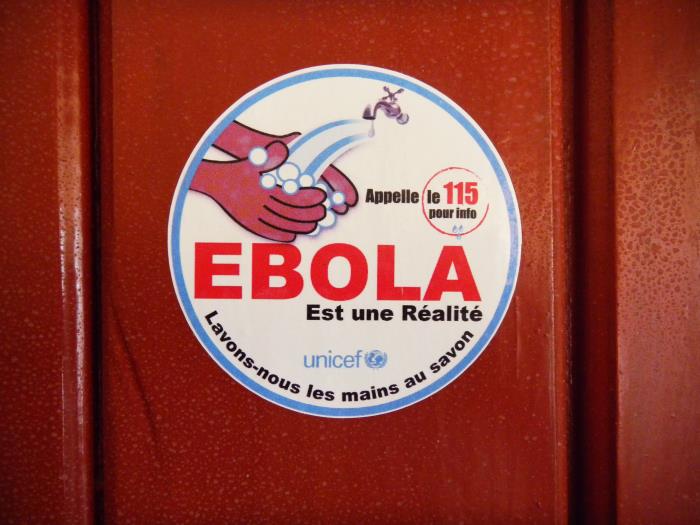
this image depicts an illustrative sticker that had been produced by the United Nations Children’s Fund, or UNICEF, which emphasized the importance of handwashing in the battle against this viral disease. credit to CDC/ Dr. Heidi Soeters, public domain
In 2014 when an Ebola epidemic broke out in Africa, a Liberian man entered the United States, became ill, and presented to a hospital emergency room; before he was isolated, healthcare workers were exposed. He was eventually diagnosed with Ebola and a nurse became infected. It caused a public health scandal which was widely criticized.
Fortunately, although deadly, Ebola is not as casually transmitted as coronavirus (not respiratory born) and never rose to pandemic proportions. But certain aspects of its presence in the United States mimics an aspect of COVID-19 which is hotly debated-personal freedom vs the common good.
Dr. Krauthammer wrote a piece commenting on this. I am quoting a few key paragraphs that particularly apply to the COVID-19 crisis. In italics I have inserted words referring to the specifics of the 2020 pandemic.
Centers for Disease Control and Prevention (CDC) activated its Emergency Operations Center (EOC) to assist public health partners in responding to the coronavirus disease 2019 (COVID-19) outbreak first identified in Wuhan, China.Credit James Gathany, Public domain
Coronavirus vs civil liberties (quoting Dr. Krauthammer, unless noted)
Unnervingly, the U.S. public health services remain steps behind the Ebola virus (Coronavirus). Contact tracing is what we do, Centers for Disease Control Director Tom Frieden (Robert Redfield) assured the nation. It will stop the epidemic “in its tracks.”
These missteps raise questions of competence, candor and false confidence. But the problem is deeper. And it rests not in our doctors but in ourselves.
In the face of a uniquely dangerous threat, we Americans have trouble re-calibrating our traditional (and laudable) devotion to individual rights and civil liberties. That is the fundamental reason we’ve been so slow in getting serious about Ebola (COVID-19). Consider:
Privacy
In normal circumstances, privacy deserves absolute respect. But these are not normal circumstances. We’re talking about a possible epidemic by an unseen pathogen that kills 70 percent of its victims. Contact tracing is the key to stopping it, we’ve been told.
Quarantine is the ultimate violation of civil liberties. Having committed no crime, having done no wrong, you are sentenced to house arrest or banishment. It’s unfair. It’s, well, un-American. But when an epidemic threatens, we do it because we must.
(Note: Americans have been asked to quarantine if they have come in close contact with someone confirmed with COVID-19. If they have the infection, they must self isolate for at least 10 days. )
Evacuation
Training and equipping every hospital in America to treat this rare disease would be ridiculously expensive and 99 percent wasted. Every Ebola (COVID-19) patient should be evacuated to a specialized regional isolation center, such as the ones in Atlanta, Omaha or Bethesda.
(Note: With the large number of COVID-19 hospitalizations, it is impractical to treat all patients at isolation centers. However, their care requires a high level of medical sophistication only available at large medical centers by physicians, nurses, and other professionals trained in critical and intensive care. Such care can potentially overwhelm the medical system, making care of COVID-19 patients more difficult and making care of other critically ill patients less available.)
Travel bans
The CDC argues that a travel ban would stop the flow of medical assistance to West Africa. This is silly. Simply make an exception for health-care workers. They apply to federal authorities, who charter their flights (or use military aircraft already headed there) and monitor their movements until 21 days (14 days) after their return home.
(Note: Non-essential travel to China from the United States was banned soon after the onset of the COVID-19 pandemic, and travel to other parts of the world followed. Ironically in July of 2020, some countries banned entry of arrivals from the United States due to a surge in cases. Some states instituted quarantine requirements for visitors from other states to limit spread during the summer surge of cases. )
President Obama, in his messianic period, declared that choosing between security and liberty was a false choice. On the contrary. It is the eternal dilemmaof every free society. Politics is the very process of finding some equilibrium between these two competing values.
Regarding terrorism, we’ve developed a fairly reasonable balance. But it took time. With Ebola (COVID-19), we don’t have time. Viruses don’t wait. The sooner we reset the balance — the sooner we get serious — the safer we will be.
Here is a link to his original article which I hope you will read.
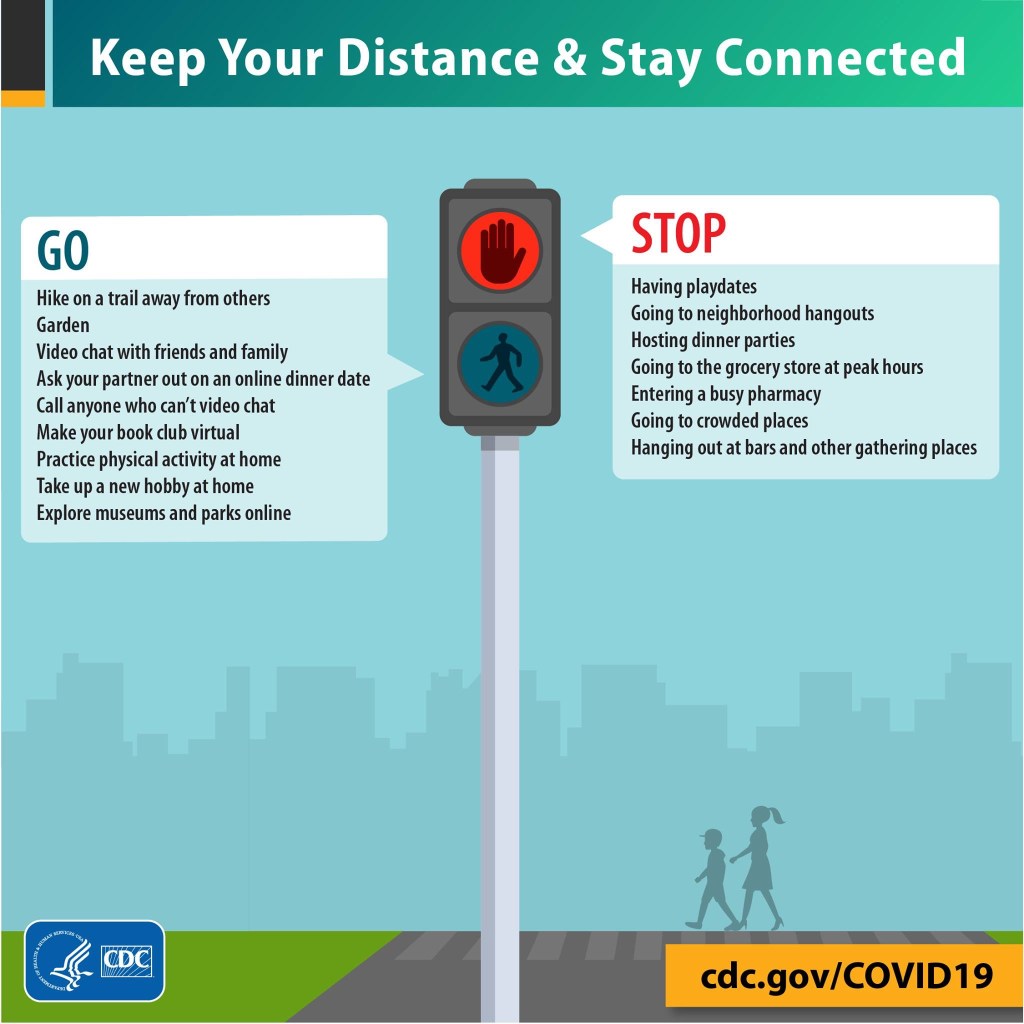
To contain and “flatten the curve” of COVID-19 cases, American citizens have been asked to limit or even avoid many common activities; these restrictions have been met with resistance and outright defiance. These include
This last one, wearing face coverings to prevent the spread of coronavirus containing droplets, has at times been the most contentious among people, with some enthusiastically embracing their use and some rejecting.
Even the two candidates for President had different responses initially, with Mr. Trump refusing to wear one, while Mr. Biden did. (By mid July, Mr. Trump began wearing a mask and urged citizens to do so.)
We’re instead asking Americans to use masks, socially distance, and employ vigorous hygiene — wash your hands every chance you get — while sheltering high-risk populations. We are imploring young Americans to avoid packed bars and other crowded indoor gatherings. Be safe and be smart.
In 1776 when the American colonies threw off unjust English rule, the leaders declared independence based on the rights of
Life, Liberty, and the Pursuit of Happiness
The Declaration of Independence
But when Life is threatened by disease, Liberty may also be threatened- and it remains to be seen if the democratic government they established can save both .
When I read Charles Krauthammer book, Things That Matter, one of the most important things I learned wasn’t about politics, medicine, or ethics, subjects he knew well and wrote about often. I learned that he was a die hard Washington Nationals baseball fan.
Use these links to share the heart of health wherever you connect.








 watercress words by Dr Aletha