As a family physician, I explore the HEART of HEALTH in my work, recreation, community, and through writing. My blog, Watercress Words, informs and inspires us to live in health. I believe we can turn our health challenges into healthy opportunities. When we do, we can share the HEART of health with our families, communities, and the world. Come explore and share with me.
and this passage of scripture was in one of the daily readings recently.
The book-Job
Job, a book in the Old Testament, ponders the meaning of suffering. It is not a book you would associate with Christmas, yet these words are sung in Handel’s famous musical, Messiah.
We usually hear Messiah performed at Christmas, but Handel wrote it for Easter. He drew the words of the songs from Scripture, choosing passages of comfort, peace, hope, and love, telling the story of God sending Jesus to earth to redeem His people.
Handel, the composer
Georg Handel was a barber-surgeon in northern Germany in the 17th century. Barber-surgeons were physicians in medieval Europe who only performed surgery, often treating wounds from war injuries. Eventually, surgery and barbery became separate occupations.
I’m glad his son, George did not follow his father into medicine. Instead George Frideric Handelstudied music and eventually composed his masterpiece , Messiah, first performed in 1742, and which millions of people have listened to or sang since then.
Thank you for considering the affiliate links and advertisers that support this blog. You are helping it grow and support worthy medical causes throughout the world
Please share this post and follow Watercress Words for more
Dr. Martin Luther King, Jr. was a prominent leader in the Civil Rights Movement, delivering his famous “I Have a Dream” speech during the March on Washington. Barack Obama, the first African-American U.S. President, fulfilled his promise of universal healthcare coverage with the Affordable Care Act. Steps to improve health apply to everyone, with special emphasis on African-American health issues.
updated February 8, 2024
Dr. Martin Luther King, Jr.
The Reverend Dr. King led the Civil Rights Movement in the United States from the mid-1950s until his death by assassination in 1968.
“Of all the forms of inequality, injustice in health care is the most shocking and inhumane.” — Dr. Martin Luther King, Jr.
“In 1963, Dr. King helped lead the March for Jobs and Freedom, more commonly known as the “March on Washington,” which drew over a quarter-million people to the National Mall. It was here that he delivered his famous “I Have a Dream” speech, which cemented his status as a social change leader and helped inspire the nation to act on civil rights.” from The King Center
Barack Obama-44th U.S. President
In 2008, Democratic candidate Barack Obama ran for President of the United States and won, becoming the 44th President and the first African-American to win the office.
President Obama kept fit exercising with his dog- photo compliments Pixabay
Obama’s Healthcare Achievement
As a candidate for president, Obama pledged to enact universal health care coverage for the country, a promise he fulfilled with the support of a Democratic Congress.
The Patient Protection and Affordable Care Act, often shortened to the Affordable Care Act (ACA), nicknamed ObamaCare, is a United States federal statute enacted by the 111th United States Congress and signed into law by President Barack Obama on March 23, 2010.
Universal Healthcare Coverage -“Obamacare”
The term “Obamacare” was first used by opponents, then embraced by supporters, and eventually used by President Obama himself. Together with the Health Care and Education Reconciliation Act of 2010 amendment, it represents the U.S. healthcare system’s most significant overhaul and expansion of coverage since Medicare and Medicaid in 1965.
African-American Health
To commemorate and celebrate the contributions to our nation made by people of African descent, American historian Carter G. Woodson established Black History Week. First celebrated in 1926, the week was expanded into Black History Month in 1976 as part of the nation’s bicentennial.
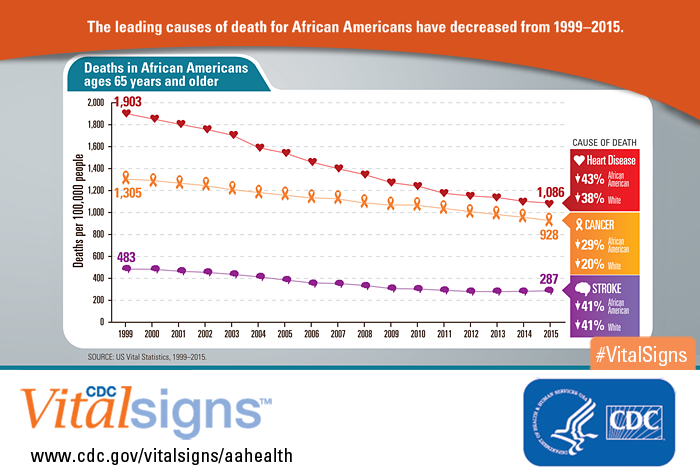
Each year, the U.S. President proclaims February as National African American History Month. Heart disease, cancer, and stroke are the leading causes of death for African Americans.
CDC Vitalsigns
High blood pressure causes most heart attacks and strokes in the United States. About 2 out of every 5 African American adults have high blood pressure, and less than half of them have it under control. African American adults are much more likely to suffer from high blood pressure (hypertension), heart attacks, and stroke deaths than white adults.
Canceris the second leading cause of death among black people in the United States. Black men get and die from cancer at higher rates than men of other races and ethnicities. White women have the highest rates of getting cancer, but black women have the highest rates of dying from cancer.
Steps to Improving Health
People of any ethnic background can prevent heart disease, cancer, stroke, and other serious or chronic diseases by living a healthy lifestyle. Here’s how
Eat a healthy diet with fruits, vegetables, whole grains, and fat-free or low-fat milk and milk products. Choose foods low in saturated fats, cholesterol, salt (sodium), and added sugars.
Exercise regularly. Adults aim for 2 hours and 30 minutes (or 150 minutes total) of exercise, spread out during the week, and broken up into smaller times during the day.
Be smokefree. call 1-800-QUIT-NOW (1-800-784-8669) or 1-855-DÉJELO-YA (1-855-335-3569 for Spanish speakers) for free resources, including free quit coaching, a free quit plan, free educational materials, and referrals to other resources where you live.
Limit alcohol use, which can lead to long-term health problems, including heart disease and cancer. If you drink, do so in moderation, which is one drink a day for women and two for men.
Know your family history . There may be factors that could increase your risk for heart disease and stroke.
Manage any medical condition you might have by collaborating with healthcare professionals for best practices to control and monitor your status.
I learned the quote on health attributed to Dr. King was never in written form, but was in an unrecorded speech. Many people verify the gist of the statement, but with some changes; he may have said “inhuman” rather than “inhumane, for example. For a discussion of this controversy, see this article by Amanda Moore.
exploring and sharing the HEART of health
I’d be honored for you to follow Watercress Words.
Thank you for reading this post. Please follow this blog and me on social media.
I share information and inspiration to help you transform challenges into opportunities for learning and growth.
Add your name to the subscribe box to be notified of new posts by email. Click the link to read the post and browse other content. It’s that simple. No spam.
I enjoy seeing who is new to Watercress Words. When you subscribe, I will visit your blog or website. Thanks and see you next time.
Dr. Aletha
Use these links to share the heart of health wherever you connect.