A goodbye to healers who listened-Squirrel Hill mourns and heals

I was horrified by news that another mass shooting had occurred, this time at a synagogue in a community called Squirrel Hill. A few days later, I realized I had seen that name before. I had met someone who lives and works there.

In early October of 2018 I received an email from a physician I had never met. He had written a book and asked me to read and review it on my blog. I agreed and soon received another email with a PDF copy. I read it and posted a review here.

A couple of weeks later I was horrified by news that another mass shooting had occurred, this time at a synagogue in a community called Squirrel Hill. A few days later, I realized I had seen that name before.

The physician who wrote to me, Dr. Jonathan Weinkle, practices at the Squirrel Hill Health Center. And he is Jewish.
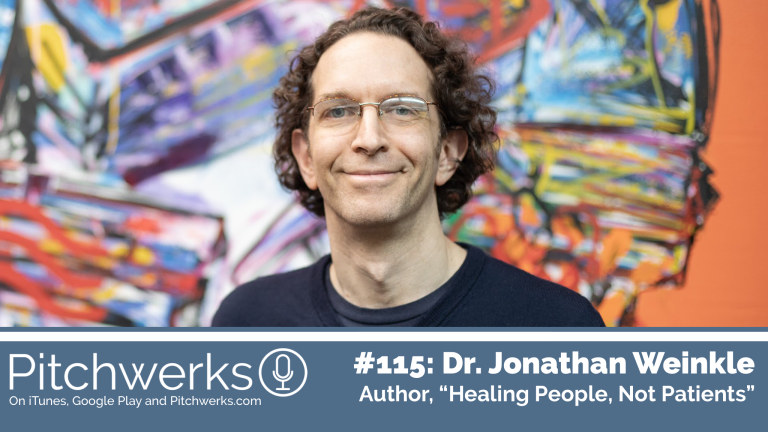
Pitchwerks podcast - #115:Dr. Jonathan Weinkle

Squirrel Hill, Pittsburgh, Pennsylvania

Squirrel Hill is considered a historic center for Jewish life in Pittsburgh. It is home to more than a quarter of Jewish households in the Pittsburgh-area, according to a Brandeis University study of the Greater Pittsburgh Jewish community.

I wrote to him and was relieved to learn he was safe. He had attended a Bat Mitzvah there just the week before the attack.

And as I had feared, some of the victims were friends and colleagues.

I’m not going to repeat the details of the horrific event as it was widely reported in the news. Here is a link to a news report.

How a deadly shooting unfolded at the Tree of Life synagogue

One of the victims I had learned about through our professional organization, the American Academy of Family Physicians, AAFP. Dr. Jerry Rabinowitz’s death was reported on the organization’s Facebook page. He was a friend and colleague of Dr. Weinkle.

Also killed was dentist Dr. Rich Gottfried who worked at the Squirrel Hill Health Center where Dr. Weinkle practices.
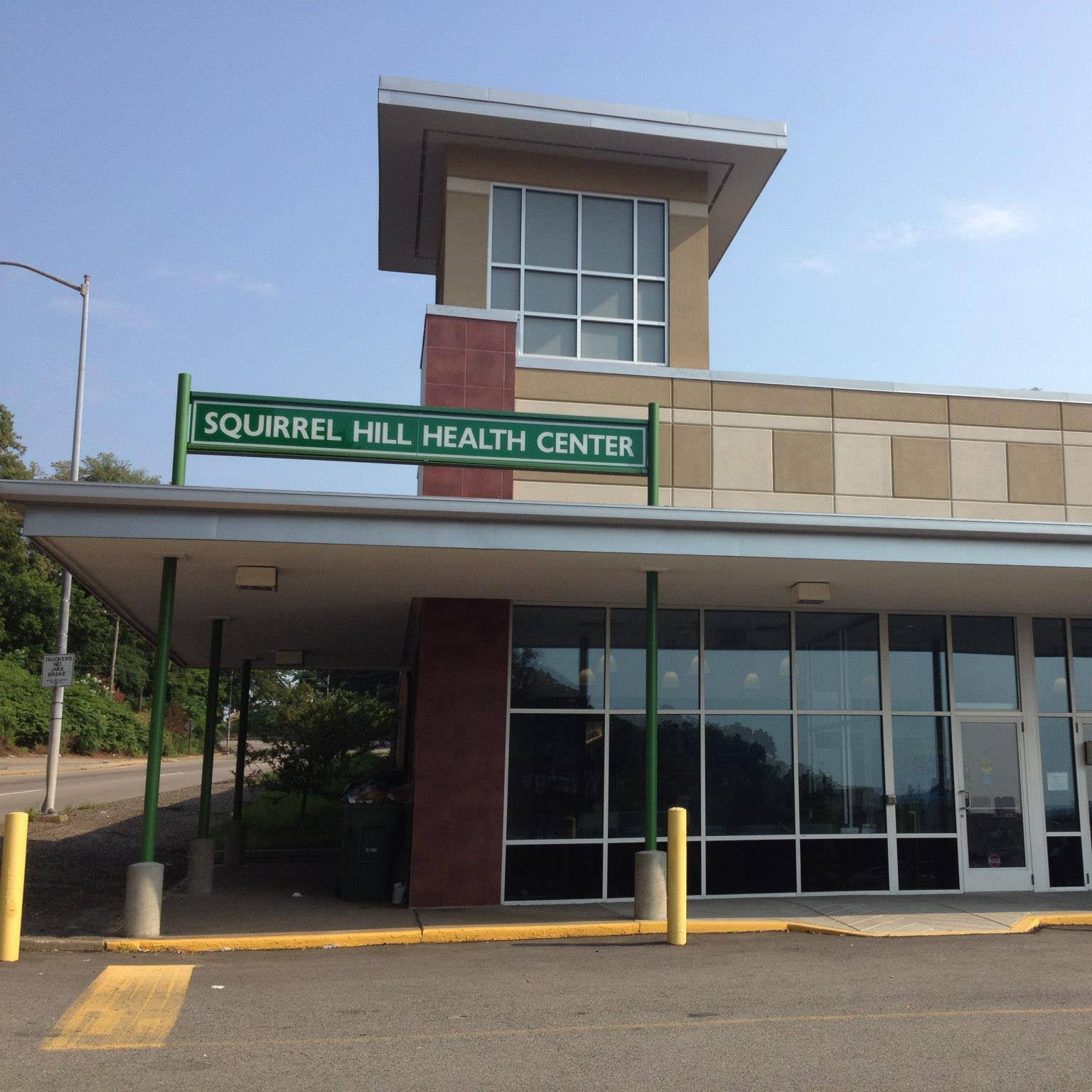
a building with sign-Squirrel Hill Health Center
THE SQUIRREL HILL HEALTH CENTER

Dr. Weinkle eulogizes his friends

Dr. Weinkle wrote reflections about his two friends and colleagues, shared them with me, and graciously consented to my sharing with you.
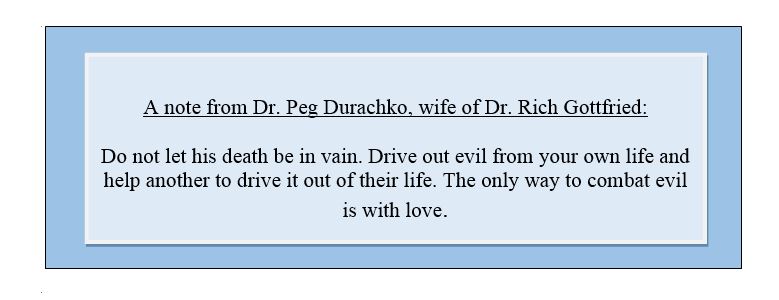
 

This message was posted on the Squirrel Hill Health Center Facebook page

Dr. Rich Gottfried

The Hebrew letters often hint at a common object: bet hints at bayit, a house.  Gimel hints at gamal, a camel.  And shin?  Why, shen, of course – tooth.

I like to think that the reason for this is that shin, or rather sin, which is the same letter with the dot moved to the other side, is also the first letter in sameach, happy.  And what do we do when we are happy?  We smile and show our teeth.

My colleague Rich Gottfried smiled all the time; as people spoke at his funeral, or around the office this week, almost all took note of his smile.  He was the Hines Ward of dentists, it would seem – always smiling.

Rich brought happiness to people through their own teeth, too.  Poor dentition is a major source of shame for people, afraid to smile or look someone in the eye for fear of having their decayed teeth be the only thing the other person will see.  For a person without dental insurance, or without substantial means, dental work or even preventive care can be prohibitively expensive.  A Hobson’s choice – shame, or bankruptcy?

Rich listened to that struggle.  Even when he was in full time private practice, he blocked off time to do pro bono work for the uninsured .  And as he and his wife Peg Durachko, who was not only his life partner but his dental partner, wound down their practice as they approached retirement, they brought their services to us, at a community health center that treated many people who had never seen a dentist in their lives. 

They overcame the fear that one dental cleaning might lead to all the teeth falling out, and got things set right for the first time ever.  Culturally competent dentistry – now those are healers who listen.

Shin stands for something else, too – Shadai, the almighty God.  It is the letter on every mezuzah on every Jewish door, reminding us that God has our backs, and that we need to refresh ourselves on what God wants from us every time we enter or leave a room.  And for Rich Gottfried, what God wanted from him was to be a blessing to others around him, through his talents in taking care of their shin-ayim.

a Jewish passover seder plate with a lit cancle
photo from the Lightstock.com collection, an affiliate link

Dr. Jerry Rabinowitz

“Do not console a person whose deceased relative lies before him” Pirke Avot 4:23

Well, now we have begun to bury them; the time of consolation for the families and community of my murdered friends has begun.  They are no longer lying before us and we must begin to fix their memories in our minds.

Among the dead October 27th were two men who epitomized the title of this site: “Healers who Listen.”  A third still clings to life and with God’s help may recover to help the rest of us heal.  Over the next three days I will remember each of them.

Jerry Rabinowitz was laid to rest yesterday, October 30th.  In the hour before the funeral I was with a friend who told me that Jerry had been his doctor.  With a wry smile, he told me,

“The first time I went to him we were in there for an hour and a half – and the first thirty minutes had nothing to do with my health.” 

He listened to get to know the person sitting in front of him before diving into the rabbit hole of the purely physical.

At the funeral, Jerry’s partner Ken Cieselka spoke of “their finest hour” as a practice – the late 1980s, when they began caring for patients with HIV/AIDS.  The disease was then incurable, and the people suffering from it were then considered by many to be untouchable. 

But not by Jerry and Ken.  They listened to the voice of suffering that no one else would ease, and understood it was their responsibility to do so.

At the synagogue, Jerry heard gunfire.  In that sound, he did not hear a warning to get out.  He heard people being hurt, of people who would need his help. 

There is a Jewish concept that the choleh l’faneinu, the ill person in front of us, should get our attention first.  For Jerry even being aware of that person’s illness or suffering, even in danger, even where he could not see them, put them l’fanav, right in front of him, where he had to help them. 

He listened, and met his end as he lived his life, caring for people.

I assume Jerry did not have a chance to read Healing People, Not Patients; it was only published a month ago and he was as busy as I was.  The truth is that he did not need to read my manifesto of compassionate, personal healing.  He lived it; he could have written it himself.

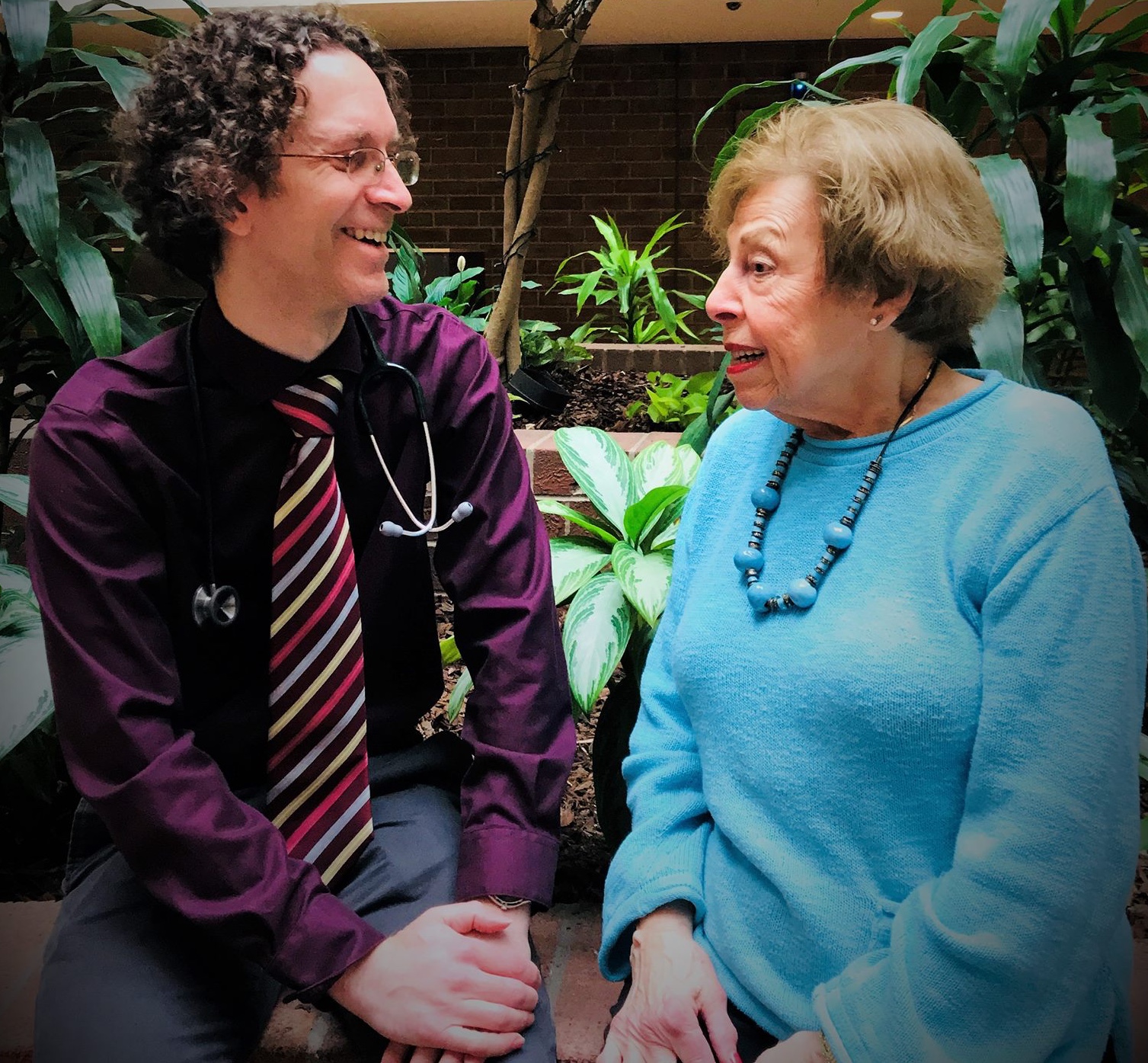
a male doctor talking to a middle aged woman
Dr. Weinkle with a patient


Here are profiles of Dr. Gottfried, Dr. Rabinowitz, and the other nine victims of this attack.

Tree of Life Congregation Shooting Victims

Dr. Weinkle concluded his note to me, writing,

“ The good news is that unlike other pogroms that have afflicted my people over the centuries, this one was carried out by a lone wolf and the majority of our neighbors are on our side, not the side of the perpetrators. There is strength and hope in that beyond measure.”

Visit Dr. Weinkle’s website, Healers Who Listen

sharing the HEART of health

Thank you for joining me to honor Dr. Weinkle’s colleagues. Please share this post and my review of his enlightening book, HEALING PEOPLE, NOT PATIENTS.

I’d love for you to follow this blog. I share information and inspiration to help you transform challenges into opportunities for learning and growth.

Add your name to the subscribe box to be notified of new posts by email. Click the link to read the post and browse other content. It’s that simple. No spam.

I enjoy seeing who is new to Watercress Words. When you subscribe, I will visit your blog or website. Thanks and see you next time.

Dr. Aletha

Why we need a National Doctors’ Day

Along with the honor of being a physician,  comes the problem of burnout. Leaders in the medical community recognize the high and increasing rate of burnout in physicians. In burnout, physicians feel exhausted,  lack enthusiasm about work, lose motivation, and feel cynical about the value of the medical profession.

Updated March 27, 2023

Did you know there is a national day to honor physicians? In 1990, the U.S. Congress established a National Doctors’ Day,first celebrated on March 30, 1991.

Along with the honor of being a physician,  comes the problem of burnout. Leaders in the medical community recognize the high and increasing rate of burnout in physicians.

National Doctors’ Burnout

In burnout, physicians feel exhausted,  lack enthusiasm about work, lose motivation, and feel cynical about the value of the medical profession.

Statistics suggest that a majority of physicians experience feelings of burnout and compassion fatigue at least sometime during their career. At any given time, that could be your doctor.

Physician burnout can arise from the technological and bureaucratic hassles in medical practice that hinder doctors from spending adequate and quality time with patients and interfere with our ability to care for patients in the way we believe is best.

a medical person holding a stethoscope

Studies suggest that burnout causes physicians to spend less time providing direct care to patients, and that care may be less efficient and effective. 

Doctors are less likely to experience burnout when they have rewarding relationships with their patients.

Most of us went into medicine because we wanted to help people, and that still brings us the most satisfaction. A successful doctor-patient relationship depends on both persons showing mutual respect.

(And by the way, physicians aren’t the only professionals who can burn out. If you recognize any of the symptoms in yourself, talk to your doctor or a mental health professional.)

March 30 is Doctors' Day

The first Doctors’ Day observance was March 30, 1933, in Winder, Georgia. The idea came from a doctor’s wife, Eudora Brown Almond,  and the date was the presumed anniversary of the first use of general anesthetic in surgery.

The Barrow County (Georgia) Medical Society Auxiliary proclaimed the day “Doctors’ Day,” which was celebrated by mailing cards to physicians and their wives and by placing flowers on the graves of deceased doctors.

You may not have a chance to honor your doctor in person, but I suggest you commit to doing your part to establish a trusting, respectful relationship with your doctors. It will be good for both of you.

To enhance communication with your doctors-

Be open and honest about your medical history,lifestyle, and concerns. 

Sometimes patients leave out important information due to forgetting, thinking it’s not important, embarrassment, or fear. But that may be the very piece of data I need to pinpoint what’s wrong.

So tell the doctor

  • If you can’t do something you’re asked  to do,
  • if you can’t afford the medication,
  • if your insurance doesn’t cover something,
  • if you are afraid to go for the test
  • if you are seeing other doctors for anything,
  • how much you smoke,drink, or other habits

Learn more tips on talking with your doctor here-

How to talk to your doctor to improve your medical care a male doctor holding a tablet

Give details about your problem, explain what you feel

I find that patients often have difficulty describing how they feel. They may say they hurt, cough, itch or get short of breath, but give few details. Maybe because we use  text messaging with its brevity, abbreviations and emoticons. We have forgotten how to use descriptive words.

I don’t think we doctors expect our patients to always recite a rehearsed narrative  about “why I came to the doctor today.” But it does help if you come prepared to answer questions as specifically as possible. You might try thinking about your problem using the PQRST mnemonic. It will help your doctor identify possible causes for your symptoms, and may also help you understand your problem and even suggest ways you can help yourself.

Find out what PQRST means at this post-

How to tell your doctor what’s wrong with you.

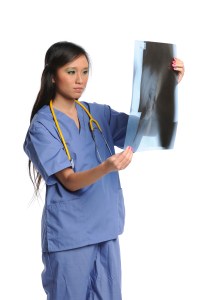
Female doctor looking at an xray

Recognize your doctors are people first

As physicians, our patients’ “social histories” help us understand factors in your life that impact your health -where you live, your job, your family, your hobbies . Besides that, we enjoy getting to know you, especially the things that make you and your life unique and interesting. That feeling can go both ways.

a woman in white coat with mask over mouth

Exchanging a few social words can make the encounter more satisfying for you and your doctor. Some of us will be more open about sharing our personal lives, and some subjects may be off limits. But I don’t think any of us will object to polite,  caring interest in our lives outside of medicine.  

You may cry when you read about a unique doctor-patient relationship in this post-

A simple way to help your doctor beat burnout

Finally, in honor of Doctors’ Day, meet some physicians with unique experiences to share, just a few of the many doctors who work tirelessly to provide us all with the HEART of health.

Doctors in international healthcare

Dr. Kent Brantly awoke feeling ill- muscle aches, fever, sore throat, headache and nausea. As his condition progressively worsened to include difficulty breathing, he learned the cause of his illness- the Ebola virus. Having spent the past few weeks caring for patients caught up in the Ebola epidemic that swept Liberia in the spring of 2014, Dr. Brantly had contracted the disease himself, and would likely die, as almost all victims do.

Continue this story at-

Surviving Ebola, “Called for Life”– Dr. Kent Brantly

 Doctors in disaster healthcare

When she applied for a position in New York City at the NYC Office of the Chief Medical Examiner (OCME), Dr. Judy Melinek never imagined that decision would plunge her into the nightmare of September 11, 2001. She was at the ME office that day when the Twin Towers were attacked and fell, killing thousands of people.

She and the other staff collaborated with the team of investigators who worked night and day identifying remains of the victims, a task she vividly describes in the book. This was basically their only job, since the cause of death was for the most part irrelevant, and impossible to determine. Sometimes they had only a small body part, as little as a finger, to extract DNA to identity a victim. Such identification was critical to bring closure to the families who lost loved ones, people who left for work that day, and never came home.

Read more about Dr. Melinek at this review of her book-

Working Stiff: Two Years, 262 Bodies, and The Making of a Medical Examiner- a review of words worth sharing

Doctors in Primary Care

Melissa Freeman, M.D.- the 91-Year-Old Doctor Who’s the Granddaughter of Slaves

Photos in this post are from the LIGHTSTOCK.COM collection, an affiliate link. Consider Lightstock for your photo and graphic needs. You will get quality media and help support the mission of this blog-to inform and inspire us all to discover the HEART of health.

exploring the HEART of health and those who care for it

Medical stethoscope and heart on a textured background

Dr Aletha