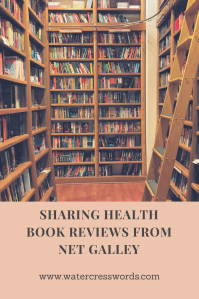
Net Galley helps readers discover and recommend new books to their audiences. If you are a librarian, bookseller, educator, reviewer, blogger or in the media, you can join for free.
I enjoy reading and sharing what I read with my blog followers, so joining Net Galley helps me accomplish both.
Net Galley helps “readers of influence” discover and recommend new books to their audiences. If you are a librarian, bookseller, educator, reviewer, blogger, or in the media, you can join for free.
I enjoy reading and sharing what I read with my blog followers, so joining Net Galley helps me accomplish both. I try to find books with a health/medical theme although occasionally I will pick something just for fun. But I find that almost any story portrays some health-related issue since it’s a universal concern.
Here are two stories, both memoirs, but vastly different. One is a private personal story, the other a public personal story.
Ms. Maynard’s story opened with a failed marriage/bad divorce saga with adult children torn between the two parents, persistent anger and bitterness, and attempts to ease the pain with a series of bad choices in lovers. Equally sad was her telling of a complicated and ultimately failed adoption attempt.
Finally, she and we can breathe a sigh of relief when she meets a man and seems to have found true love at last. But that comes to an abrupt halt when he is diagnosed with cancer.
From then on she poignantly describes a life turned upside down as she enters new territory as a caregiver. As she relates how their lives changed, we the readers are changed also, learning to recognize what is truly important in life. As Ms. Maynard writes,
“success, money, beauty, passion, adventure, possessions- have become immaterial. Breathing would be enough.”
Read this book if you want your assumptions about life and death to be challenged and changed. You may read an excerpt at this link
Dr. Pietro Bartolo practices medicine on the tiny Italian island of Lampedusa, in the Mediterranean Sea. Lampedusa, known for its friendly people, sunny skies, pristine beaches, and turquoise waters famous for fishing, seems an idyllic place to live, work, and visit.
But for the past 20 years, Dr.Bartolo has cared for not just residents and tourists, but for hundreds of refugees- people who risk their lives crossing the Mediterranean from northern Africa, fleeing poverty and political unrest. The lucky ones land on shore injured and sick. The unlucky ones wash ashore dead, having died en route or drowning after falling from a capsized or wrecked boat, sometimes only a few feet from shore.
In this memoir, Dr. Bartolo shares the stories of many of these people, giving them the names and faces that we don’t see watching news stories about the refugee crisis. He also shares his own life story of growing up on the island, leaving for medical school, and returning to raise a family and to practice medicine.
Dr. Bartolo’s story was also told in the documentary film FIRE AT SEA
He never expected to become the front-line help for hundreds of desperate people. With no specific training on how to manage an avalanche of desperate, sick, and injured refugees, and with little resources, he manages to put together a system for triaging, evaluating, and treating these people, then sending them on for more advanced medical care or to immigration centers in Europe.
For the less fortunate, he serves as medical examiner, to determine the cause of death for those who do not make it to Lampedusa alive; sometimes taking body parts to extract DNA to identify them, so families can be notified. He states he has never grown comfortable with this aspect of his job.
As a physician myself, I marvel at Dr. Bartolo’s caring and commitment to people who will never be able to repay him for his sacrifice. He approaches his work as a mission of mercy and treats every person with the utmost respect, no matter their circumstance. Some of the people he treats become almost like family; he has even tried to adopt a couple of orphaned children but cannot due to legalities.
Dr. Bartolo’s story reads like a conversation. I think you will like him, and admire him for his dedication and selfless service. His life should encourage all of us to consider what we can each do to lessen someone else’s suffering.
Another book review from Net Galley is at this link-
We believe bookstores are essential to a healthy culture and they are dedicated to the common good.
Bookshop.org donates a portion of every sale to independent bookstores.
Exploring the HEART of Health
Thank you for reading this post. Please follow this blog and me on social media.
I share information and inspiration to help you transform challenges into opportunities for learning and growth.
Add your name to the subscribe box to be notified of new posts by email. Click the link to read the post and browse other content. It’s that simple. No spam.
I enjoy seeing who is new to Watercress Words. When you subscribe, I will visit your blog or website. Thanks and see you next time.
Thank you for reading this post. Please follow this blog and me on social media.
I share information and inspiration to help you transform challenges into opportunities for learning and growth.
Add your name to the subscribe box to be notified of new posts by email. Click the link to read the post and browse other content. It’s that simple. No spam.
I enjoy seeing who is new to Watercress Words. When you subscribe, I will visit your blog or website. Thanks and see you next time.
Dr. Aletha
Use these links to share the heart of health wherever you connect.
The author recounts an experience of losing power for five days due to an ice storm that caused widespread power outages in the city. With no electricity, they discovered the critical role that light plays in daily life and how its absence affected various activities. The experience underscored the importance of light, its shared nature and its inviolable value, mirroring the biblical teaching of letting one’s light shine before others.
“You are the light of the world. A town built on a hill cannot be hidden.
Neither do people light a lamp and put it under a bowl. Instead, they put it on its stand, and it gives light to everyone in the house.
In the same way, let your light shine before others, that they may see your good deeds and glorify your Father in heaven.”
(This post uses affiliate links for support by a commission if you purchase through them.)
The day my lights went out
On a cold December morning, I awoke to no electric power in my house; so I had no heat, no coffee, no hot breakfast, and no television or internet access that day. And neither did thousands of other people in my city.
During the previous night as rain fell, it quickly turned to ice so thick that it brought down exposed power lines. It also took down tree limbs which in turn knocked down more power lines. By dawn, a city of a half million people was largely without power, including my home and the clinic where I practiced.
Upon arising, we started navigating the challenge of life without electricity. We were cold, and could not cook, wash clothes, watch TV, use our computer, or recharge our cell phones.
So, after opening our automatic garage door manually, we drove around looking for an open restaurant, finding traffic signals not working, and many businesses closed. I didn’t go to my clinic since it didn’t have power either.
Somehow we made it through the day; it was something of an adventure at that point. But at sunset, we faced an evening and night in the dark.
My house had no power for 5 days, some people as long as 2 weeks. By the third day, my clinic reopened so I had access to a computer, could charge my phone, and had a warm place to spend the day.
This slideshow requires JavaScript.
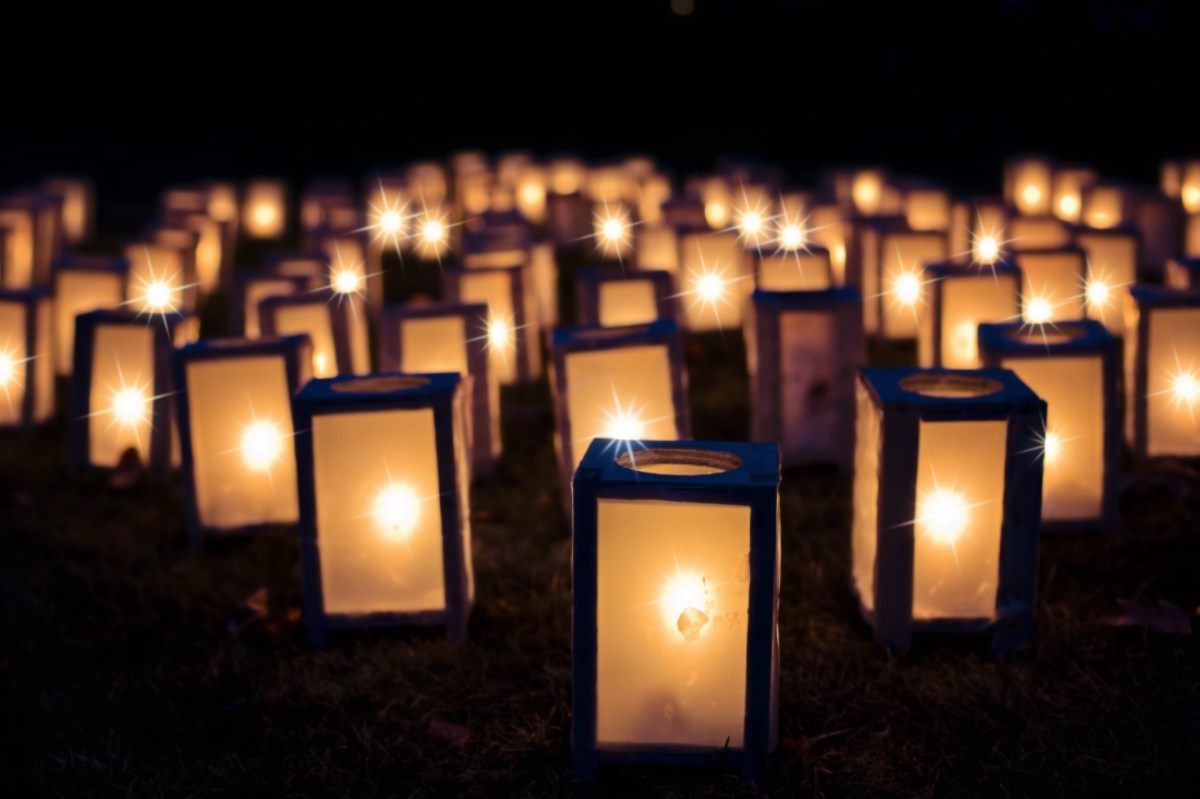
As inconvenient as all the other things were, the thing I missed most was light.
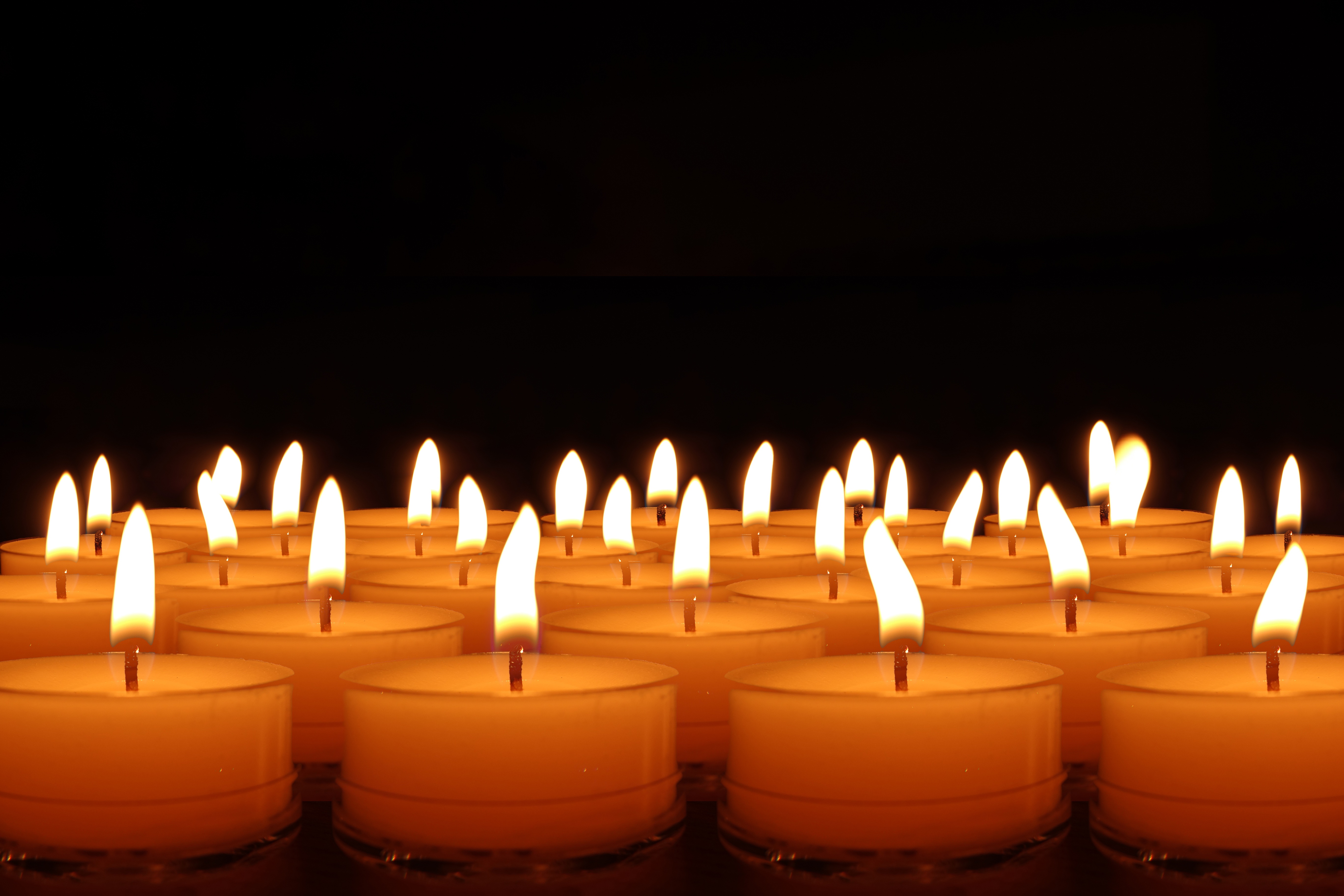
I felt grateful to have candles and flashlights, but they weren’t the same as being able to flip a switch on the wall or turn the switch on a lamp and have bright light flood the room.
By living in the dark for 5 days I learned…
I should not take light for granted.
Natural sunlight lasts from 8 to 14 hours per day, depending on the season and where you live- unless you live at the north or south pole, where you may be in darkness for 24 hours part of the year. Once the sun sets, you are in darkness unless you create light in some way.
Light is a great equalizer.
It didn’t matter who you were or what part of town you lived in. Rich and poor and everyone in between experienced the power outage. Some people had generators or were lucky enough to find a store with one for sale. Otherwise, you were in the dark.
Life without light is difficult.
Sitting in the living room listening to our battery-powered TV (now a relic) by candlelight, wrapped up in blankets wasn’t too bad. I just had to remember to take a flashlight to go to the bathroom or into my closet to change clothes. With no power or windows to catch a little moonlight, these areas of my home were pitch black.
We couldn’t cook, and could not safely store perishable food- I had to throw away everything in the refrigerator and freezer by the third day. We quickly tired of peanut butter and crackers. Dirty clothes stayed dirty for the time being.
Power company crews worked around the clock, helped by crews from other cities and states. It still took 2 weeks to get power back to everyone.
t took even longer to get all the broken tree limbs picked up from streets and yards and hauled off to a central site for burning. Subsequently, the city undertook a plan to trim trees that posed a hazard to power lines and to bury power lines.
Light should be shared with others.
Residents and businesses who had power invited others in, providing places to eat, wash clothes, charge phones, and stay warm. We were all in this together, and everyone seemed to make an extra effort to be kind to each other.
We enjoyed a view of the lights of New York City from the Empire State Building
The Sermon on the Mount
The scripture I quoted above is from Matthew in the New Testament. It’s part of a passage called the Sermon on the Mount because Jesus taught these lessons on a mountain to the people who were following him. So it may not have been exactly what we now consider a sermon.
Luke also records Jesus teaching many of the same lessons but at different times. His words taught how people should relate to God and to each other. Here is another post I wrote about Jesus’ teachings in the Sermon on the Mount.
Thank you for reading this post. Please follow this blog and me on social media.
I share information and inspiration to help you transform challenges into opportunities for learning and growth.
Add your name to the subscribe box to be notified of new posts by email. Click the link to read the post and browse other content. It’s that simple. No spam.
I enjoy seeing who is new to Watercress Words. When you subscribe, I will visit your blog or website. Thanks and see you next time.